

 Residential
 Commercial
 Interior
 Exteriors
 Service Areas
 Contact Us

Roofing caulk (also called roof sealant) is specialized flexible adhesive designed to seal gaps, cracks, and joints in roofing systems, preventing water infiltration that causes leaks and structural damage. The best roofing caulks feature silicone, polyurethane, or rubber-based formulations offering superior adhesion to multiple surfaces (asphalt shingles, metal roofing, wood, concrete), maintain flexibility across temperature extremes (-40°F to 180°F typical range), resist UV degradation preventing premature failure, and remain waterproof even in standing water or wet application conditions. Quality products cost $8-$25 per 10-ounce tube with professional-grade options reaching $30-$50, providing economical solution for sealing flashing, vent pipes, chimneys, skylights, and minor roof repairs preventing expensive water damage.
Critical application areas include chimney flashing where brick meets roofing material, vent pipe boots where plumbing or exhaust penetrates roof deck, skylight frames preventing leaks around glass units, roof valleys where two slopes meet creating vulnerable seams, and shingle repairs sealing cracked or damaged individual shingles. Proper surface preparation (cleaning, drying) and technique (continuous bead, adequate thickness, smooth finish) determine seal effectiveness and longevity. Most roofing caulks cure in 24-48 hours developing full strength and waterproofing, though many offer immediate water resistance enabling repairs during rainy weather.
Top roofing caulk uses:
- Emergency leak repairs during storms (products working on wet surfaces)
- Chimney and vent flashing maintenance preventing common leak points
- Skylight sealing addressing perimeter gaps
- Minor shingle damage fixing cracks before replacement needed
- Preventive maintenance sealing vulnerable joints before problems develop
Choose the right type:
- Silicone: Maximum flexibility, UV resistance, longest lifespan (20-30 years)
- Polyurethane: Superior adhesion, paintable, good for exposed applications
- Rubber-based: Excellent for metal roofs, remains elastic, moderate cost
- Acrylic: Budget option for temporary repairs or mild climates only
This comprehensive guide reviews top roofing caulk products, explains different formulation types, provides application techniques, and helps you select the right sealant for your specific roof repair or maintenance needs.
Top 5 Roofing Caulk Products for 2026
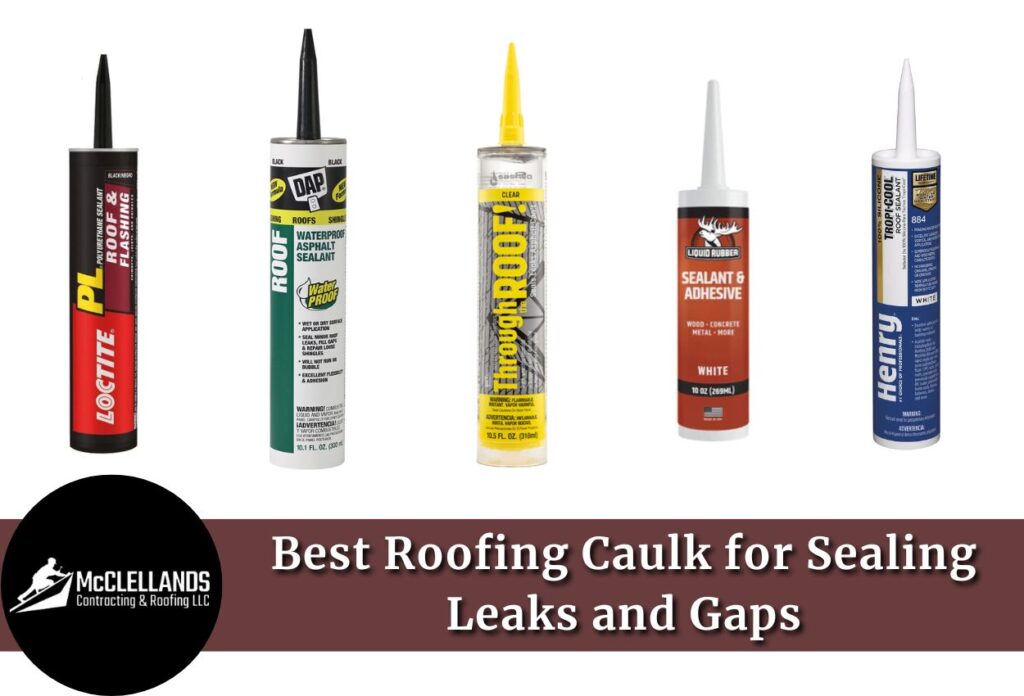
1. Henry 884 Tropi-Cool Silicone Roof Sealant
Best for: Emergency repairs and wet surface applications
Henry 884 consistently ranks among top-performing roofing sealants, offering professional-grade performance at accessible pricing ($15-$20 per 10oz tube). The standout feature is instant waterproof seal capability even on wet surfaces—critical advantage during emergency repairs when waiting for dry conditions isn’t feasible. This sealant performs reliably in standing water, making it ideal for low-slope or flat roofs where pudding commonly occurs.
Key features:
- Works on wet surfaces for emergency applications
- Effective in standing water (flat roof applications)
- UV resistant maintaining integrity decades
- Temperature range: -65°F to 400°F
- White finish (heat-reflective for energy efficiency)
- 100% silicone formula providing maximum flexibility
Best applications: Emergency leak repairs during rain, low-slope roof maintenance, areas with standing water, flat commercial roofing
Limitations: White color may not match all roofing aesthetics, higher cost than budget alternatives
2. Liquid Rubber Sealant & Adhesive Caulk
Best for: Versatile applications on multiple surfaces
Liquid Rubber delivers high-quality, professional-grade sealant excelling across diverse roofing materials and applications ($18-$25 per 10oz tube). Available in clear and white finishes, this product offers aesthetic flexibility matching various roof colors. The formula resists sagging, slumping, and dripping during application and throughout product life—important quality for overhead and vertical applications where inferior products fail.
Key features:
- Will not sag, slump, or drip (overhead applications)
- Available in clear and white
- Paintable for color matching
- Does not shrink or become brittle over time
- UV resistant and completely waterproof
- Works on asphalt, concrete, metal, wood, masonry
Best applications: Multi-material roofs, areas requiring color matching, professional installations, permanent repairs
Limitations: Requires dry surface for optimal adhesion, premium pricing
3. DAP RapidFlex Roofing Sealant
Best for: Fast-curing repairs and paintable applications
DAP RapidFlex offers exceptional versatility through advanced polymer formulation providing professional results at moderate cost ($12-$18 per 10oz tube). This sealant resists oil, gas, grease, and road salt—valuable for urban or industrial environments where chemical exposure threatens typical sealants. The formula adheres to numerous surfaces including asphalt, wood, metal, masonry, and fiberglass without primers or special surface treatments.
Key features:
- Works in wet and dry conditions
- Resists UV damage and temperature extremes
- Won’t harden or crack over time
- Mold and mildew resistant
- Non-toxic formulation
- Paintable in one hour (fast color matching)
Best applications: Residential roof repairs, areas requiring painting, environments with chemical exposure, multi-surface sealing
Limitations: Not ideal for prolonged standing water, moderate cure time
4. Sashco Through-the-Roof Sealant
Best for: Difficult repairs in challenging conditions
Sashco Through-the-Roof specializes in tough repair scenarios where other products struggle ($14-$22 per 10oz tube). The unique formulation works reliably on wet surfaces—uncommon capability in roofing sealants—while maintaining strong adhesion and flexibility. Clear finish remains transparent rather than yellowing from UV exposure, creating invisible repairs on various colored surfaces.
Key features:
- Works on wet surfaces (emergency repairs)
- Clear finish stays clear (no yellowing)
- Takes paint well for color matching
- Applies in cold weather (down to 0°F)
- Compatible with most roofing materials
- Long-lasting flexibility preventing cracks
Best applications: Cold climate repairs, wet weather emergencies, areas where visibility matters, multi-season applications
Limitations: Higher cost than budget alternatives, may require multiple coats for heavy-duty sealing
5. Loctite PL Roof & Flashing Polyurethane Sealant
Best for: High-movement areas and flashing applications
Loctite PL specializes in challenging applications where thermal expansion/contraction creates stress on typical sealants ($16-$24 per 10oz tube). The polyurethane formula delivers impressive flexibility allowing sealed joints to move with temperature changes without cracking or losing adhesion—essential quality for metal roofing, flashing, and expansion joints experiencing significant movement.
Key features:
- Exceptional flexibility (high-movement areas)
- Permanent, durable seal
- Resists harsh UV rays and extreme weather
- Low VOC formula (environmental compliance)
- No primer required (easy application)
- Creates tough, weatherproof barrier
Best applications: Metal roofing, chimney flashing, expansion joints, areas with significant thermal movement
Limitations: Polyurethane odor during application, longer cure time than silicone
Understanding Roofing Caulk Types
Silicone Sealants
Characteristics: 100% silicone formulations offering maximum flexibility, excellent UV resistance, and broadest temperature range (-65°F to 400°F typical). Silicone maintains elasticity indefinitely, never hardening or becoming brittle regardless of age or exposure. The material resists moisture, chemicals, and weathering better than alternatives.
Advantages:
- Longest lifespan (20-30+ years)
- Maximum flexibility preventing cracks
- Works on wet surfaces (many formulas)
- Superior UV resistance
- Extreme temperature tolerance
Disadvantages:
- Not paintable (most formulations)
- Higher cost than alternatives
- Can be messy to apply
- May not adhere to certain plastics
Best for: Permanent repairs, metal roofing, high-UV areas, temperature extremes, areas requiring maximum longevity
Polyurethane Sealants
Characteristics: Polymer-based formulations providing excellent adhesion across diverse materials with good flexibility and moderate UV resistance. Polyurethane bonds chemically to surfaces creating exceptionally strong attachment resistant to peeling or separation. Most formulations accept paint allowing color matching for visible applications.
Advantages:
- Superior adhesion strength
- Paintable (color matching)
- Good flexibility
- Bonds to difficult surfaces
- Moderate cost
Disadvantages:
- Less UV resistant than silicone
- Shorter lifespan (10-15 years typical)
- Strong odor during application
- Requires dry surfaces
Best for: Flashing repairs, areas requiring painting, professional installations, surfaces where adhesion is challenging
Rubber-Based Sealants
Characteristics: Synthetic or natural rubber formulations (often EPDM or butyl rubber) providing excellent elasticity and good adhesion particularly to metal surfaces. Rubber-based products remain elastic across temperature ranges while resisting weathering and UV exposure moderately well.
Advantages:
- Excellent for metal roofs
- Remains elastic indefinitely
- Good adhesion to metals
- Moderate cost
- Easy application
Disadvantages:
- Less UV resistant than silicone
- May not adhere well to certain plastics
- Moderate lifespan (10-20 years)
- Limited color options
Best for: Metal roofing, EPDM rubber roofs, gutters, downspouts, moderate-budget repairs
Acrylic Sealants
Characteristics: Water-based formulations offering easiest cleanup and application with moderate performance suitable for light-duty or temporary applications. Acrylics provide adequate weatherproofing in mild climates but lack durability and flexibility of premium alternatives.
Advantages:
- Lowest cost option
- Easy water cleanup
- Paintable
- Low odor
- Simple application
Disadvantages:
- Shortest lifespan (5-10 years)
- Limited flexibility (cracks over time)
- Poor performance in temperature extremes
- Not suitable for critical applications
Best for: Temporary repairs, mild climates, budget-constrained projects, non-critical sealing
How to Apply Roofing Caulk Properly
Surface Preparation (Critical Step)
Proper preparation determines seal effectiveness and longevity—more roof caulk failures result from inadequate preparation than product quality issues:
Clean thoroughly: Remove all dirt, debris, old caulk, loose material, moss, and algae using wire brush, scraper, or pressure washer. Surface must be completely clean for proper adhesion.
Dry completely: Most sealants (except specific wet-surface products) require dry surface. Wait 24-48 hours after rain or cleaning before application. Use towels or heat gun to accelerate drying if necessary.
Remove loose material: Scrape away any loose shingles, flaking paint, rust, or deteriorated material. Sealant bonds only as well as weakest layer beneath it.
Repair structural damage: Address underlying rot, rust perforation, or structural damage before sealing. Caulk cannot compensate for failed materials requiring replacement.
Application Technique
Cut nozzle angle: Cut tube nozzle at 45-degree angle with opening size matching gap width—smaller openings for narrow cracks, larger for wide joints. Clean cut creates smooth bead application.
Apply continuous bead: Work steadily maintaining consistent pressure creating uniform bead without gaps or thin spots. Overlap starting point slightly ensuring complete seal.
Tool smooth: Immediately after application, use caulk tool, putty knife, or gloved finger to press sealant into gap while smoothing surface. This removes air pockets and creates watertight seal.
Avoid over-working: Excessive tooling introduces air, creates thin spots, and compromises seal integrity. One or two smooth passes suffices.
Respect cure time: Allow full cure time (24-72 hours typical) before exposing sealed area to water, stress, or other challenges. Initial skin formation doesn’t equal full cure.
Common Application Mistakes
Applying to dirty/wet surfaces: Prevents proper adhesion causing premature failure. Take time for adequate preparation.
Insufficient sealant thickness: Thin applications lack flexibility and fail quickly. Use adequate bead size—⅛ to ¼ inch typical minimum.
Bridging rather than filling: Sealant should fill gap completely, not just bridge across opening. Bridged applications fail when material stretches.
Ignoring weather conditions: Extreme temperatures (below 40°F or above 100°F) affect application and curing. Apply in moderate temperatures when possible.
Using expired product: Old caulk loses effectiveness. Check dates and discard expired tubes regardless of appearance.
When to Call Professional Roofers
While roofing caulk enables many DIY repairs, certain situations warrant professional attention:
Extensive damage: Multiple leaks, large areas requiring sealing, or widespread deterioration indicate problems beyond spot repairs, requiring comprehensive evaluation and possibly full roof work. In these cases, professionals may also recommend appropriate gutter sealants to help prevent water intrusion around connected drainage areas.
Difficult access: Steep slopes, high roofs, or dangerous working conditions risk injury. Professionals have proper equipment, training, and insurance for safe high-elevation work.
Underlying structural issues: When leaks result from failed flashing, damaged decking, or structural problems, caulk provides only temporary relief. Proper repairs require addressing root causes and selecting suitable exterior caulking types for the affected materials and conditions.
Warranty concerns: Improper DIY repairs may void roofing warranties. For newer roofs under warranty, consult professionals ensuring repairs comply with warranty terms.
Uncertain diagnosis: If you cannot identify leak source or aren’t confident in repair approach, professional inspection prevents wasting time and materials on ineffective repairs.
Conclusion
Quality roofing caulk provides economical, effective solution for sealing leaks and gaps preventing water damage to your home. Silicone formulations (Henry 884, Liquid Rubber) deliver maximum longevity and flexibility for permanent repairs, polyurethane options (DAP RapidFlex, Loctite PL) offer superior adhesion and paintability for flashing and visible areas, while rubber-based products (Sashco) handle challenging conditions and wet-surface applications. Proper product selection matching your specific application, thorough surface preparation, and correct application technique determine repair success and longevity.
Most roofing caulk applications are DIY-friendly for homeowners comfortable working on roofs, potentially saving hundreds in professional repair costs. However, extensive damage, difficult access, or structural issues warrant professional assessment ensuring problems are properly diagnosed and corrected rather than temporarily concealed.
For professional roof inspection, repair, or maintenance, call McClellands Contracting and Roofing at (412) 206-6718.