

 Residential
 Commercial
 Interior
 Exteriors
 Service Areas
 Contact Us
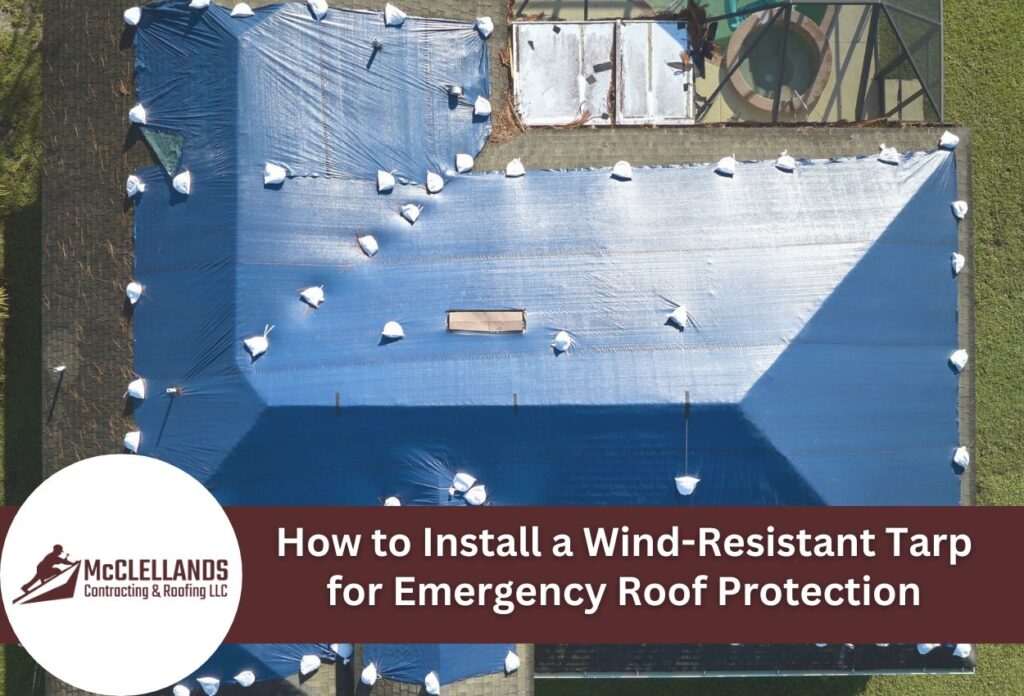

Roof damage from severe weather can leave homeowners scrambling for immediate protection, making tarp installation critical for preventing extensive water damage and structural issues. When emergency roof covering is necessary, understanding windproof tarp techniques separates temporary fixes from reliable protection that withstands harsh conditions.
Protecting tarps from winds on roofs requires more than simply throwing a covering over damaged areas. Strong winds can easily tear inadequately secured tarps, creating dangerous projectiles while leaving the roof completely exposed. Failed emergency roof coverings often result from poor anchoring methods, insufficient overlap coverage, or inappropriate materials for the specific weather conditions.
Protecting your roof after a storm requires executing proven roof tarp installation methods. Professional tarp anchoring systems utilize multiple attachment points, weight distribution techniques, and reinforcement strategies that residential property owners can implement with the right knowledge and materials. These windproof approaches ensure the temporary covering remains intact during storms, preventing additional water intrusion that compounds existing damage.
Understanding common failure scenarios helps property owners avoid mistakes when installing emergency roof protection. The right techniques protect both the structure and surrounding areas from damage while maintaining effective coverage until permanent repairs can be completed.
Choosing the Right Tarp Material and Size for Maximum Wind Resistance
The tarp material plays a major role in how long your emergency protection lasts. Heavy-duty vinyl tarps offer exceptional tear resistance and waterproof properties, making them ideal for extended protection. These materials typically feature reinforced edges and grommets that withstand repeated stress from wind forces without compromising the covering’s integrity.
Canvas tarps provide breathability while maintaining durability, though they may not be completely waterproof. Reinforced polyethylene options deliver cost-effective protection with adequate wind resistance for short-term applications. The material thickness, measured in mils or ounces per square yard, directly impacts the tarp’s ability to resist punctures and tears during high-wind events.
Correct sizing ensures complete coverage while minimizing wind catch that can compromise tarp anchoring systems. Choosing the right roof tarp size helps ensure measurements extend beyond damaged areas by at least 4 feet on all sides, allowing adequate overlap for secure attachment points. Oversized tarps create unnecessary sail area that increases wind pressure, while undersized coverings leave vulnerable areas exposed.
When securing tarps on rooftops, balancing coverage needs with wind resistance is crucial. Professionals generally recommend selecting materials and dimensions that match specific damage patterns on your roof while accounting for local weather conditions and the expected duration of temporary protection needs. Identifying signs of hidden roof damage can also help determine whether additional areas require temporary coverage before permanent repairs are completed.
Professional-Grade Anchoring Systems That Withstand Severe Weather
Professional tarp anchoring systems rely on multiple securing methods that distribute forces evenly across the entire covering surface. Sandbags provide reliable anchoring when properly positioned along tarp edges and corners, with each bag weighing between 25 and 50 pounds to create sufficient hold-down force. These flexible weights conform to roof contours while preventing concentrated stress points that can tear material during wind gusts.
Concrete blocks offer superior holding power for securing tarps on rooftops during extended protection periods. Position blocks every 4 to 6 feet along tarp perimeters, with additional weight concentrated at corners where wind forces typically create the greatest uplift pressure. Specialized tarp anchors, including screw-in ground anchors and weighted tie-down straps, provide mechanical attachment points that resist both vertical and horizontal wind forces.
Load distribution methods prevent individual anchor points from bearing excessive stress during high-wind events. Professional roof tarp installation methods incorporate rope or cable systems that spread tension across multiple attachment points rather than relying on single-point connections. This approach reduces the likelihood of anchor failure while maintaining consistent coverage across damaged roof sections.
Effective windproof tarp techniques combine multiple anchoring methods to create redundant protection. Strategic anchor placement accounts for prevailing wind directions and roof geometry, ensuring the emergency roof covering remains secure even when individual components experience stress beyond normal operating limits.
Step-by-Step Secure Installation Techniques for Roof Tarps
Overlap techniques are the foundation of effective windproof tarp installation on damaged roofing systems. Creating overlapping seams requires positioning adjacent tarp sections, allowing wind forces to press materials together rather than creating separation points. Professional roof tarp installation methods include overlapping tarps in a shingle-like pattern, with upper sections covering lower ones to direct water flow away from vulnerable seam areas.
Edge sealing prevents wind from getting underneath tarp perimeters where uplift forces typically begin. When securing tarps on rooftops, folding material edges under weighted anchors creates double-thickness barriers that resist tearing and separation. Professional-grade sealing tape applied along overlap seams provides additional protection against wind-driven moisture while reinforcing connection points between multiple tarp sections.
Corner reinforcement addresses the most vulnerable areas where wind forces concentrate during severe weather events. Installing additional anchor points near each corner distributes stress across multiple attachment locations rather than allowing forces to concentrate at single points. Triangular reinforcement patches, cut from excess tarp material, can be applied to corners using waterproof adhesive before final anchoring.
Safety protocols require non-slip footwear, fall protection harnesses, and working only during favorable weather conditions when installing an emergency roof covering. For proper tarp anchoring systems, secure one section completely before moving to adjacent areas, preventing partially installed coverings from becoming wind hazards during the installation process.
Advanced Fastening Methods for Long-Term Tarp Security
Professional fastening hardware provides superior holding power when tarps are on roofs for extended periods. Specialized screws designed for temporary roof applications penetrate roofing materials without creating permanent structural damage while providing mechanical attachment points that resist wind uplift forces. These fasteners typically feature broad heads that distribute loads across tarp material, preventing tear-out during high-wind events.
Washer systems amplify the holding power of mechanical fasteners by spreading attachment forces across larger material areas. Professional-grade washers, measuring 2 to 3 inches in diameter, prevent screw heads from pulling through tarp material under stress. Metal washers provide maximum durability, while rubber washers offer flexibility that accommodates thermal expansion and contraction cycles without compromising attachment integrity.
Furring strips create continuous attachment lines that distribute wind forces across multiple fastener points rather than concentrating stress at individual locations. These wooden or metal strips, secured through tarp material into the roof structure, provide professional-grade attachment systems for emergency roof coverings. Fasteners should be installed every 6 to 8 inches along the strip length, creating multiple attachment points that maintain coverage even if individual fasteners fail.
Tensioning systems using rope and bungee cord combinations allow for thermal expansion while maintaining consistent pressure across tarp surfaces. These anchoring methods prevent material fatigue that occurs when rigid fasteners restrict natural movement during temperature fluctuations, ensuring the long-term effectiveness of the roof tarp. Each of these advanced anchoring methods will keep the roof tarp securely in place, preventing secondary damage to your home.
Installation Mistakes That Compromise Tarp Performance
Inadequate edge securing is a common cause of tarp failure during windstorms, allowing uplift forces beneath coverings and creating catastrophic material separation. Many property owners underestimate the importance of continuous perimeter attachment, leaving gaps between anchor points that allow wind to enter and pressurize the space beneath emergency roof covering. Professional roof tarp installation methods generally suggest securing edges every 2 to 3 feet along the entire perimeter, with additional reinforcement at corners where stress concentrations typically develop.
Improper tension distribution creates weak points that escalate into complete system failure when exposed to sustained wind forces. Overtightening tarp sections places excessive stress on individual anchors, while insufficient tension allows material to flap and eventually tear at attachment locations. Effective windproof tarp techniques balance material tension to eliminate slack without creating stress points that compromise long-term performance.
Insufficient overlap areas between adjacent tarp sections create vulnerability points where wind-driven moisture penetrates protective coverings. Many installations fail because overlaps are too short, allowing separation during thermal expansion cycles. Professional tarp anchoring systems incorporate generous overlap zones that account for material movement while maintaining weatherproof barriers. Wrinkles and air pockets form when tarps are installed without proper smoothing techniques, creating wind catch areas that generate destructive uplift forces during storms.
Loose fastening is another critical failure point where minor securing issues develop into complete covering loss. Verifying each anchor point before proceeding to adjacent areas ensures comprehensive protection across damaged roof sections, so your emergency roof covering stays intact until permanent repairs are completed.
Maintenance and Monitoring Tips for Roof Tarps
Regular maintenance schedules make sure emergency roof covering systems continue protecting your home throughout extended installation periods. Weekly inspections should focus on anchor point integrity, material condition, and edge security, where wind forces typically initiate tarp damage. Monitoring the tarp over time identifies minor issues before they cause complete system failure during severe weather.
Warning signs of impending tarp failure include loose fasteners, material fatigue at stress points, and separation along overlap seams. Frayed edges indicate excessive wind exposure that requires immediate reinforcement to prevent catastrophic tears. Anchor point displacement, visible as sagging or pulling at attachment locations, signals the need for additional securing hardware before the next weather event. Water pooling on the tarp suggests inadequate drainage that can lead to material stretching and eventual puncture failure.
Adjustment techniques address minor issues without requiring complete reinstallation of tarp anchoring systems. Retightening loose fasteners and adding supplemental anchor points at stress locations improves the tarp’s effectiveness. Reinforcement patches applied to worn areas prevent small tears from expanding into major failures. Edge resealing using waterproof tape maintains the barrier along perimeter zones, where protecting tarps from winds on roofs is most challenging.
Proactive monitoring prevents emergency situations where sudden tarp failure exposes damaged roof areas. Documented inspection findings can show recurring problem areas that require enhanced securing methods or material upgrades for continued protection until permanent roof repairs can be completed.
Secure Your Roof with McClellands Contracting and Roofing, LLC
When facing severe weather in Pittsburgh, securing your roof with the right tarp is crucial. McClellands Contracting and Roofing, LLC specializes in professional-grade tarp installation that withstands even the toughest winds. Our team uses only the best materials and anchoring systems designed specifically for maximum wind resistance, keeping your home safe and protected.
Reach out to our team today at (412) 353-5660 for immediate tarping services. Choose McClellands Contracting and Roofing, LLC for reliable emergency roof covering and protect your home effectively against unpredictable weather.