


 Residential
 Commercial
 Interior
 Exteriors
 Service Areas
 Contact Us
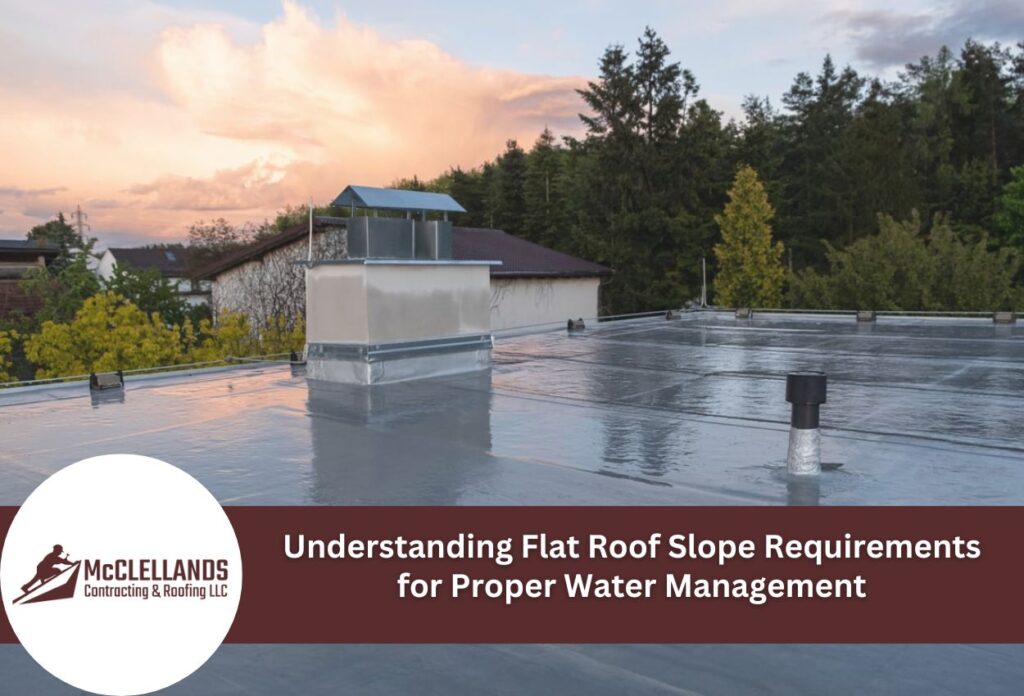

Despite their name, flat roofs are usually not completely flat. Every flat roof requires a minimum slope to function properly and prevent serious water damage. Without adequate drainage, water pools on the surface, creating leaks, structural damage, and expensive repairs that could have been easily avoided.
Minimum flat roof slope requirements exist for good reason. Building codes mandate specific pitch calculations to ensure water flows toward drains and off the roof surface. Most residential and commercial structures need at least a ¼ inch drop per foot, though requirements vary based on roof size, materials, and local regulations.
A sufficient roof slope prevents the headaches that come with standing water. Pooled water adds unnecessary weight to the structure, accelerates material deterioration, and creates perfect conditions for leaks to develop. Low-slope roofing systems depend entirely on correct pitch to channel water away from vulnerable areas.
Commercial roof slope standards often differ from residential requirements due to larger surface areas and different drainage systems. Knowing flat roof drainage requirements helps property owners make informed decisions about new construction or roof replacements. Building code roof requirements are the basis for any successful flat roof installation, ensuring both safety and longevity.
*Please note, this article is meant for general educational purposes only and is not intended to represent professional legal advice. Consult with a qualified attorney for advice regarding your specific situation.
Standard Minimum Slope Requirements for Different Roof Types
Building code roof requirements establish specific minimum flat roof slope requirements based on roofing materials and applications. When it comes to materials, whether EPDM, TPO, modified bitumen, or built-up systems, all typically require a minimum slope of 1/4 inch per foot to ensure proper water drainage. Metal roofs may need a slightly steeper slope of ½ inch per foot, though this depends on many other factors.
Local building codes frequently exceed national standards, particularly in areas with heavy rainfall or snow. Some municipalities require slopes up to 1/2 inch per foot for certain low-slope roofing systems. These variations reflect regional climate conditions and local construction practices developed over decades of experience.
Professional roof pitch calculations should also account for deflection under added weight, ensuring adequate slope remains after the structure settles. Contractors must consider these factors when establishing proper drainage patterns during installation.
How to Calculate and Measure Roof Pitch for Flat Roofs
Calculating the slope for flat roofs requires basic tools and straightforward measurement techniques. A level, measuring tape, and simple math provide accurate roof pitch calculations for most applications. To begin, place the level on the roof surface and measure the vertical drop from one end to establish the slope ratio.
The standard method involves measuring a 12-inch horizontal distance and determining the vertical drop in inches. For minimum flat roof slope requirements of 1/4 inch per foot, the measurement should show the same drop over 12 inches. This translates to approximately a 2.08% grade when converting between measurement systems.
Converting between degrees, percentages, and inches per foot helps contractors work with different architectural specifications. To convert inches per foot to degrees, divide the rise by 12 and use the arctangent function. For percentage calculations, divide rise by run and multiply by 100. These roof pitch calculations ensure compliance with flat roof drainage requirements regardless of how plans specify the slope.
Digital levels and phone apps provide quick slope verification during installation. However, traditional measurement methods remain reliable for establishing commercial roof slope standards. Contractors should verify measurements at multiple points across the roof surface, as low-slope roofing systems require consistent pitch throughout the entire area to prevent water accumulation in any section.
Drainage System Design and Water Flow Considerations
Effective drainage systems combine minimum flat roof slope requirements with properly sized gutters, downspouts, and internal drains to create reliable water removal. The slope directs water toward collection points, while drainage components handle the actual water evacuation from the roof surface.
Gutters need adequate capacity to handle water volumes generated by the roof area. Flat roof drainage requirements specify gutter sizing based on square footage and expected rainfall intensity. Downspouts must accommodate the full flow from connected gutters, with commercial roof slope standards often requiring larger drainage components than residential applications.
Internal roof drains offer advantages over perimeter drainage systems on larger flat roofs. These drains connect to interior plumbing systems and rely on proper slope design to funnel water toward drain locations. Low-slope roofing systems with internal drains need careful attention to drain placement and surrounding slope patterns.
Water pooling typically occurs in areas where roof pitch calculations were insufficient or where structural settling has altered the original slope. Common problem areas include around roof vents, skylights, HVAC equipment, and perimeter edges where debris accumulates.
Proper slope design prevents standing water by ensuring continuous flow toward drainage points. Even minor depressions can collect water and cause problems over time. Regularly inspecting drainage components and slope helps maintain the drainage system’s performance throughout the roof’s service life.
Building Code Compliance and Inspection Requirements
International Building Code (IBC) standards establish baseline minimum flat roof slope requirements that municipalities across the country adopt and modify. These codes require flat roofs to maintain adequate slope for proper drainage, typically mandating at least 1/4 inch per foot toward drainage points. Local jurisdictions often enhance these standards based on regional climate conditions and historical performance data.
Pittsburgh area building codes may include additional requirements beyond standard IBC provisions due to the region’s climate patterns and precipitation levels. Local amendments frequently address specific concerns like snow patterns and freeze-thaw cycles on low-slope roofing systems. These modifications ensure roof installations perform adequately under local weather conditions throughout their expected service life.
Building inspectors verify that roof pitch calculations meet code requirements during construction phases. They examine slope measurements, drainage system installation, and material specifications to confirm compliance with approved plans. Inspectors also check that commercial roof slope standards are properly implemented, particularly on larger buildings where drainage becomes more critical.
Before roofing work can begin, permit approvals depend on demonstrating code compliance through detailed drawings and specifications. Plans must show how flat roof drainage requirements will be met, including slope directions, drain locations, and overflow provisions. Building code roof requirements may also mandate backup drainage systems to handle situations where primary drains become blocked or overwhelmed during heavy rainfall events.
Common Problems Caused by Inadequate Roof Slopes
When minimum flat roof slope requirements are not met during construction, property owners face a cascade of water-related problems that can compromise the entire roofing system. Standing water becomes the primary culprit, creating conditions where leaks develop rapidly and structural damage accelerates beyond normal wear patterns.
Water pooling on low-slope roofing systems leads directly to membrane deterioration and premature failure. The constant moisture exposure breaks down roofing materials faster than designed, causing cracks, blisters, and separation at seams. These failures allow water to seep into the building structure, damaging insulation, decking, and interior spaces below the roof. For TPO membrane systems, these conditions can contribute to common TPO roofing problems, including seam failures, membrane damage, and premature deterioration.
Additionally, inadequate roof pitch calculations create perfect breeding grounds for mold and algae growth. Standing water combined with organic debris provides ideal conditions for biological growth that can spread throughout the building’s HVAC system. This contamination poses health risks to occupants and requires expensive remediation efforts that often exceed the cost of the original roof installation.
Structural deterioration accelerates when building code roof requirements for drainage are ignored. Water weight adds unexpected loads to roof structures, while freeze-thaw cycles in colder climates cause expansion and contraction damage. Commercial roof slope standards exist specifically to prevent these issues, yet buildings constructed without adequate slope face ongoing maintenance challenges and shortened roof life expectancy that impact long-term operational costs significantly. When evaluating long-term roofing expenses, property owners should also consider commercial roof coating costs as part of their maintenance and restoration budget.
Professional Installation and Slope Correction Solutions
Qualified roofing contractors bring essential expertise to flat roof installations, ensuring minimum flat roof slope requirements are executed from the start. Professional installers understand how to establish correct slope patterns during construction, preventing extensive drainage problems that plague improperly built roofs. They possess the specialized tools and knowledge needed to achieve precise roof pitch calculations across large surface areas.
Experienced contractors coordinate slope installation with structural elements, accounting for deck deflection and settling that can affect long-term drainage performance. They also ensure compliance with building code roof requirements and local amendments that may exceed standard specifications. Professional installation includes seamless integration of drainage components with slope design to create effective water removal systems.
Existing flat roofs with inadequate slope can be corrected through several methods. Tapered insulation systems offer an effective solution that adds proper slope while improving energy efficiency. These systems use varying insulation thicknesses to create the required pitch without major structural modifications. The tapered approach works well for most commercial roofs and can accommodate complex drainage patterns.
More extensive slope problems may require partial or complete roof reconstruction. This approach involves rebuilding the roof deck with a proper slope built into the structure itself. While more expensive than tapered insulation, reconstruction provides the most reliable long-term solution for severe drainage issues. Professional contractors evaluate each situation to recommend the most appropriate flat roof drainage requirements solution based on existing conditions and performance goals.
Ensure Your Roof Meets Pittsburgh’s Minimum Flat Roof Slope Requirements with McClellands Contracting and Roofing, LLC
Understanding and adhering to the minimum flat roof slope requirements is crucial for preserving your roofing system. Whether you are planning a new installation or adjusting an existing flat roof, McClellands Contracting and Roofing, LLC can provide professional, code-compliant solutions tailored to both residential and commercial properties. Our expert team is well-versed in the specific slope measurements necessary for various roofing materials and Pittsburgh’s building codes.
Don’t let inadequate roofing slopes lead to expensive water damage or structural issues. Call McClellands Contracting and Roofing, LLC today at (412) 353-5660 to schedule an assessment and ensure your roof is up to standard!