

 Residential
 Commercial
 Interior
 Exteriors
 Service Areas
 Contact Us
Do Insurance Companies Have to Match Your Shingles After Roof Damage?
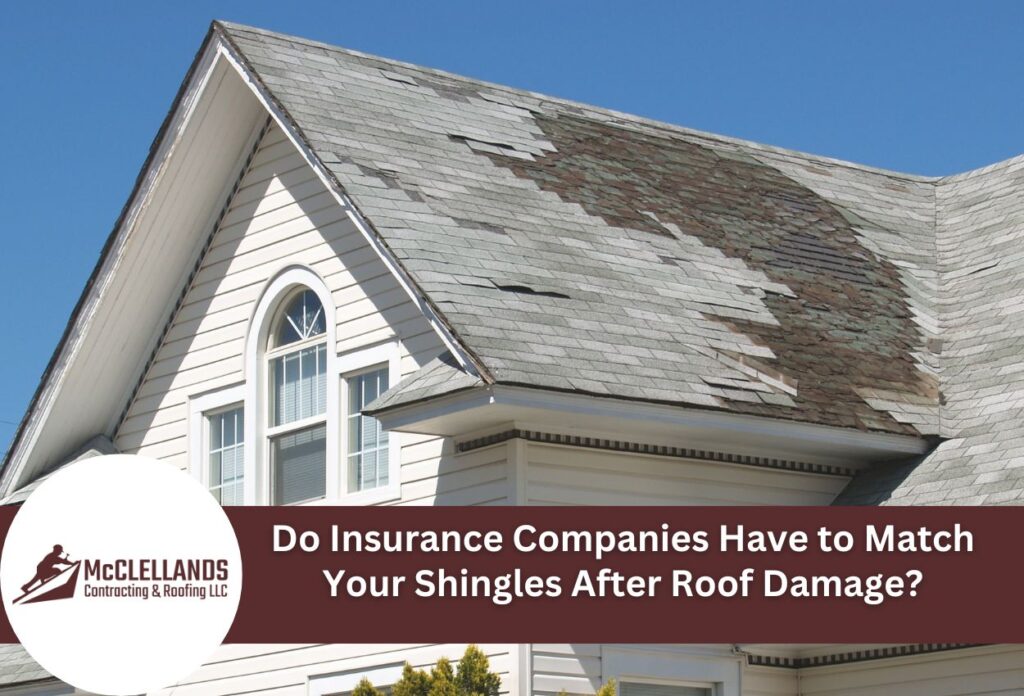

When storm damage strikes and only part of a roof needs repair, homeowners often face a frustrating dilemma about shingle matching. Insurance company roof matching requirements vary significantly between policies and providers, leaving many property owners uncertain about what coverage they can expect for aesthetic consistency.
Most insurance policies do not automatically require companies to match shingle color across an entire roof surface. Instead, insurers typically focus on restoring the damaged area to its pre-loss condition using materials of “like kind and quality.” This approach can create noticeable color differences when manufacturers discontinue shingle lines or when existing materials have weathered over time.
Partial roof replacement coverage becomes complicated when homeowners discover their specific shingle style is no longer available. Weather exposure, aging, and manufacturing changes mean that even identical shingle models installed years apart may not match perfectly. The resulting patchwork appearance can significantly impact a home’s curb appeal and potentially its market value.
Understanding homeowners insurance shingle replacement rules helps property owners set realistic expectations and explore available options. While some policies include matching provisions or endorsements, others leave homeowners responsible for upgrade costs when seeking a uniform roof appearance. Knowing these details before filing a claim prevents disappointment and enables better decision-making during the repair process.
Understanding Your Insurance Policy Coverage for Shingle Matching
Standard homeowners insurance language regarding matching provisions often contains specific clauses that directly impact roofing materials and color coordination requirements. These roof insurance claim policies typically focus on restoring damaged areas rather than ensuring aesthetic consistency across entire roof surfaces. Most policies specify restoration using materials of “like kind and quality” without guaranteeing perfect color matches.
Insurance companies distinguish between cosmetic matching coverage and functional replacement coverage when processing roof claims. Functional replacement addresses the structural integrity and weather protection aspects of roofing systems, ensuring damaged areas receive adequate materials to restore protective capabilities. Cosmetic matching coverage, however, addresses aesthetic concerns when replacement materials create visible color variations or texture differences.
Insurance company roof matching requirements are different between carriers and policy types. Basic policies rarely include automatic matching provisions, while comprehensive coverage may offer endorsements or riders that address aesthetic concerns. Some insurers provide matching coverage for specific percentages of roof surfaces or limit matching obligations to visible areas from ground level.
Partial roof replacement coverage is even more complex when manufacturers discontinue specific shingle lines or when existing materials have weathered substantially. Matching shingle color insurance claims often require documentation of unavailable materials and estimated costs for achieving a uniform appearance. Understanding these policy distinctions helps homeowners navigate claims processes and choose between repair versus replacement.
When Insurance Companies Are Required to Match Shingles
Insurance companies face legal obligations to provide matching shingle coverage under specific circumstances outlined in policy language and state regulations. These requirements typically activate when partial roof replacement creates substantial aesthetic disparities that affect property value or when policy endorsements specifically guarantee matching provisions. Understanding these trigger conditions helps homeowners identify legitimate claims for complete roof replacement rather than patchwork repairs.
Contractual obligations for shingle matching often arise from explicit policy language that addresses “ensuing loss” or “additional coverage” scenarios. When insurers cannot reasonably match existing materials due to discontinuation or significant weathering, some policies require coverage extension to achieve uniform appearance. These provisions become enforceable when homeowners can demonstrate that available replacement materials create obvious visual inconsistencies with undamaged roof sections.
Documentation requirements for successful matching claims include manufacturer correspondence confirming material discontinuation, contractor estimates showing cost differences between partial and complete replacement, and photos of aesthetic disparities. Homeowners must typically provide written proof that reasonable matching attempts failed and that visible differences significantly reduce their property’s appearance or marketability.
State insurance regulations sometimes mandate matching coverage for specific roof percentages or visible areas. These requirements vary by jurisdiction but often establish thresholds where insurers must extend coverage beyond initially damaged areas. Professional documentation from licensed contractors becomes essential evidence when arguing that matching provisions should apply to specific claim situations under existing policy terms.
Common Reasons Insurance May Deny Shingle Matching Requests
Insurance companies may decline shingle matching requests during claim processing for many reasons, frequently citing age-related depreciation. Insurers argue that natural weathering creates color changes and texture variations that make perfect matching impossible, regardless of material availability. This depreciation factor becomes particularly relevant when roofing systems exceed 10 years of age and show visible signs of weather exposure, UV fading, or granule loss.
Discontinuation of original shingle styles is another common basis for insurance denials regarding matching coverage. Manufacturers regularly update product lines, change color formulas, and modify manufacturing processes that affect material appearance. When original materials become unavailable, insurance companies often propose substitute products that meet functional specifications but fail to provide aesthetic consistency with existing roof sections.
Policy exclusions specifically addressing aesthetic concerns allow insurers to fulfill basic replacement obligations. These limitations typically distinguish between functional restoration and cosmetic improvements, categorizing color matching as an upgrade rather than a necessary repair. As mentioned above, standard homeowners insurance shingle replacement rules often include language that limits coverage to “like kind and quality” without guaranteeing identical appearance.
Insurance providers may also invoke partial roof replacement coverage restrictions that cap obligations to damaged areas only. These policy limitations prevent automatic extension of coverage to undamaged sections, even when achieving uniform appearance requires broader replacement. Understanding these common denial reasons helps homeowners prepare stronger documentation and explore policy endorsements that address aesthetic-matching concerns before claims arise.
How to Negotiate Shingle Matching Coverage With Your Insurance Company
Documenting roof damage thoroughly is the first step in successful shingle-matching negotiations with insurance providers. Property owners should photograph damaged areas from multiple angles, capture close-up images showing texture and color details, and document the overall roof condition before any repairs begin. This visual evidence becomes crucial when demonstrating that partial replacement would create obvious aesthetic inconsistencies that affect property value and neighborhood standards.
Professional contractor involvement often strengthens matching coverage requests by providing expert assessments of material availability and replacement options. Licensed roofing professionals can document manufacturer discontinuations, provide written estimates comparing partial versus complete replacement costs, and explain technical reasons why matching existing materials would be impossible. Their professional opinions carry significant weight with insurance adjusters who rely on expert testimony when evaluating coverage decisions.
Presenting a compelling case also requires gathering manufacturer documentation confirming that original shingle styles are no longer produced or that current versions differ substantially from existing materials. This evidence should include written correspondence from shingle manufacturers, product specification sheets showing changes in color or texture, and comparative samples demonstrating visual differences between old and new materials.
Working effectively with insurance adjusters involves presenting organized documentation that clearly demonstrates matching necessity rather than preference. Property owners should emphasize how visible differences impact market value, neighborhood compliance standards, and property aesthetics. Professional estimates showing minimal cost differences between partial and complete replacement often persuade adjusters that matching coverage represents reasonable claim resolution rather than unnecessary upgrades.
Alternative Solutions When Insurance Won’t Pay for Matching Shingles
Creative roofing approaches can address aesthetic concerns when insurance companies leave homeowners with mismatched materials. Strategic design modifications allow property owners to work around partial roof replacement coverage limitations while maintaining their home’s curb appeal and value. These solutions transform potential matching problems into intentional design elements that enhance rather than detract from overall property appearance.
Accent roofing techniques create deliberate contrast patterns that incorporate mismatched sections as architectural features. Professional contractors can design complementary color schemes using existing materials alongside new replacements, creating intentional variation that appears purposeful rather than accidental. This approach particularly benefits homes where insurance claims failed but where complete replacement exceeds budgets.
Homeowners facing out-of-pocket expenses for complete shingle matching beyond insurance coverage can explore various financing alternatives. Home improvement loans, property equity lines of credit, and contractor financing programs offer structured payment options for upgrade costs. These financial solutions enable property owners to invest in complete roof uniformity when homeowners insurance shingle replacement rules limit coverage to damaged areas only.
Evaluating cost differences is essential when deciding whether to accept mismatched repairs or pay additional amounts for aesthetic consistency. Property owners should consider long-term market value impacts, neighborhood standards, and personal satisfaction when deciding between insurance-covered repairs and upgraded solutions. Professional appraisals can quantify potential value differences between matched and mismatched roofing outcomes for informed decision-making.
Working With Professional Roofers During Insurance Claims
Experienced roofing contractors can be valuable advocates during insurance claims processes, particularly when homeowners seek matching shingle coverage for partial roof damage. Professional roofers understand the technical requirements and documentation standards that insurance companies need when evaluating claim decisions. Their expertise is essential when navigating complex coverage about material availability and aesthetic concerns.
Qualified contractors often provide documentation that supports insurance claims through detailed damage assessments and professional estimates. They can document manufacturer discontinuations, photograph material differences, and provide written explanations of why partial roof replacement coverage would create unacceptable aesthetic results. This professional documentation carries significant weight with insurance adjusters who rely on expert opinions.
Local roofing professionals have regional expertise that can be helpful when dealing with area insurance practices and carrier-specific policies. Contractors familiar with regional weather patterns, common roofing materials, and local insurance company procedures can anticipate potential claim complications and help homeowners prepare documentation accordingly.
Choosing contractors who understand insurance company roof matching requirements helps homeowners avoid common mistakes that can jeopardize claim success. Professional roofers coordinate timing between insurance inspections and repair work, ensuring that damage documentation remains intact while preventing further deterioration.
Expert Shingle Roofing Services in Pittsburgh
If you’re facing partial roof damage and grappling with insurance claims to match your shingles, McClellands Contracting and Roofing, LLC is here to help. Navigating through your insurance policy’s fine print can be daunting, especially when it comes to ensuring aesthetic consistency of your roof’s shingles. Whether your insurance covers matching shingle colors or not, our expert team ensures seamless integration of new shingles with your existing roof setup.
Don’t let mismatched shingles diminish the value of your home or disrupt the aesthetic harmony of your property. Call McClellands Contracting and Roofing, LLC today at (412) 353-5660 to schedule a consultation and discover how we can help you get a perfectly matched, visually appealing roof that stands the test of time.