

 Residential
 Commercial
 Interior
 Exteriors
 Service Areas
 Contact Us
Can You Have Too Many Roof Vents? Understanding the Balance Between Proper Ventilation and Overdoing It
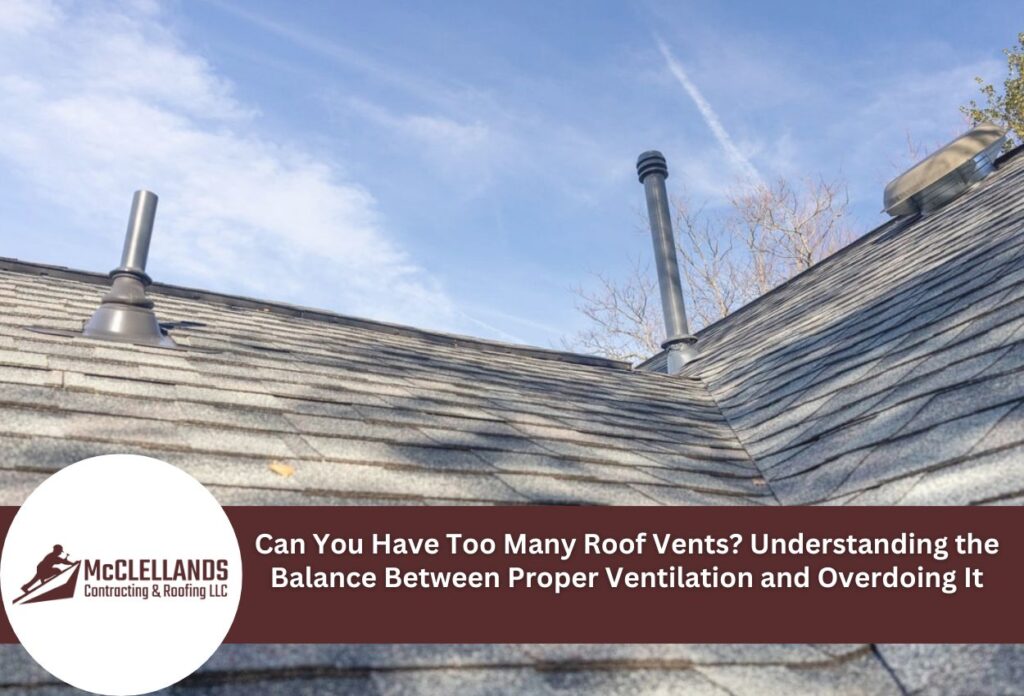

Roof ventilation plays an important role in maintaining a healthy home, but many homeowners wonder if it’s possible to go overboard with vent installation. The answer is yes, excessive roof vents can create just as many problems as inadequate ventilation, disrupting the delicate balance your attic needs to function properly.
Proper attic ventilation works on a simple principle: cool air enters through intake vents at the eaves while warm air exits through exhaust vents near the ridge. This natural airflow helps regulate temperature, prevents moisture buildup, and protects your roof’s structure. However, when this system becomes unbalanced due to too many vents or improper roof vent spacing, several issues can emerge.
Installing excessive roof vents can cause turbulent airflow patterns that interfere with the natural ventilation cycle. Instead of smooth air movement, conflicting air currents can develop, reducing the system’s effectiveness. Roofing problems from over-ventilation may include decreased energy efficiency, moisture infiltration during storms, and compromised structural integrity.
Understanding proper roof vent installation guidelines helps homeowners avoid these pitfalls while ensuring adequate airflow. The key lies in achieving the right balance of attic ventilation, enough vents to maintain healthy air circulation without creating counterproductive effects that compromise your roof’s performance and your home’s comfort.
Signs Your Home Has Excessive Roof Ventilation
Identifying roof ventilation problems requires the observation of both physical indicators and changes in your home’s performance. Several telltale signs suggest your roof may have too many vents installed.
Physical symptoms of excessive roof vents often appear around the attic and roof area first. Homeowners may notice inconsistent temperature zones throughout the attic space, with some areas feeling warmer or cooler than others. Water stains or moisture damage near vent openings can indicate that over-ventilation is allowing rain or snow to infiltrate the attic during storms. Additionally, visible debris, leaves, or dust accumulation around vents could lead to airflow patterns being disrupted, caused by competing air currents.
Indoor comfort issues frequently accompany improper roof vent spacing and installation. Drafts in upper-level rooms, uneven heating or cooling throughout the house, and difficulty maintaining consistent temperatures all point to potential over-ventilation. These problems occur when excessive roof vents disrupt the natural intake and exhaust balance, creating turbulent airflow that interferes with your home’s thermal envelope and compromises the effectiveness of your ventilation system.
Problems Caused by Installing Too Many Roof Vents
Excessive roof vents create several significant problems that can negatively impact both your home’s energy efficiency and structural integrity. Understanding these roof ventilation problems helps homeowners recognize when their attic ventilation balance has been compromised by over-installation.
One of the most expensive issues occurs when too many vents actually pull conditioned air from living spaces below. This happens when excessive roof vents create negative pressure that draws heated or cooled air directly from your home’s interior through ceiling openings, gaps around fixtures, and other small openings. The result is dramatically increased energy costs as your HVAC system works overtime to replace the lost conditioned air. This problem becomes particularly pronounced when proper roof vent spacing guidelines are ignored during installation.
Weather infiltration presents another serious concern with excessive roof vents. Too many vent openings create multiple entry points for rain, snow, and wind-driven moisture during storms. The increased number of penetrations in your roofing system multiplies the potential for water damage, especially when competing air currents from over-ventilation draw precipitation deeper into the attic space. This moisture can lead to insulation damage, wood rot, and mold growth.
Additionally, excessive roof vents can create turbulent airflow patterns that actually reduce ventilation effectiveness while increasing the risk of structural damage during high winds.
Calculating the Right Number of Vents for Your Roof Size
Determining the correct number of vents for your roof requires understanding basic ventilation calculations that prevent both inadequate airflow and excessive roof vents. The foundation of proper attic ventilation balance starts with measuring your attic’s square footage and applying established ventilation ratios.
The standard formula recommends 1 square foot of net free ventilation area for every 150 square feet of attic floor space. For example, a 1,200 square foot attic needs 8 square feet of total ventilation area. This total should be split evenly between intake vents at the soffits and exhaust vents at the ridge to maintain optimal airflow performance. However, when vapor barriers are present, this ratio can be reduced to 1 square foot of ventilation per 300 square feet of attic space.
Proper roof vent spacing becomes critical when translating these calculations into actual vent installations. Ridge vents typically provide 18 square inches of net free area per linear foot, while soffit vents vary based on their size and design. Roof ventilation problems often arise when homeowners focus solely on exhaust vents without ensuring adequate intake ventilation at the eaves.
Achieving the correct attic ventilation balance requires careful attention to both intake and exhaust components. Following established roof vent installation guidelines helps prevent the installation of excessive roof vents while ensuring your ventilation system operates efficiently. This balanced approach maximizes airflow effectiveness while avoiding the complications that come with over-ventilation.
Proper Spacing Guidelines for Roof Vent Installation
Strategic roof vent placement requires careful attention to spacing distances that maintain optimal airflow while preventing roof ventilation problems. Professional installations follow specific measurements between individual vents to ensure proper attic ventilation balance without creating excessive roof vents that compromise system performance.
Individual exhaust vents should typically be spaced 8 to 10 feet apart along the ridge line or the roof’s surface. This distance prevents competing air currents that can develop when vents are positioned too closely together. Proper roof vent spacing also maintains structural integrity by avoiding unnecessary roof penetrations that could weaken the underlying framework. Ridge vents offer advantages in this regard since they provide continuous ventilation along the entire peak without requiring multiple individual openings.
Creating adequate coverage across the entire roof surface while avoiding dead air zones requires balancing vent distribution with airflow dynamics. Dead air zones develop when sections of the attic receive insufficient air circulation, typically occurring in areas too far from active vents. However, installing excessive roof vents to combat these zones often creates turbulent airflow that reduces overall system effectiveness.
Following established roof vent installation guidelines helps achieve uniform air distribution without over-ventilating specific areas. The key involves positioning vents to work with natural convection patterns rather than against them. This approach ensures comprehensive attic ventilation coverage while maintaining the delicate balance necessary for the best performance throughout all seasons and weather conditions.
Best Practices for Roof Vent Installation and Placement
Professional roof vent installation requires precise techniques that balance effective ventilation with weatherproofing integrity. Skilled contractors understand that achieving the best possible attic ventilation balance depends on careful attention to both mechanical installation methods and strategic placement decisions that prevent roof ventilation problems.
Proper sealing around vent gaps stands as the most critical aspect of professional installation. Each vent requires multiple layers of protection, including underlayment integration, flashing installation, and sealant application that creates watertight barriers without restricting airflow. Professional installers follow manufacturer specifications for proper roof vent spacing while ensuring each gap receives adequate weatherproofing protection. Quality installations also incorporate ice and water shield membranes around vent openings in areas prone to ice dam formation.
Common homeowner mistakes often stem from focusing solely on adding more vents without considering overall system balance. Many property owners install excessive roof vents, believing more ventilation automatically improves performance, creating turbulent airflow patterns that reduce effectiveness. Another frequent error involves mixing different types of vents on the same roof slope, which can create competing air currents that disrupt natural convection patterns.
Following established roof vent installation guidelines prevents these issues while maximizing system performance. Professional contractors evaluate existing ventilation before adding new components, ensuring additions complement rather than compromise the current setup. This systematic approach maintains proper attic ventilation balance while avoiding the pitfalls associated with over-ventilation that many well-intentioned homeowners inadvertently create through improper installation practices.
When to Call a Professional Roofer for Ventilation Assessment
Recognizing when your roof ventilation system requires professional evaluation can save homeowners from expensive mistakes and prevent roof ventilation problems before they escalate. Several warning signs indicate that expert assessment is necessary before making any modifications to your current ventilation setup.
Persistent moisture issues in the attic, inconsistent indoor temperatures, or visible condensation around existing vents signal potential problems with attic ventilation balance. Ice dams forming repeatedly during winter often indicate ventilation imbalances that require professional diagnosis. Energy bills showing unexplained increases may also suggest your current system has excessive roof vents creating unwanted air leaks, or insufficient ventilation causing HVAC strain.
Professional roofers bring specialized knowledge of proper roof vent spacing and installation techniques that most homeowners lack. These experts can evaluate your current system’s performance without immediately recommending expensive additions or replacements. A qualified contractor will measure your attic space, assess existing vent placement, and determine whether your problems stem from inadequate ventilation, over-ventilation, or improper configuration of current components.
Rather than automatically adding more vents, experienced professionals often make the most out of existing setups through strategic modifications or minor adjustments to improve airflow patterns. This approach follows established roof vent installation guidelines while avoiding unnecessary gaps that could compromise your roof’s structural integrity. Professional assessment ensures any changes maintain proper attic ventilation balance while addressing specific performance issues affecting your home’s comfort and energy efficiency.
Expert Roof Ventilation Services in Pittsburgh
If you’re experiencing issues with your home’s temperature regulation or noticing higher energy bills, it might be time to assess your roof’s ventilation system. McClellands Contracting and Roofing, LLC specializes in getting the best possible attic airflow to prevent the common pitfalls of excessive roof vents. Balancing your home’s ventilation can significantly enhance comfort and reduce unnecessary energy consumption.
Don’t let improper vent placement lead to expensive energy losses and structural damage. Call us today at (412) 353-5660, and let our experts provide a comprehensive evaluation and tailored solutions. Ensure your roofing system is effectively balanced with McClellands Contracting and Roofing, LLC, your trusted local roofing specialists.