

 Residential
 Commercial
 Interior
 Exteriors
 Service Areas
 Contact Us
Key Points:
- Yes, a roof valley can often be repaired for minor damage, but severe issues or widespread deterioration may require full replacement.
- Identify roof valley damage signs early, such as cracked flashing, missing shingles, or interior water stains, to prevent escalation.
- Regular roof valley maintenance, including debris removal and inspections, is important for extending lifespan and preventing expensive repairs.
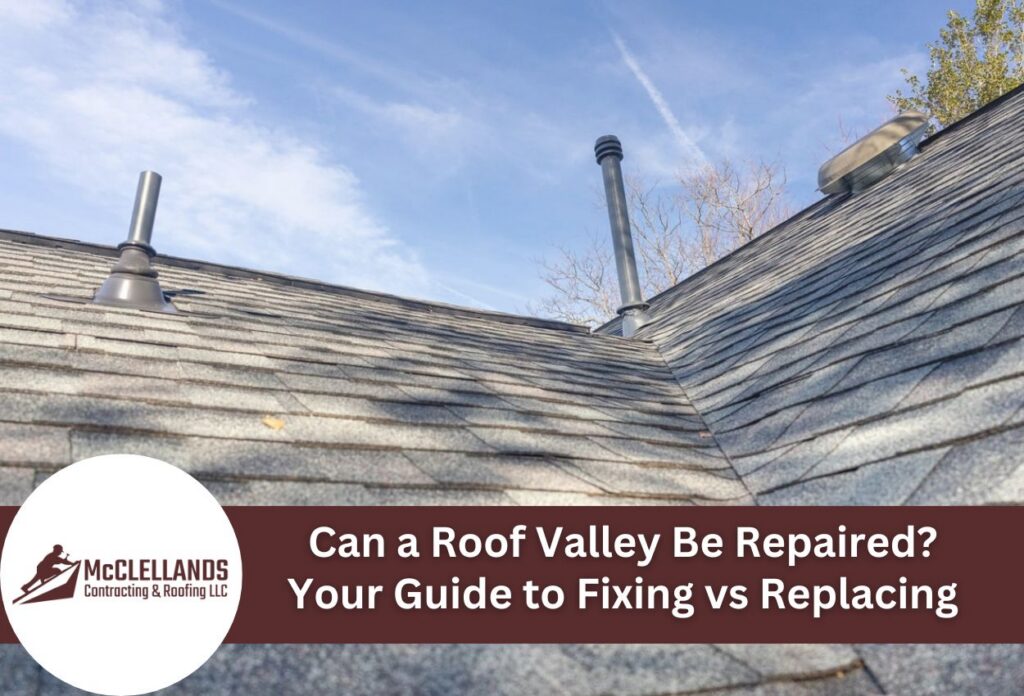
Roof valleys can often be repaired depending on the extent of damage and the type of valley system installed on your home. These important roofing components channel water away from your roof where two slopes meet, making them essential for preventing water damage and structural issues. When roof valley damage occurs, homeowners face the decision between repair and full replacement.
Minor roof valley leak repair typically involves addressing small cracks, loose flashing, or damaged sealant around the valley area. Metal roof valley repair often proves more straightforward than other materials due to the durability of metal components. However, extensive deterioration, multiple leak points, or structural damage may require complete roof valley replacement.
Recognizing roof valley damage signs early allows property owners to address problems before they escalate into expensive repairs. Common indicators include water stains on interior ceilings, visible cracks or gaps in valley materials, and pooling water during rainfall. Proper roof valley maintenance and fast intervention can extend the lifespan of valley systems and protect homes from leaks that lead to expensive structural damage.
Identifying Common Roof Valley Problems Before They Escalate
Recognizing roof valley damage signs early can save property owners from extensive water damage and expensive repairs. External indicators often appear first and provide clear warnings that roof valley leak repair may be necessary. Homeowners should regularly inspect valley areas for cracked or separated flashing, missing or damaged shingles along valley edges, rust spots on metal components, and excessive granule loss from asphalt shingles.
Interior warning signals frequently indicate that valley problems have progressed beyond surface issues. Water stains on ceilings near valley areas, moisture buildup in attic spaces, and ceiling discoloration suggest that roof valley replacement may be required rather than simple repairs. These interior signs typically develop after exterior damage has allowed a leak into the home’s structure.
Metal roof valley repair needs often manifest as corrosion, loose fasteners, or separation at seam joints. Regular roof valley maintenance includes clearing debris that can trap moisture and cause accelerated deterioration. Property owners who notice any combination of these visual indicators should schedule a professional inspection to determine whether targeted repairs can address the issues or if more intervention is necessary.
When Roof Valley Repair Is the Right Solution
Roof valley repair becomes the best choice when damage remains localized and hasn’t compromised the underlying structural components. Small cracks in metal valleys, minor flashing separation, or isolated areas of worn sealant typically respond well to targeted repair approaches. These situations allow homeowners to restore valley function without the expense and disruption of complete roof valley replacement.
Cost-effective scenarios for roof valley leak repair include addressing single leak points, replacing damaged sections of flashing, or resealing joints that have developed small gaps. Metal roof valley repair often proves particularly successful when corrosion affects only surface areas or when fasteners require tightening or replacement. Properties with newer roofing systems generally benefit from repair solutions since surrounding materials remain in good condition.
The financial advantages of targeted repairs become apparent when comparing the scale of the project and material requirements. Roof valley maintenance through strategic repairs can extend system lifespan by several years while addressing immediate concerns. However, repair solutions work best when roof valley damage signs indicate isolated problems rather than widespread deterioration. Professional assessment helps determine whether repair efforts will provide lasting results or if replacement offers better long-term value.
Professional Repair Techniques for Different Valley Materials
Professional roof valley repair methods vary significantly based on the specific materials involved in the installation. Metal valley repair techniques focus on addressing corrosion, loose fasteners, and compromised sealing around aluminum or steel components. Contractors typically begin by cleaning affected areas to remove debris and assess the full extent of damage before applying specialized patches or sealants designed for metal roofing systems.
Metal roof valley repair often involves strategic flashing adjustments to restore proper water flow and prevent future pooling. Professional installers may replace individual sections of damaged metal rather than entire valley runs when corrosion remains localized. Advanced sealing compounds specifically formulated for metal applications provide long-lasting protection against leaks while accommodating thermal expansion and contraction cycles.
Asphalt shingle valley repairs require different approaches that address both surface materials and underlying protection layers. Roof valley leak repair in shingle systems typically involves careful removal of damaged shingles around valley edges, assessment of underlayment condition, and strategic replacement using proper layering techniques. Professional contractors ensure new shingles integrate seamlessly with existing materials while maintaining adequate overlap patterns that prevent leaks. These repair methods restore valley function while preserving the appearance of the overall roofing system.
Addressing Roof Valley Leaks Through Strategic Repairs
When roof valley leaks develop, homeowners can implement several emergency measures while awaiting professional assistance. Temporary solutions include applying roofing cement to visible cracks, placing tarps over affected valley areas during storms, and redirecting interior water collection using buckets or containers. These stopgap measures help minimize water damage until qualified contractors can assess the situation and implement permanent solutions.
Professional repair approaches focus on identifying and addressing underlying causes rather than applying surface-level fixes. Experienced contractors examine valley construction methods, evaluate flashing integration, and assess water flow patterns to determine why leaks developed initially. This analysis ensures that roof valley leak repair efforts target structural deficiencies and installation problems that contribute to ongoing leak issues.
Effective leak repair strategies often involve systematic removal of damaged materials, thorough cleaning of affected areas, and installation of properly sized components that restore the valley’s structural integrity. Metal roof valley repair may require specialized welding or soldering techniques to create watertight seals, while asphalt systems benefit from strategic layering approaches. Professional contractors utilize weather-appropriate materials and timing to ensure repairs cure properly and provide lasting protection against future roof valley damage signs.
Essential Roof Valley Maintenance to Prevent Future Repairs
Implementing consistent roof valley maintenance routines prevents minor issues from developing into major repair projects that require professional intervention. Seasonal inspection schedules help property owners identify roof valley damage signs before leaks cause structural damage or require complete roof valley replacement. Regular maintenance activities protect the investment in roofing systems while extending the functional lifespan of valley components.
Effective roof valley maintenance includes removing accumulated debris that can trap moisture and accelerate deterioration of metal or shingle materials. Leaves, twigs, and other organic matter create blockages that prevent proper water drainage and increase the likelihood that roof valley leak repair will become necessary. Property owners should check the sealant condition around flashing areas and monitor for loose fasteners that could compromise the structural integrity of the valley during severe weather.
Gutter alignment verification ensures that water flows efficiently away from valley areas without creating backup conditions that stress roofing materials. Metal roof valley repair needs often develop when gutters pull away from proper positioning and create drainage problems. Proactive maintenance activities cost significantly less than emergency repairs and help maintain the best possible roof performance. Regular attention to valley systems reduces the frequency of professional service calls while protecting homes from water damage that can affect interior spaces and structural components.
Making the Smart Decision Between Repair and Replacement
Determining whether roof valley repair or complete replacement provides the best solution requires a close look at several important factors. The age of existing valley materials plays a significant role in decision-making, as older systems may benefit more from roof valley replacement than repeated repairs. Properties with valleys approaching 20 years of service often experience multiple failure points that make replacement more cost-effective than ongoing roof valley leak repair efforts.
Overall roof condition influences whether targeted repairs align with long-term maintenance strategies or if broader renovation makes financial sense. Homes requiring extensive roofing work may benefit from coordinating roof valley replacement with other necessary improvements. The frequency of previous repairs provides valuable insight into whether underlying issues persist despite maintenance efforts. Properties requiring repeated metal roof valley repair services within short timeframes often indicate systemic problems that replacement addresses more effectively.
Professional roofing contractors provide essential expertise for evaluating damage severity and recommending appropriate solutions based on specific circumstances. Experienced professionals assess structural integrity, examine surrounding materials, and consider local weather patterns when developing repair or replacement recommendations. Their technical knowledge helps property owners understand whether roof valley maintenance through repairs will provide adequate long-term protection or if roof valley replacement offers better value and performance for their particular situation.
Expert Roof Valley Repairs in Pittsburgh with McClellands Contracting and Roofing, LLC
If you’re facing issues with your roof valley, it’s important to make an informed decision between repair and replacement. McClellands Contracting and Roofing, LLC specializes in identifying the root cause of roof valley problems and implementing durable solutions tailored to your needs. Whether it’s a minor leak repair or a replacement, our team ensures your roof valley is restored to the best condition, protecting your home from potential water damage.
Don’t wait for minor damage to escalate into expensive repairs. Call us today at (412) 353-5660 for a professional assessment and to discuss your options. Trust McClellands Contracting and Roofing, LLC to provide reliable, high-quality roofing services that stand the test of time.