

 Residential
 Commercial
 Interior
 Exteriors
 Service Areas
 Contact Us
Roof Over or Tear Off: Which Is Actually Better for Pittsburgh Homeowners?

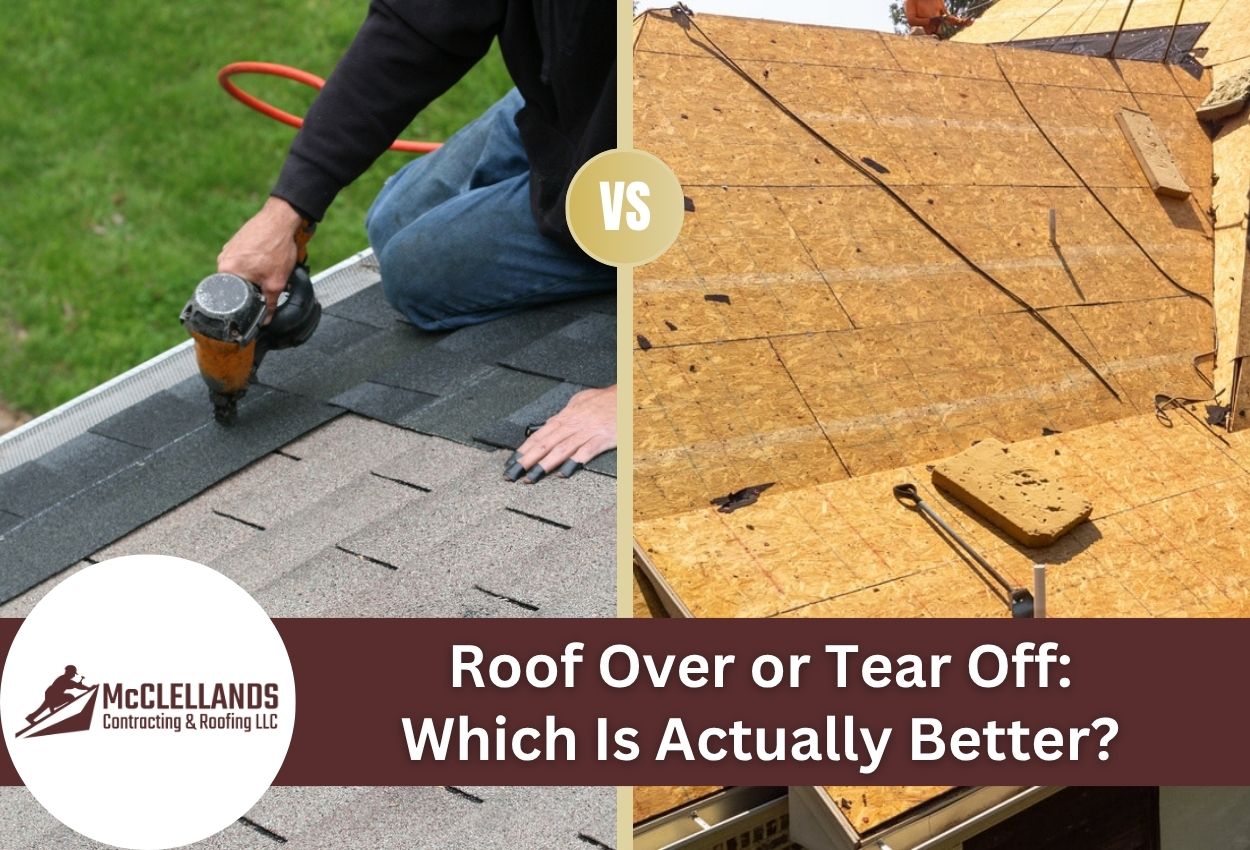
For most Pittsburgh homeowners — especially those in homes built before 1950 with existing multiple shingle layers — a full roof tear-off is the better long-term choice, though a roof-over can save $1,000 to $3,000 upfront in eligible cases. That savings sounds good on paper, but it comes with real trade-offs that Pittsburgh’s climate makes harder to ignore.
Pittsburgh averages 44 inches of snowfall every year. Add frequent temperature changes that cause roofing materials to expand and contract, and that extra layer of old shingles underneath becomes a structural liability. The added weight stresses rafters and decking — a serious concern in a city full of homes that are 75 to 100+ years old.
This article breaks down both methods side by side. It covers costs, lifespan, code compliance, and the Pittsburgh-specific conditions that often tip the decision toward a full tear-off. By the end, homeowners will have a clear picture of which option makes the most sense for their roof, their home, and their budget.
What Are the Real Pros and Cons of Roofing Over Existing Shingles?
A roof-over can save $1,000 to $2,500 in labor costs compared to a full tear-off, but those savings come with real trade-offs that affect how long the new roof will last. Skipping the tear-off eliminates disposal fees — which average $300 to $500 in Allegheny County — and cuts job time from 2 to 3 days down to a single day. However, new shingles installed over old ones can lose 5 to 10 years of their rated lifespan due to heat buildup and an uneven surface beneath.
| Pros of a Roof-Over | Cons of a Roof-Over |
|---|---|
| Labor savings: $1,000 to $2,500 | Lifespan reduction: 5 to 10 years |
| No disposal fees ($300 to $500 savings) | Decking rot and water damage go undetected |
| Faster completion: 1 day vs. 2 to 3 days | Warranty impact: most manufacturers void full warranty on layered installs |
| Less short-term disruption to the home | Added weight stresses rafters and decking |
The upfront savings are real, but voided warranties and hidden deck damage can turn a budget-friendly decision into a costly repair down the road — particularly in an older Pittsburgh home where the decking may already be compromised.
How Much Does a Tear-Off vs. Roof-Over Actually Cost in Pittsburgh?
A roof-over costs $4,500 to $7,000 for a 1,500 sq ft roof in Pittsburgh, while a multi-layer tear-off — common in pre-1960 homes across the city — runs $7,500 to $12,500 for the same size. Homeowners who need help managing upfront project costs may want to explore roofing financing options before choosing between methods.
| Method | Avg. Labor Cost | Disposal/Haul-Away | Total Project Cost (1,500 sq ft) | Typical Completion Time |
|---|---|---|---|---|
| Roof-Over | $2,500 to $4,000 | $0 to $100 | $4,500 to $7,000 | 1 day |
| Single-Layer Tear-Off | $3,000 to $5,500 | $300 to $500 | $6,000 to $10,000 | 2 to 3 days |
| Multi-Layer Tear-Off | $4,000 to $7,000 | $500 to $800 | $7,500 to $12,500 | 2 to 4 days |
Pittsburgh building permits for a full tear-off and replacement average $75 to $200 in Allegheny County. Permits are sometimes waived for roof-overs depending on the municipality — confirm with a local contractor before scheduling. On the question of whether reroofing over old shingles is cheaper: yes, upfront. But a roof-over typically lasts 15 to 20 years versus 25 to 30 years for a full tear-off, meaning the lower sticker cost often works out to a higher cost per year over time.
How Many Layers of Shingles Are Allowed, and What Does Pennsylvania Code Say?
Pennsylvania municipalities, including Pittsburgh, follow the International Residential Code (IRC), which allows a maximum of 2 layers of asphalt shingles — so if your roof already has 2 layers, a roof-over is not legally permitted without a full tear-off first.
- The 2-layer legal limit applies throughout Allegheny County. The IRC caps asphalt shingle layering at 2 total. Any roof-over that would create a third layer violates code and can trigger failed inspections or insurance complications.
- Older Pittsburgh homes frequently hit this limit before a second re-roof. Homes built before 1960 are commonly found during contractor inspections to already have 2 or more existing shingle layers from previous re-roofs — which means a tear-off is the only code-compliant path forward.
- A roof-over can disrupt attic ventilation ratios required under IRC Section R806. Adding a second layer traps more heat and reduces airflow. In Pittsburgh, where July humidity levels regularly exceed 70%, that restriction can create moisture buildup in the attic — leading to mold, rot, and reduced insulation performance over time. A properly designed residential roof ventilation system is essential to preventing these issues.
Before approving any roof-over, a reputable contractor will count existing shingle layers and check ventilation compliance — two steps that frequently rule out the roof-over option in Pittsburgh’s older housing stock. Skipping this check can result in code violations that create problems when selling or filing an insurance claim.
Can You Put New Shingles Over Old Ones Without Voiding Your Warranty or Causing Hidden Damage?
Technically yes — but major shingle manufacturers including GAF, CertainTeed, and Owens Corning require installation over clean decking to honor full material warranties, meaning a layered install typically receives limited or no warranty coverage at all. The option exists on paper. In practice, it costs homeowners far more than it saves.
The durability risk is measurable. Shingles installed over an existing layer experience 10% to 15% higher surface temperatures because the trapped old layer cuts off airflow underneath. That heat buildup accelerates granule loss and can reduce a shingle’s rated 30-year lifespan down to roughly 20 to 22 years — a loss of nearly a decade. Pair that with a voided or limited manufacturer warranty, and any upfront savings disappear fast.
Pittsburgh homeowners face an additional risk that makes layered installs especially problematic: ice dams. With 44 inches of annual snowfall and regular temperature changes that cause materials to expand and contract, ice dams are a real and recurring threat across the area. When a new layer is installed over old shingles, any rot, soft spots, or existing water damage in the decking stays hidden — and cannot be corrected before the new roof goes on. That means water that works its way under shingles during an ice dam event has a straight path to already-compromised wood, and there is no way to know the damage is there until it becomes a serious interior problem.
“`html
Roof Over or Tear Off: Which Option Is Right for Your Situation?
Choose a roof-over if your home has only 1 existing shingle layer and the decking is dry and solid — choose a tear-off if 2 layers already exist, the decking is damaged, or you plan to stay in the home 10+ years.
Choose a Roof-Over If:
- Only 1 existing shingle layer is present. A second layer is allowed under the IRC’s 2-layer maximum, so a roof-over remains code-compliant — but only in this specific situation.
- Decking shows no soft spots or moisture damage. A contractor inspection must confirm the decking is structurally sound before any roof-over is scheduled.
- Budget is under $6,000. A roof-over on a 1,500 sq ft roof starts at $4,500 — a meaningful difference from a full tear-off when short-term costs are the deciding factor.
- The home will be sold within 5 to 7 years. A roof-over typically lasts 15 to 20 years, which can be enough coverage to satisfy a buyer without the cost of a full replacement.
Choose a Tear-Off If:
- Two shingle layers already exist. A third layer violates code throughout Allegheny County — a full tear-off is the only legal path forward.
- Visible sagging or decking damage is present. Hidden rot cannot be repaired without removing the existing layers first.
- The home will be kept long-term — 10+ years. A tear-off produces a roof that lasts 25 to 30 years versus 15 to 20 years for a roof-over, making it the better value over time.
- Manufacturer warranty coverage matters. GAF, CertainTeed, and Owens Corning require installation over clean decking to honor full material warranties.
- Structural load is a concern in a snow-heavy area. Pittsburgh averages 44 inches of snowfall per year — a second shingle layer adds meaningful weight to rafters and decking that may already be stressed in older homes.
If your Pittsburgh home was built before 1960, assume a professional residential roof inspection is required before any roofing quote is finalized — multi-layer roofs are common in that housing stock, and the tear-off decision is often already made before a contractor even measures the roof.
“`
What’s the Long-Term ROI of Paying More for a Full Tear-Off?
A roof-over at $6,000 lasting 20 years and a tear-off at $9,000 lasting 30 years both work out to roughly $300 per year — but only the tear-off eliminates hidden decking damage and preserves full manufacturer warranty coverage. The annual cost difference is nearly zero. The risk difference is not.
| Method | Estimated Cost | Expected Lifespan | Cost Per Year | Key ROI Factor |
|---|---|---|---|---|
| Roof-Over | $6,000 | 15 to 20 years | $300 to $400/year | Decking damage stays hidden; no full warranty |
| Full Tear-Off | $9,000 | 25 to 30 years | $300 to $360/year | Decking inspected and repaired; full warranty eligible |
Two additional costs shift the ROI further toward a full tear-off. First, undetected decking rot discovered mid-life on a layered roof commonly adds $1,500 to $4,000 in emergency repair costs — expenses a tear-off eliminates by exposing the deck before new shingles go down. Second, resale value matters: roofing replacements recoup approximately 60% to 68% of project cost at resale, and a documented full tear-off with a transferable warranty is more appealing to buyers than a layered install with no warranty coverage.
When the decking condition is uncertain — common in Pittsburgh homes built before 1960 — the tear-off pays for itself by avoiding emergency repairs alone. Factor in the warranty and resale advantages, and the higher upfront cost becomes the lower long-term cost.
Ready to Make the Right Call? Get a Roofing Assessment From a Pittsburgh Pro
Knowing that a full tear-off produces a roof lasting 25 to 30 years — compared to 15 to 20 years for a roof-over — is only useful if you know which option your home actually qualifies for. An in-person inspection determines layer count, decking condition, and code compliance before any money changes hands.
McClellands Contracting and Roofing, LLC serves Pittsburgh homeowners with on-site assessments that take the guesswork out of this decision. Ask for a written quote that itemizes tear-off labor, disposal, and material costs separately so both options can be compared side by side. For best results, schedule between mid-June and mid-September when Pittsburgh’s climate supports proper material adhesion and installation.
The right call starts with the right inspection — not a guess.
Get your free roofing estimate
Not ready to schedule? Learn more about residential roof tear-off and replacement.