

 Residential
 Commercial
 Interior
 Exteriors
 Service Areas
 Contact Us
Which Roof Coating Can Be Applied in Cold Weather? Solutions That Actually Work When Temperatures Drop
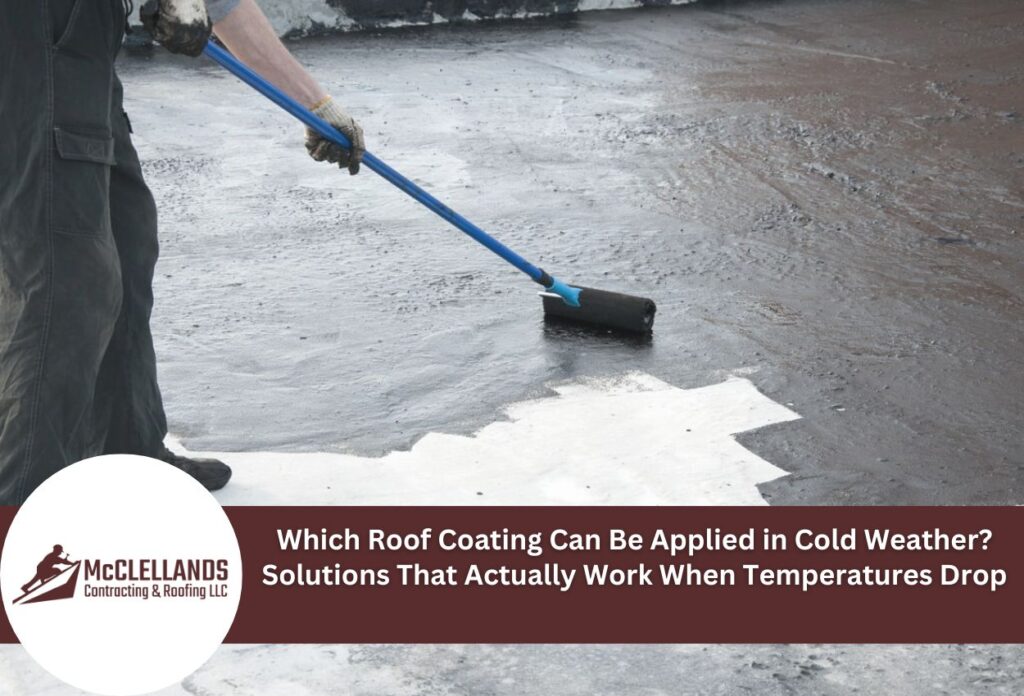
When winter temperatures arrive, most traditional roof coatings become unreliable and ineffective. Standard roofing materials often crack, peel, or fail to properly adhere when applied in cold conditions, leaving property owners with limited options for urgent roof repairs during the colder months.
Understanding what roof coating can be applied in cold weather is critical when facing unexpected roof damage or scheduling winter roof maintenance, as cold temperatures affect how coatings cure, bond, and perform long-term.
Traditional coatings struggle in cold weather because low temperatures slow chemical reactions needed for curing. Many products require minimum application temperatures between 50 and 70 degrees Fahrenheit to completely bond with the roof surface. When these requirements aren’t met, coatings may remain soft, fail to create waterproof seals, or develop poor adhesion that leads to premature failure.
Specialized winter roof coatings are designed to overcome these challenges. These advanced formulas cure effectively in low temperatures, providing reliable protection when standard options fail. These coatings offer property owners viable solutions for emergency repairs and planned maintenance projects that cannot wait for warmer weather.
Types of Roof Coatings Designed for Low Temperatures
Several specialized coating types are engineered specifically to be applied in winter. However, it is important to note that most roof coatings cannot be applied in low temperatures. Consulting with a roofing professional can ensure you choose the best product for your project and local weather conditions.
Acrylic coatings formulated for cold-weather use are one effective option for low-temperature applications. These specialized formulations can perform effectively in cooler temperatures, though optimal results occur above 50 degrees. Cold-weather acrylics maintain their flexibility and adhesion properties better than standard formulations, making them suitable for emergency repairs during mild winter conditions. However, these coatings still require careful surface preparation and may need extended curing times in colder temperatures.
Silicone-based coatings offer superior performance in freezing conditions, remaining flexible even when temperatures drop well below freezing. These coatings can sometimes be successfully installed in temperatures. Silicone coatings cure through moisture in the air rather than chemical reactions, which generally allows them to set properly even in cold, dry conditions. Their inherent flexibility prevents cracking and splitting that commonly affects other roof membrane systems in low temperatures.
These winter roof maintenance solutions require specific application techniques and surface conditions, regardless of the coating type selected for the project.
Application Techniques for Cold-Weather Roof Coating
A successful winter roof coating application requires modified techniques and specialized equipment to achieve seamless results in challenging temperature conditions. Surface preparation becomes even more critical when applying coatings in cold weather, as contaminants and moisture have a greater impact on adhesion and performance.
Preparing the roof surface begins with the complete removal of ice, snow, and frost from all coating areas. Even thin layers of ice can prevent complete adhesion and cause coating failure. Power washing may not be feasible in freezing conditions, requiring mechanical cleaning methods like scraping and wire brushing. All cleaning must be followed with thorough drying time, which extends significantly in cold temperatures due to reduced evaporation rates.
Additionally, safety considerations become even more important during winter roof coating application. Surfaces remain slippery longer in cold conditions, requiring enhanced fall protection systems and non-slip footwear, and workers need appropriate cold-weather gear that maintains dexterity while providing warmth. Wind chill factors can make actual working conditions significantly colder than air temperatures, affecting both worker safety and coating performance.
Equipment modifications are essential for successful cold-weather coating application. Spray equipment requires heated hoses and temperature-controlled storage to prevent material freezing. Rollers and brushes may need frequent cleaning as coatings thicken in cold temperatures. Material storage containers should be kept in heated areas and only brought to application areas immediately before use to maintain optimal viscosity for application.
Temperature Guidelines and Weather Conditions for Application
Successful cold-weather coating application depends on understanding specific temperature thresholds and environmental conditions that affect coating performance. Different coating types have minimum temperature requirements that must be met to ensure proper adhesion, curing, and long-term durability.
Measuring surface temperature helps determine if conditions are suitable for applying a roof coating. Infrared thermometers provide accurate readings of actual substrate temperatures, which often differ significantly from ambient air temperatures. Metal roofing surfaces can be several degrees colder than the surrounding air, while dark membrane surfaces may retain heat and read warmer. Professional contractors measure surface temperatures at multiple locations across the roof area, including taking readings in shaded areas where temperatures remain consistently lower throughout the day.
Silicone coatings usually maintain the lowest minimum application temperature, making them ideal for emergency repairs during harsh winter conditions. Elastomeric coatings applied in cold weather typically require higher surface temperatures, while modified acrylic options need minimum temperatures of 40 to 45 degrees for film formation and curing.
Humidity levels also significantly impact curing times for roof coatings. High humidity accelerates coating cure rates, while low humidity conditions may extend curing beyond normal timeframes. Relative humidity between 40% and 70% generally provides the best conditions for most roof coatings. Weather windows must account for sustained temperature ranges rather than brief warm periods, as coatings need consistent conditions throughout the entire curing process.
Roofing Material Compatibility in Cold Weather Coating Applications
Different roofing materials have varying responses to cold-weather coating applications and require specific preparation techniques and products for quality results. TPO membranes can be challenging to coat during winter due to their smooth, white surface that stays at cooler temperatures even on sunny days. Surface preparation, including primer application, is critical for a successful outcome.
EPDM rubber membranes respond differently to roof coatings applied in cold weather. The rubber surface maintains better coating compatibility in low temperatures compared to thermoplastic membranes, but weathered EPDM requires thorough cleaning to remove chalk and oxidation that accumulates over time. Cold temperatures make these contaminants more difficult to remove, often requiring specialized cleaning solvents that remain effective below freezing.
Modified bitumen systems generally offer the most forgiving surface for roof coatings being applied in low temperatures. The asphalt-based composition is compatible with most coatings, though surface preparation remains essential. Granulated surfaces require power washing or mechanical abrasion to ensure the coating fully adheres.
Other considerations for winter roof coating projects include extended primer cure times and modified application techniques. TPO membranes may require flame treatment or chemical etching in cold conditions, while EPDM surfaces benefit from solvent-based primers that still evaporate in low temperatures. Understanding the requirements of different membrane types ensures successful coating application regardless of the weather conditions.
Professional vs. DIY Cold Weather Roof Coating
Cold-weather roof coating applications come with significant safety hazards and technical complexities that make professional installation the recommended approach for most property owners. Working on roofs during winter conditions creates elevated risks due to icy surfaces, reduced visibility, and unpredictable weather changes that can trap workers in dangerous situations.
Professional contractors have the equipment necessary for safe winter roof coating application, including heated spray systems, temperature monitoring devices, and fall protection gear designed for cold weather. The technical expertise required to properly assess surface conditions, select appropriate products, and modify application techniques for low temperatures typically exceeds the capabilities of most property owners attempting DIY projects.
Surface preparation becomes exponentially more challenging in cold conditions, requiring professional-grade equipment to remove ice, frost, and contaminants that prevent the coating from adhering. Professionals also understand how to identify when roof systems can safely accept coatings versus when conditions make successful application impossible.
Emergency coating repairs may justify the risks of cold-weather application when immediate protection is needed to prevent interior damage. However, non-emergency projects should typically be delayed until temperatures consistently exceed 50 degrees Fahrenheit. A professional assessment can determine whether elastomeric coatings applied in cold weather will provide adequate protection or if temporary measures should be implemented until better conditions return. This evaluation requires understanding local weather patterns and the specific characteristics of different winter roof maintenance solutions.
Discover Cold Weather Roof Coating Options with McClellands Contracting and Roofing, LLC
When temperatures drop, choosing the right roof coating that can be applied in cold weather is crucial to protect your property. McClellands Contracting and Roofing, LLC specializes in applying elastomeric coatings that maintain their flexibility even in low temperatures, ensuring your roof withstands the winter without compromise. Whether you have a TPO, EPDM, or other roof membrane systems, our expert team understands the requirements needed for successful winter roof coating.
Don’t let the cold weather delay your roof repairs. Call us today at (412) 353-5660 to ensure your roof is prepared to handle the winter with the right coating. Trust McClellands Contracting and Roofing, LLC for professional application that guarantees durability and long-lasting protection.