

 Residential
 Commercial
 Interior
 Exteriors
 Service Areas
 Contact Us
What Is the Most Fire-Resistant Roofing Material for Homes?
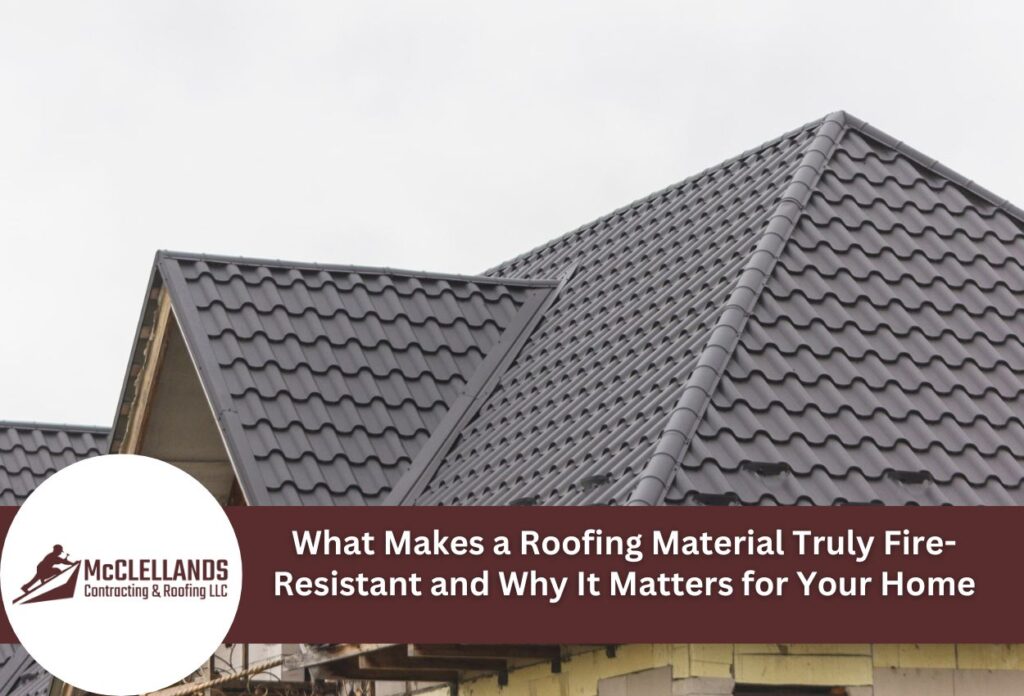

Fire-resistant roofing materials undergo rigorous testing to earn official ratings that determine their effectiveness against exposure to flames and heat absorption. The most fire-resistant roofing material options include metal roofs, concrete and clay tiles, and slate, all of which typically achieve Class A fire ratings, the highest level of fire protection available.
Class A fire-rated roofing options have superior resistance to external fire sources and prevent flames from burning through to the underlying structure. These materials can withstand flame exposure for extended periods without igniting or allowing fire to spread across the roof’s surface. Non-combustible roofing options like metal and tile provide the strongest defense against wildfires and airborne embers.
Metal roofs consistently outperform traditional asphalt shingles, while tile roofs for fire protection offer excellent thermal barriers that prevent heat transfer to structural components. Understanding these fire resistance ratings is important for homeowners in fire-prone areas where building codes often require enhanced protection standards. The classification system evaluates how materials perform under standardized fire tests, measuring factors like flame spread, burning resistance, and structural integrity when exposed to fire.
Fire Protection Performance from a Metal Roofing System
Metal roofing materials deliver exceptional fire resistance through their inherently non-combustible roof properties. Steel, aluminum, and copper roofs achieve Class A fire-rated roofing options status by reflecting heat away from the home’s structure rather than absorbing it. These fire-resistant roofing materials cannot ignite when exposed to flames or flying embers, making metal roofs the top choice for maximum protection against fires.
The non-combustible nature of metal roofing creates an impenetrable barrier that prevents fire from reaching wooden decking and structural components below. Unlike organic materials that can fuel fires, metal surfaces actively deflect radiant heat and maintain structural integrity even under extreme temperatures.
Beyond fire protection, metal roofing systems offer substantial long-term value through their enhanced durability and energy-efficient benefits. These roofs typically last 40 to 70 years with minimal maintenance requirements, resist severe weather damage, and reduce cooling costs through their reflective properties. The combination of superior fire resistance and comprehensive performance advantages makes the metal roofing system a strategic investment for homeowners seeking reliable protection and lasting value.
Clay and Concrete Tiles Offer Natural Fire Resistance with Lasting Beauty
Clay and concrete tiles achieve exceptional fire resistance through high-temperature manufacturing processes that create non-combustible options. During production, clay tiles undergo firing at temperatures exceeding 2,000 degrees Fahrenheit, while concrete tiles cure under controlled conditions that eliminate organic materials. These fire-resistant roofing materials earn Class A fire-rated roofing options status by maintaining structural integrity when exposed to extreme heat and flames.
The dense composition of these materials prevents flames from getting in and creates effective thermal barriers that protect underlying roof structures. Clay tiles have superior heat resistance due to their ceramic properties, while concrete tiles absorb and disperse thermal energy. Both materials also resist ignition from airborne embers and prevent fire from spreading across roof surfaces.
Tile roofs come in various looks, including traditional barrel tiles, flat Mediterranean styles, and modern interlocking designs that combine curb appeal with maximum safety. These versatile options allow homeowners to achieve their desired architectural styles without compromising protection.
Slate Roofing Provides Maximum Fire Resistance
Natural slate is the pinnacle of fire-resistant roofing due to its formation as a metamorphic rock through intense geological heat and pressure. This natural stone achieves the highest Class A fire-rated option by having complete resistance to ignition and spreading flames. Slate’s mineral composition makes it one of the most effective non-combustible roofing options available to homeowners seeking ultimate fire protection.
The dense stone structure of slate withstands temperatures exceeding 3,000 degrees Fahrenheit without cracking, melting, or releasing toxic fumes. When exposed to flames or radiant heat, slate acts as a natural thermal barrier that prevents fire from reaching wooden decking and structural components. This exceptional heat resistance stems from slate’s original formation deep within the earth under extreme temperature conditions.
Beyond superior fire resistance, slate roofing delivers unmatched longevity with properly installed systems lasting 75 to 100 years or more. The natural stone resists weathering from hail, wind, and temperature fluctuations while maintaining its protective properties throughout decades of service. This combination of fire protection and exceptional durability makes slate roofing the premium choice for homeowners requiring the highest level of safety and long-term performance from their roofing investment.
Composite and Synthetic Options That Meet Fire Resistance Standards
Modern synthetic roofing materials have revolutionized fire protection by engineering composite products that achieve Class A fire-rated roofing options while replicating the natural beauty of traditional materials. These innovative fire-resistant roofing materials combine advanced polymer technology with mineral additives to create non-combustible roofing options that resist ignition and flame spread. Synthetic slate, composite wood shakes, and engineered tile products undergo specialized manufacturing processes that eliminate organic matter.
Technological advances in composite materials have produced roofing systems that deliver multiple performance benefits beyond fire resistance. These lightweight alternatives reduce weight on the structure while maintaining the visual appeal of heavy materials like natural slate or cedar shakes. The enhanced impact resistance of synthetic materials provides superior protection against hail damage and severe weather that can compromise the structural integrity of the roof.
Composite roofing products offer consistent quality control that eliminates the natural variations found in organic materials. The engineered construction ensures uniform fire resistance across every piece while providing enhanced installation efficiency through standardized dimensions and reduced weight requirements. This combination of proven fire protection and practical installation advantages makes synthetic roofing materials an increasingly popular choice for homeowners seeking reliable performance.
Factors Beyond Material Choice That Impact Your Roof’s Fire Performance
While selecting the most fire-resistant roofing material is the base level of protection, proper installation techniques and supporting components significantly influence the overall resistance of a roof. Professional installation of fire-resistant roofing materials requires specialized knowledge of manufacturer specifications and building code requirements to maintain Class A fire-rated roofing options. Incorrect fastening patterns, inadequate sealing, or improper flashing installation can compromise even the best non-combustible roofing options.
Underlayment selection plays an important role in creating fire barriers beneath roofs for fire resistance. Fire-rated underlayments provide additional thermal protection and prevent flames from getting through small gaps or damaged areas in the primary roofing material. Proper ventilation systems also contribute to fire safety by reducing heat buildup in attic spaces that could accelerate the spread of a fire or create dangerous conditions during wildfires.
Regular maintenance and debris removal are essential for preserving fire-resistant properties over time. Accumulated leaves, branches, and organic matter can create sources of ignition that negate the benefits of high-performance roofing materials. Routine inspections and quick repairs ensure that protective barriers remain intact and effective throughout the roof’s service life.
Making the Right Fire-Resistant Roofing Decision for Your Pittsburgh Home
The area’s climate creates unique challenges for fire-resistant roofing materials, including freeze-thaw cycles that can affect material expansion and contraction. Local building codes may specify minimum fire resistance requirements, particularly for homes in certain zoning areas or neighborhoods with elevated risk factors.
Pittsburgh’s diverse architectural styles, from Victorian row houses to modern suburban constructions, influence which Class A fire-rated roofing options provide the best look and structural compatibility. Historical neighborhoods may have design guidelines that limit material choices, requiring homeowners to balance fire protection with preservation requirements. Metal roofs work well on contemporary homes, while tile roofs complement classic architectural styles common throughout the region.
Working with experienced roofing professionals ensures a proper evaluation of structural requirements and installation techniques specific to local conditions. Qualified contractors understand how Pittsburgh’s weather patterns affect different non-combustible roofing options and can recommend materials that provide the best possible fire protection while addressing concerns like snow capacity, wind resistance, and thermal performance during temperature fluctuations.
Discover the Best Fire-Resistant Roofing Options for Your Home with McClellands Contracting and Roofing, LLC
Choosing the right roofing material is important for ensuring the safety of your home against fire hazards. At McClellands Contracting and Roofing, LLC, we specialize in providing top-tier fire-resistant roofing solutions that meet Class A fire rating standards, ensuring maximum protection for your residence. Whether you’re considering metal, slate, clay, or concrete options, our expert team is here to guide you through the best choices tailored to the Pittsburgh climate and building codes.
Call us today at (412) 353-5660 to discuss your roofing needs and schedule a consultation. Ensure your home is protected with the best fire-resistant materials on the market.