

 Residential
 Commercial
 Interior
 Exteriors
 Service Areas
 Contact Us
A Complete Guide on Metal Roofing Systems for Pittsburgh Homeowners

Pittsburgh’s weather puts roofs under a lot of pressure. The region averages 44 inches of snowfall each year, temperatures that swing hard between seasons, humid summers, and thunderstorms that regularly produce hail. Every roofing material gets tested by those conditions, and how well a material holds up over decades of that type of exposure matters.
This guide covers everything a Pittsburgh homeowner needs to evaluate metal roofs. You’ll find breakdowns of common material types like steel and aluminum, expected lifespan ranges, cost comparisons to asphalt shingle roofs, installation details specific to older Pittsburgh homes, and a straightforward look at whether a metal roof fits your situation.
What Is a Metal Roofing System and How Does It Work on a Residential Home?
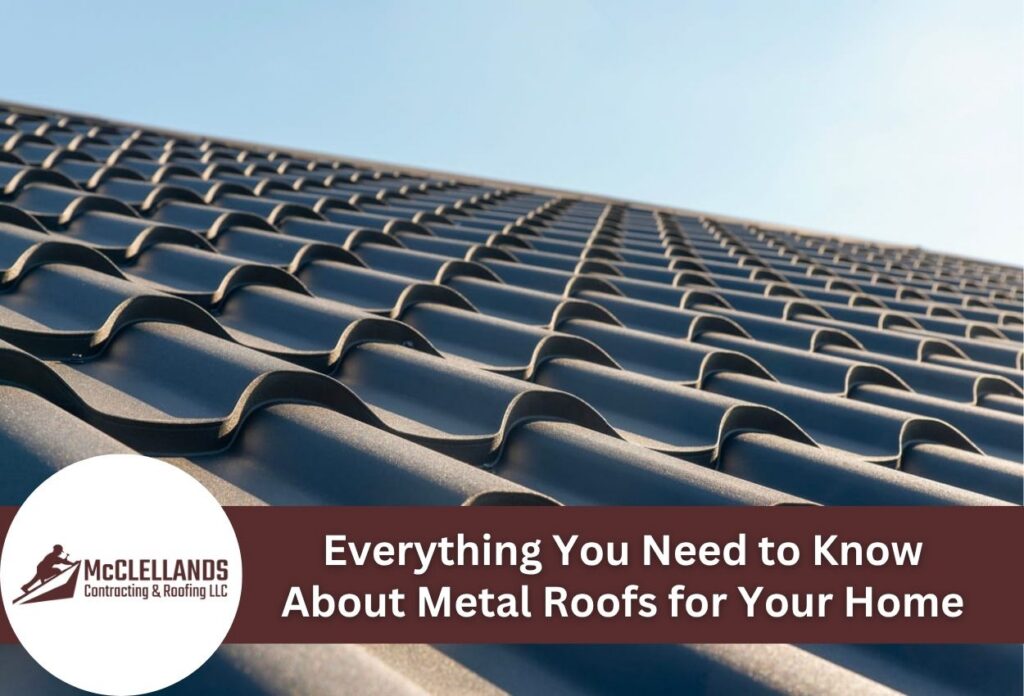
A metal roofing system is not a single product. There are many styles to choose from, including seam panels, corrugated and ribbed panels, and metal shingles, each available in materials such as steel, aluminum, copper, and zinc. That range of options means homeowners are making a series of choices, not just one, before a single material goes on the roof.
Every metal roofing system starts at the roof deck, the layer of plywood or OSB boards nailed to the rafters. On top of the roof deck sits an underlayment, typically a self-adhering or synthetic sheet that acts as a secondary barrier against water. The metal panels or shingles are then fastened on top of that underlayment. How they’re fastened matters: Concealed fastener systems, like standing seam, hide the screws or clips beneath the metal, reducing potential leak points. Exposed fastener systems, like corrugated panels, use screws driven directly through the metal face, which costs less upfront but requires more maintenance attention over time.
Metal also expands and contracts as temperatures change. A properly installed metal roof accounts for thermal movement by using clips or slotted fasteners that allow panels to shift slightly without buckling or cracking, a detail that separates a well-installed system from a problematic one. Water sheds quickly off the smooth surface, and snow slides off steep roof pitches rather than building up into damaging loads.
Pittsburgh’s older homes, many built from the late 1800s through the early 1900s with steep roof pitches, dormers, and complex rooflines, make careful system selection and precise installation detailing especially important. Flashing around dormers, valleys, and chimneys must be fitted correctly or water finds its way in. The type of metal system and base material chosen directly affects cost, lifespan, and how well the roof performs over decades of Pittsburgh weather.
What Are the Different Types of Metal Roofs for Residential Homes?
Standing seam, corrugated panels, and metal shingles are the three primary metal roofing systems used on Pittsburgh residential homes, and each one serves a different budget, roof style, and performance goal.
Standing seam systems use concealed clips and raised seams to lock panels together without exposed fasteners, making them the most waterproof option available. Corrugated and ribbed panels are the most affordable systems, but they use exposed fasteners that require periodic inspection. Metal shingles mimic the appearance of traditional roofing materials, including asphalt, slate, and wood shake, while delivering the lifespan and durability of metal underneath.
Steel is the most widely used base material for all three systems because of its cost and availability. Galvalume steel and galvanized steel both offer solid corrosion resistance at a reasonable cost. Aluminum costs more than steel but resists rust better in high-moisture environments, which is relevant for Pittsburgh’s humid summers and heavy precipitation. Copper and zinc are premium, more expensive options that develop a natural patina over time, with lifespans exceeding 100 years in some cases.
| System Type | Common Materials | Typical Cost Range Per Sq. Ft. Installed | Best Suited For | Key Advantage | Key Limitation |
|---|---|---|---|---|---|
| Standing Seam | Galvalume steel, aluminum, zinc, copper | $10 to $18 | Steep-slope roofs; high-performance installs | No exposed fasteners; highly waterproof | Higher upfront cost; requires skilled installers |
| Corrugated / Ribbed Panels | Galvanized steel, Galvalume steel, aluminum | $7 to $12 | Budget-conscious projects; simpler rooflines | Lowest cost metal option | Exposed fasteners require periodic maintenance |
| Metal Shingles | Steel, aluminum, stone-coated steel, copper | $9 to $15 | Homes where traditional curb appeal matters | Mimics asphalt, slate, or wood shake appearance | More flashing points |
For most Pittsburgh homeowners, standing seam and metal shingles are the two systems worth the closest look. Standing seam provides maximum weather performance, while metal shingles provide curb appeal. Steel, particularly Galvalume-coated steel, covers the largest share of residential metal roof installations because it balances cost, availability, and corrosion resistance better than any other single material.
How Long Does a Metal Roof Last on a House Compared to an Asphalt Shingle Roof?
Metal roofing systems typically last 40 to 70 years depending on material and system type, while standard 3-tab asphalt shingles average just 15 to 20 years and architectural shingles 25 to 30 years. This means that over 60 years, you might replace a standard asphalt roof three or four times before a standing seam steel roof needs its first replacement.
| Material / System | Expected Lifespan | Typical Warranty Range | Relative Maintenance Need |
|---|---|---|---|
| Standing Seam Steel | 40 to 70 years | 30 to 50-year manufacturer warranty; lifetime workmanship warranty varies by installer | Low; no exposed fasteners to inspect |
| Metal Shingles | 40 to 60 years | 30 to 50-year manufacturer warranty | Low to moderate; more seams and flashing points than standing seam |
| Architectural Asphalt Shingles | 25 to 30 years | 25 to 30-year limited warranty | Moderate; granule loss, moss growth, and cracking increase over time |
| Standard 3-Tab Asphalt Shingles | 15 to 20 years | 20 to 25-year limited warranty | High; most vulnerable to weather damage and aging |
Pittsburgh’s climate makes that lifespan gap even more meaningful. The region averages 44 inches of snowfall each year, and repeated temperature swings drive repeated expansion and contraction across roofing materials all winter long. Asphalt shingles crack, curl, and lose granules faster under that kind of pressure. Ice dam formation, a common problem on Pittsburgh homes with complex rooflines, dormers, and valleys, pulls at shingle edges and pushes moisture under tabs. Metal roofs shed snow faster on steeper pitches and handle temperature changes without the same surface degradation.
What Are the Pros and Cons of Metal Roofs for Homeowners?
Metal roofs are a strong performer in Pittsburgh’s climate, but they aren’t the right fit for every home or every budget. Understanding both sides helps homeowners make a confident decision for their home.
Pros of Metal Roofs
- Exceptional lifespan: Metal roofing systems last 40 to 70 years on average, two to four times longer than standard asphalt shingles. That difference means fewer replacements and less disruption over the lifespan of a home.
- Low maintenance requirements: Unlike asphalt shingle roofs, which lose granules and develop cracks over time, metal roofs need only periodic inspections and occasional debris removal to stay in good shape for decades.
- Superior snow shedding: Pittsburgh averages 44 inches of snowfall each year. On steep-pitch roofs common across the city, metal panels shed snow quickly rather than letting it pile up into damaging ice dam conditions.
- Wind and hail resistance: Most residential metal roofs carry a Class 4 impact resistance rating and are engineered to hold up under the strong thunderstorms and hail the Pittsburgh region regularly sees.
- Energy efficiency through reflective coatings: Metal roofing systems with factory-applied cool roof coatings reflect solar heat rather than absorbing it, which can reduce summer cooling costs compared to standard dark asphalt shingles.
- Increased home resale value: Homes with metal roofs often attract buyers who recognize the long remaining service life. A roof with 40 or more years of life left is a measurable selling point.
- Fire resistance: Metal roofs carry a Class A fire resistance rating, the highest available, which can matter for homeowners insurance costs and peace of mind.
Cons of Metal Roofs
- Higher upfront cost: Metal roofs installed on a Pittsburgh home typically run between $7 and $24 per square foot, depending on the system and material type, which is a steeper upfront cost than most asphalt shingle options.
- Rain and hail noise: Metal can amplify sound during heavy rainfall or hailstorms. Adding a quality underlayment layer during installation reduces that noise considerably and is a standard step on well-executed installs.
- Thermal expansion and contraction: Pittsburgh’s wide seasonal temperature swings cause metal panels to expand and contract year-round. Systems must use clips or slotted fasteners designed for that movement, as improper fastening leads to buckling or loose panels over time.
- Complex installation on older homes: Many Pittsburgh homes built from the late 1800s through the early 1900s have dormers, steep roof pitches, and intricate rooflines. Each gap and valley requires precise flashing work, which adds installation time and the importance of a skilled crew.
- Limited qualified installers: Not every roofing contractor in the Pittsburgh market has hands-on experience with installing standing seam or premium metal shingle systems. Choosing an inexperienced installer for a complex system is one of the most common sources of callbacks and leaks.
The pros and cons listed here reflect the installation price, but the full picture requires looking at total cost of ownership over 40 to 70 years, not just what appears on the initial quote.
Is a Metal Roof Worth It Compared to an Asphalt Shingle Roof for Pittsburgh Homes?
Over 50 years, a homeowner who installs asphalt shingles will likely pay for two to three full replacements, while a homeowner who installs a metal roof typically only pays once. That difference reshapes the entire cost comparison. Asphalt shingles install for $4 to $8 per square foot, but most last only 15 to 25 years. Metal roofs cost more on day one, but a system that lasts 40 to 70 years eliminates the need for one or two future replacements entirely.
| Category | Asphalt Shingle Roofs | Metal Roofs |
|---|---|---|
| Upfront Cost (installed, per sq ft) | $4 to $8 | $7 to $24+ |
| Expected Lifespan | 15 to 25 years | 40 to 70 years |
| Replacements Over 50 Years | Two to three full replacements | Replacement is not likely to be needed |
| Estimated 50-Year Total Cost (2,000 sq ft roof, rough range) | $28,000 to $64,000+ (before considering inflation) | $14,000 to $48,000 (one-time installation cost) |
| Maintenance Costs | Moderate; granule loss, cracking, periodic repairs | Low; inspections and debris removal only |
| Insurance Potential | Standard rates | Possible savings with Class 4 and Class A rated systems |
| Energy Efficiency | Dark shingles absorb heat; limited heat reflectance | Reflective coatings reduce summer cooling costs |
| Snow and Ice Performance | Snow accumulates; ice dam risk higher | Snow sheds quickly; lower ice dam risk on roofs with steep pitches |
From a resale standpoint, metal roofs consistently rank as a high-value exterior upgrade. In Pittsburgh’s older housing market, where buyers are alert to delayed maintenance and future capital costs, a roof with 40 or more years of service life remaining is a measurable selling point.
Metal roofs make the most financial sense for homeowners planning to stay long-term, those facing a second or third asphalt replacement on an older home, or anyone who wants to remove roofing from their maintenance concerns for decades. It is a harder case to make for homeowners who expect to sell within 5 to 10 years or who cannot afford the higher upfront cost. McClellands Contracting and Roofing, LLC can help you run the numbers against your home’s specific situation before committing to either direction.
How Much Do Metal Roofs Cost Per Square Foot Installed in Pittsburgh?
Installed metal roofs in Pittsburgh typically run $7 to $24 per square foot depending on the system type, material, and project complexity. Homeowners who compare the cost of materials alone, rather than fully installed costs, almost always underestimate what their project will actually cost.
| System / Material Type | Installed Cost Range (per sq ft) | Typical Total for 1,500 sq ft Roof | Typical Total for 2,500 sq ft Roof | Notes on Cost Drivers |
|---|---|---|---|---|
| Corrugated / Ribbed Steel Panels | $7 to $12 per sq ft | $10,500 to $18,000 | $17,500 to $30,000 | Exposed fasteners; lower labor cost but more maintenance points over time |
| Metal Shingles | $9 to $15 per sq ft | $13,500 to $22,500 | $22,500 to $37,500 | More flashing and seam detail on complex Pittsburgh rooflines adds labor hours |
| Standing Seam Steel | $10 to $18 per sq ft | $15,000 to $27,000 | $25,000 to $45,000 | Hidden fastener system; steep roof pitches and dormers push costs |
| Aluminum | $12 to $20 per sq ft | $18,000 to $30,000 | $30,000 to $50,000 | Lighter weight but higher material cost than steel |
| Copper or Zinc | $18 to $24+ per sq ft | $27,000 to $36,000+ | $45,000 to $60,000+ | Specialty material; used on high-end or historical Pittsburgh homes |
Pittsburgh’s older homes and complex rooflines, consisting of steep roof pitches, dormers, multiple valleys, chimneys, and aging roof decks, consistently push project costs toward the higher end of these ranges. Roof deck replacement on a home from the early 1900s, ice and water shield installation at all eaves and valleys, and full flashing replacement around chimneys and skylights each add expenses before a single panel goes up. Homeowners should budget for roof deck repairs and flashing replacement as likely additions on any pre-1950s Pittsburgh home.
Metal roofs carry a higher upfront cost than asphalt shingle roofs, which typically install for $4 to $8 per square foot. However, a metal roof that lasts 40 to 70 years, covering a period when an asphalt roof might be replaced two or three times, changes the total cost picture considerably. Lower maintenance costs and potential homeowners insurance savings on Class 4 impact-resistant and Class A fire-rated systems can also offset part of that initial premium over time. McClellands Contracting and Roofing, LLC can assess your specific roof conditions and provide an accurate installed cost estimate based on your home’s actual needs.
How Do Metal Roofs Perform in Pittsburgh’s Snow, Ice, and Storms?
Metal roofs handle Pittsburgh’s climate conditions better than most other roof materials available today. Pittsburgh receives an average of 44 inches of snowfall annually, around 35 to 40 inches of total precipitation spread across all seasons, repeated temperature swings that stress roofing materials from late fall through early spring, and summer thunderstorms that bring hail and high winds. Those conditions combined make material performance a serious decision factor.
Snow, Ice, and Temperature Movement
Metal’s smooth surface sheds snow faster than asphalt shingles, which have a granulated texture that holds snow longer and adds stress to your roof. Faster shedding reduces the weight sitting on rafters and roof decking during heavy snowfall. Ice dams form when heat escaping from the attic melts snow on the roof, and that water refreezes at the cold eave edge. Metal roofs alone do not eliminate ice dam risk, but pairing metal’s surface characteristics with a proper ice and water shield at all eaves and valleys addresses the problem at the most vulnerable points. Skipping ice and water protection under a metal system on a Pittsburgh home is one of the most common installation shortcuts that leads to water leaks in winter.
Pittsburgh’s seasonal temperatures range from sub-zero winter lows to summer highs in the upper 70s to mid-80s. This variation causes metal panels to expand and contract throughout the year. Well-engineered systems use floating clips or slotted fasteners specifically designed to allow that movement. Improper fastening locks panels in place, which leads to buckling, fastener backout, or panel noise over time.
Hail and Wind Resistance
Class 4 impact resistance is the highest rating available for hail performance, and many steel and aluminum metal roofing systems qualify at that level. Standing seam systems use concealed fasteners, meaning no exposed screw heads face the weather. That design also provides superior wind uplift resistance compared to exposed fastener panels, which matters during Pittsburgh’s stronger thunderstorms. Homeowners who experience sudden storm damage can also explore emergency roof storm damage services to address urgent repairs before more water leaks occur.
What Should Pittsburgh Homeowners Know About Metal Roof Installation?
A residential metal roof installation on a typical Pittsburgh home runs 3 to 7 days of active work, but the full process from first call to finished roof commonly spans 4 to 8 weeks when material lead times and permits are included. Understanding that timeline upfront prevents scheduling frustration and helps homeowners plan around Pittsburgh’s limited winter installation window.
| Stage | Typical Duration |
|---|---|
| Initial consultation and estimate | 1 to 5 days after contact |
| Material lead time (panels, underlayment, flashing) | 1 to 4 weeks, depending on system and supplier |
| Permit (if required for roof deck replacement or structural work) | 1 to 3 weeks through local Pittsburgh or Allegheny County authorities |
| Active installation on an average Pittsburgh home | 3 to 7 days |
| Final inspection and cleanup | 1 to 2 days |
The installation sequence follows a consistent order: tear-off and disposal of the existing roof, inspection and repair or replacement of roof decking, installation of underlayment and ice and water shields at all eaves and valleys, panel or shingle installation, and completion of all flashing details. On Pittsburgh’s older homes, roof decking inspection is not optional. Worn or rotted boards need replacement before any new material goes down.
Flashing details at chimneys, skylights, dormers, and wall intersections are among the most common points of failure on older Pittsburgh homes. Those details take time to do correctly, and rushing them leads to leaks. Fasteners must also be selected and placed to allow for thermal expansion. As temperatures in Pittsburgh swing from winter lows to summer highs, rigidly locking panels results in buckling or noise.
Pittsburgh’s winters, which include freezing temperatures, heavy snowfall, and frequent wet periods from November through March, make spring through fall the best scheduling window for metal roof installation. Homeowners who wait until a roof is failing in December face a much smaller set of options and higher scheduling pressure. Planning a replacement during the warmer months gives time for proper material ordering, permit requirements, and residential roof installation without weather interference. McClellands Contracting and Roofing, LLC can walk through your home’s specific conditions and help you build a realistic project timeline before work begins.
Is a Metal Roof a Good Fit for My Home?
Metal roofs are an excellent option for many Pittsburgh homeowners, but they aren’t the right choice for every situation. Use this list as a self-assessment tool before starting any conversation with a contractor.
A metal roof may be right for you if:
- You plan to stay in your home 10 or more years. Metal roofs last 40 to 70 years. Homeowners who stay long enough to avoid a second or third replacement cycle are the ones who benefit most from the higher upfront cost.
- Your current roof is approaching or past its lifespan. Asphalt shingles last 15 to 25 years. If your roof is already in that range, upgrading to a longer-lasting system makes practical sense.
- Your home’s roof pitch and structure are compatible with metal installation. Most metal roofing systems perform best at a 4:12 roof pitch or steeper. A contractor’s assessment will confirm whether your home’s structure is ready.
- You want to reduce future maintenance and replacement costs. Metal roofs require far less routine maintenance than asphalt roofs. They mostly need inspections and debris removal, with no granule loss or cracking to track over time.
- Your home faces heavy snow, ice, or storm exposure. Pittsburgh receives an average of 44 inches of snow annually. Metal’s smooth surface sheds snow faster and performs well against hail and high winds.
- You want to improve energy efficiency or home resale value. Reflective coatings reduce summer cooling costs, and a roof with decades of service life remaining is a measurable selling point in Pittsburgh’s housing market.
A metal roof may not be the best fit if:
- Your budget requires the lowest possible upfront cost. Metal roofs are installed for $7 to $24 per square foot, which is significantly more than asphalt shingle roofs at $4 to $8 per square foot. If upfront costs are a binding constraint, asphalt may be the only realistic option right now.
- You plan to sell within a few years. The financial advantage of a metal roof builds over time. A short window of ownership reduces the likelihood of recovering the cost difference at resale.
- Your roof has structural issues that must be addressed first. Damaged roof decking, failing rafters, or other structural problems need to be repaired before any new roofing system goes down, metal or otherwise.
- Your HOA or municipality restricts metal roof materials or appearance. Some Homeowners Associations and local ordinances limit acceptable roofing materials. Confirm those rules before scheduling anything.
This framework is a starting point, not a final answer. A qualified local contractor who can assess your home’s specific structure, existing roofline, and condition will always be the most reliable source before any final decision is made.
What Questions Should You Ask a Metal Roof Contractor Before Hiring?
Metal roof installation requires more specialized knowledge than standard asphalt work, and not every contractor who installs asphalt shingle roofs has hands-on experience with standing seam panels, floating clip systems, or the flashing details commonly found on Pittsburgh’s older homes. Asking the right questions upfront is the fastest way to confirm that your installer is qualified.
- Are you licensed and insured in Pennsylvania? Any contractor working on your home should carry both general liability insurance and workers’ compensation coverage. Ask to see current certificates, not just verbal confirmation.
- How many metal roof installations have you completed? Ask for a specific number, and ask how many of those were standing seam versus exposed fastener systems. Volume and system variety matter more than years in business alone.
- Can you provide local references for metal roofs specifically? General roofing references are not enough. Ask for three or more references in the Pittsburgh area who had metal roofing systems installed.
- What metal roofing systems and brands do you install? Contractors limited to one product line may not be recommending the best fit for your home. Instead, they may be recommending what they stock.
- What underlayment and ice and water shield do you use, and where? All eaves and valleys require ice and water protection in Pittsburgh’s climate.
- How do you handle thermal expansion in your fastening system? The correct answer involves floating clips or slotted fasteners, and any contractor unfamiliar with this detail should not be installing standing seam panels on your home.
- What does your warranty cover? Material warranties and workmanship warranties are separate. Ask for both in writing, including exact terms and exclusions.
- How do you handle flashing at chimneys, dormers, and complex rooflines? On Pittsburgh homes built in the late 1800s or early 1900s, flashing details are where most leaks originate. A qualified contractor should have a specific process ready to describe.
Red flags to watch for: unusually low bids that skip underlayment or flashing line items, contractors who cannot provide local metal roof installation references or who pressure you to sign a contract immediately, and warranty language that is vague about what labor coverage actually includes. A reputable local contractor will welcome every question on this list and treat the initial consultation as an educational conversation, not a closing opportunity. McClellands Contracting and Roofing, LLC approaches every estimate that way, answering questions thoroughly before any work is discussed.
Can Metal Roofs Save You Money on Insurance or Energy Bills?
Some homeowners insurance carriers offer premium discounts for metal roofs because of their Class A fire resistance rating and Class 4 impact resistance rating, two performance benchmarks that reduce the insurer’s risk exposure. The discount amount varies by carrier and policy, so the right move is to contact your insurance provider directly before installation begins to ask what discounts apply in Pennsylvania for qualifying metal roofing systems.
As for energy efficiency, metal roofs with reflective coatings or cool-roof finishes reduce solar heat gain in summer, which can lower cooling costs during Pittsburgh’s warmer months. That said, Pittsburgh’s climate means heating costs are the bigger energy concern for most homeowners, as the region’s cold winters put far more pressure on a home’s heating system than summer cooling. A well-insulated and properly ventilated roofing system is the primary driver of year-round energy performance, regardless of what material sits on top. Metal roofing systems can support that goal, but insulation and residential roof ventilation do the heavy lifting.
Warranties & Financing Worth Asking About
Many metal roof manufacturers offer extended product warranties of 30 to 50 years. That longer coverage window reduces the likelihood of paying for another full replacement during your ownership of the home. Contractors who offer financing options help you spread the upfront cost over time, making the initial investment more manageable. Ask about both product warranties and financing terms during any consultation before signing anything.
How to Get Started With a Metal Roof in Pittsburgh
A metal roof is only as good as the installation behind it, and Pittsburgh’s older homes, steep roof pitches, and harsh winters make the contractor you choose matter more than almost any other decision in this process. McClellands Contracting and Roofing, LLC works with Pittsburgh homeowners on exactly these projects: complex rooflines, aging homes, and climate conditions that make it important for installation to be done right the first time.
The next step is straightforward. An inspection and estimate gives you a clear picture of your home’s current condition, what a metal roofing system would cost, and which system fits your home, with no pressure to commit.
Not ready to schedule? Learn more about McClellands Contracting and Roofing, LLC.