

 Residential
 Commercial
 Interior
 Exteriors
 Service Areas
 Contact Us
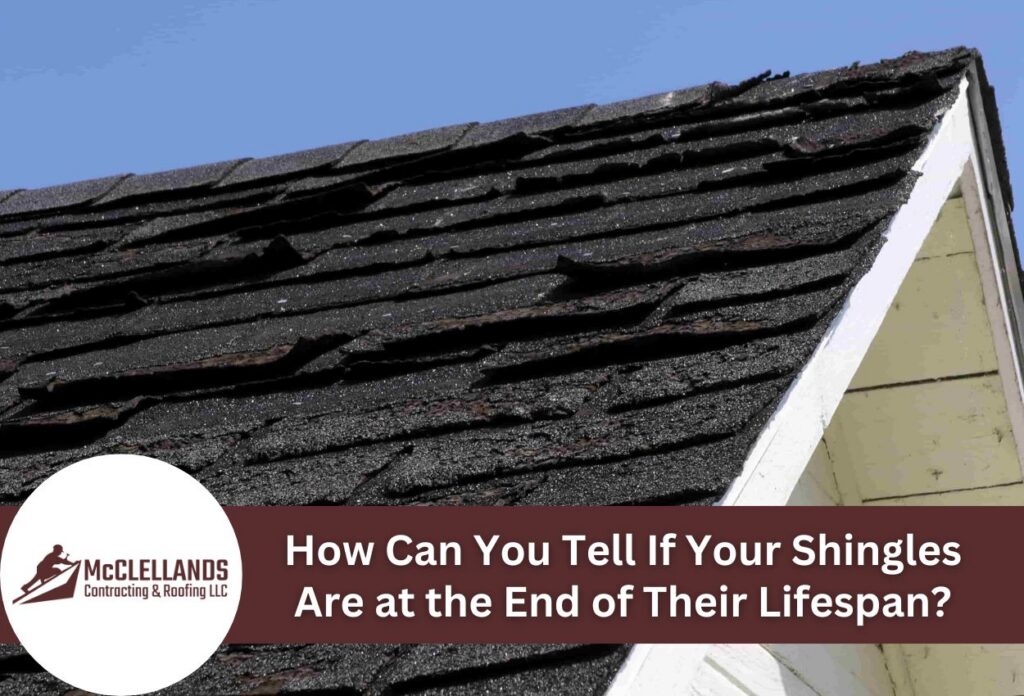

Pittsburgh’s climate cuts standard 3-tab shingle lifespan to roughly 15 to 20 years and architectural shingles to 20 to 30 years, well short of what many manufacturers rate them for in milder conditions. With 35 to 45 inches of annual precipitation, repeated temperature changes that crack and loosen shingles, and summer humidity high enough to feed algae growth, Pittsburgh roofs age faster than most homeowners expect.
The good news is that shingles give clear warning signs before a leak ever starts. Six indicators, curling edges, cracking or brittle tabs, granule loss, blistering, missing tabs, and dark streaking are visible from the ground or a safe vantage point. You do not need to climb on the roof to spot most of them.
This article walks through each warning sign, helps you benchmark your shingle age against Pittsburgh norms, and gives you a clear way to decide whether a professional inspection or an immediate replacement is the right next step.
*Please note, price ranges listed in this article may not reflect the final cost of your project. Prices are subject to change based on various factors such as local labor rates, material quality, and more. All costs established in this article are rough estimates based on average industry rates.
How Long Do Asphalt Shingles Last Before Replacement, and Where Does Your Roof Stand?
In Pittsburgh, standard 3-tab shingles realistically last 15 to 20 years, and architectural shingles 20 to 30 years, both shorter than manufacturer ratings because of local temperature changes, moisture, and UV exposure.
| Shingle Type | Manufacturer-Rated Lifespan | Realistic Pittsburgh-Area Lifespan | Primary Accelerating Factor | Approximate Warranty Period |
|---|---|---|---|---|
| 3-tab asphalt | 20 to 25 years | 15 to 20 years | Temperature changes, granule loss | 20 to 25 years |
| Architectural/dimensional asphalt | 30 to 50 years | 20 to 30 years | Humidity, algae, UV exposure | 30 to 50 years |
| Impact-resistant asphalt | 30 to 50 years | 25 to 35 years | Wind-driven debris, ice dams | 30 to 50 years |
| Metal roofing | 40 to 70 years | 35 to 60 years | Flashing failures, fastener corrosion | 30 to 50 years |
| Slate | 75 to 150 years | 60 to 125 years | Fastener failure, aged flashing | Varies by installer |
Pittsburgh’s older housing stock, much of it built before 1950, means many homes have already had one or two shingle layers applied over the original deck. A second layer traps heat and reduces the remaining life of the underlying layer by an estimated 20% to 30%, pushing actual replacement timelines earlier than the table above suggests. If your home is 15 or more years past its last confirmed roof installation, it should be evaluated against the visual warning signs covered in the next section right away. Check past contractor invoices or your home’s permit history through Allegheny County to pin down your installation date before assuming you have years left.
What Do Worn-Out Shingles Look Like? The Physical Warning Signs You Can Identify Yourself
Six specific signs tell you whether shingles are approaching or past their service life, and most are visible from the ground without setting foot on the roof.
- Curling (cupped tabs or clawed edges): Cupping happens when shingle tabs curl upward at the edges; clawing happens when the middle lifts while edges stay flat. Both result from moisture imbalance between the top and bottom layers of the shingle mat and typically appear after 15 or more years in Pittsburgh’s wet climate.
- Cracking (thermal split tabs): Repeated temperature changes cause shingle tabs to dry out and split across the surface. Cracking becomes common after 15+ years and leaves the underlying mat open to leaks.
- Granule loss (bald patches or gutter buildup): Granules washing into gutters or leaving bare spots on shingle surfaces signal that UV protection is gone. Losing 20% to 30% of surface granules is a widely cited industry threshold for accelerated aging. At that point, the shingle mat breaks down much faster.
- Blistering (ruptured bubbles on the surface): Trapped moisture or volatile organic compounds (VOCs) released during manufacturing form bubbles that eventually rupture and expose the raw mat beneath. An exposed mat has no weather resistance and fails quickly.
- Missing tabs (wind uplift failures): Pittsburgh regularly sees storm gusts exceeding 50 to 60 mph, which is enough force to tear tabs from shingles that have lost adhesion. Any missing tabs after a storm need fast attention to prevent deck damage.
- Dark streaking (algae growth): Black or dark gray streaks are caused by Gloeocapsa magma, a type of algae that spreads in humid conditions. Pittsburgh’s summer humidity accelerates growth, and heavy algae coverage reduces roof reflectivity, shortening remaining shingle life further.
Simultaneous curling and cracking across multiple roof planes, not just one or two isolated shingles, is a reliable indicator of system-wide failure rather than spot damage, making it one of the clearest curling and cracking shingles’ end-of-life signs a homeowner can identify without a ladder. If two or more of these six signs appear together, a professional roof inspection is the recommended next step.
How Do You Know When Roof Shingles Are Failing Versus Just Locally Damaged?
If three or more of the following conditions are true for your roof, full replacement is likely warranted, not a spot repair. Use this checklist as a self-triage tool to identify signs your roof shingles need to be replaced soon before calling a contractor.
- Shingles are 15+ years old: Pittsburgh’s climate pushes 3-tab shingles to the end of their realistic 15 to 20 year lifespan by this point. Age alone is not a replacement trigger, but it changes how every other condition on this list should be read.
- Granule loss is visible on multiple roof planes: Scattered granule loss on one slope can be localized wear. Loss across two or more planes points to a system-wide breakdown, not isolated damage.
- Curling or cracking affects more than 30% of visible shingles: A few cracked tabs after a storm are repairable. When curling or cracking covers more than 30% of the surface area you can see, the whole roof is aging out.
- Two or more interior water stains have appeared in the past 12 months: One stain tied to a single flashing failure is a repair scenario. Multiple stains over 12 months signal the roof is losing the ability to shed water reliably.
- A prior repair was already made within the past 3 to 5 years: Repeated repairs on the same roof indicate the underlying system is failing, not just a single weak point.
- The home already has two existing shingle layers: A second layer traps heat and reduces remaining shingle life by an estimated 20% to 30%. Two layers also means the next job requires a full tear-off regardless.
Localized damage, one or two missing tabs after a single storm, or an isolated flashing failure at one gap is a repair scenario on a roof under 12 years old. That same damage on a 17-year-old roof showing granule loss is a replacement trigger, not a patch job. Running through this checklist first gives you a clearer starting point before any contractor sets foot on the roof.
What Happens If You Wait Too Long to Replace Failing Shingles?
Delaying a roof replacement on a Pittsburgh home adds $3,500 to $12,500 in secondary damage costs on top of the base replacement cost, and that gap grows fast once water gets in. A standard roof replacement on a single-family home in Pittsburgh typically runs $8,000 to $18,000, depending on size and material. But leaks that reach the roof decking add $1,500 to $4,000 for deck replacement, attic mold remediation adds $1,500 to $6,000, and interior ceiling or drywall repair adds $500 to $2,500 per room.
Pittsburgh’s temperature changes make this added damage happen faster than in milder climates. A small shingle crack that admits water in October can split a sheathing board or trigger an ice-dam-driven leak by February. What starts as a $400 repair in the fall can become a structural issue before spring arrives, all within a single winter season.
Pennsylvania homeowners’ insurance generally does not cover wear-and-tear roof failure, only sudden storm damage, so waiting shifts the full cost of secondary damage entirely to the homeowner. An aging roof that shows two or more of the warning signs covered earlier in this article is past the point where insurance provides a safety net. The financial risk of deferring replacement on a 17-year-old or older roof is not shared with an insurer. It sits entirely with the homeowner until a new roof goes on.
Is It Worth Replacing Your Roof Now, or Should You Wait for More Damage?
Replacing at the first end-of-life signs before a leak occurs saves most homeowners $4,000 to $10,000 in secondary damage costs compared to waiting for water to get in. Roofing ROI at resale in the Pittsburgh market averages 60% to 70% cost recoupment on a mid-range asphalt shingle replacement, and a documented recent roof replacement is a known buyer negotiation point in the local resale market. Timing matters beyond cost, too; most manufacturers require installation above 40 degrees for adhesive strips to bond, meaning Pittsburgh’s April through October window is the reliable season for valid warranty coverage.
| Replacement Timing | Estimated Total Project Cost | Additional Repair Costs Avoided or Incurred | Estimated 5-Year Post-Replacement Maintenance Cost |
|---|---|---|---|
| Proactive replacement at first end-of-life signs (year 18 to 20) | $8,000 to $18,000 | Avoids $4,000 to $10,000 in secondary damage | $300 to $600 |
| Delayed replacement after one interior leak (years 21 to 23) | $8,000 to $18,000 plus $2,000 to $6,500 in deck and drywall repairs | Incurs $2,000 to $6,500 in water damage repairs | $400 to $800 |
| Emergency replacement after structural water damage (years 23 to 25) | $8,000 to $18,000 plus $4,500 to $12,500 in structural and mold remediation costs | Incurs $4,500 to $12,500 in added damage costs | $500 to $1,000 |
Every year of delay past the first end-of-life signs adds risk, with no insurance safety net. Pennsylvania homeowners’ insurance covers sudden storm damage, not wear-and-tear failure. If a Pittsburgh home’s roof is between 18 and 20 years old and showing two or more of the warning signs covered earlier, scheduling a replacement in the April through October window protects both the warranty and the budget. McClellands Contracting and Roofing, LLC can help homeowners assess where their roof falls on this timeline before a small problem becomes a structural one.
What Should Pittsburgh Homeowners Do Next If Their Shingles Show End-of-Life Signs?
Avoiding $4,500 to $12,500 in structural and mold remediation costs starts with one step: scheduling a professional roof inspection before a leak reaches the interior. A qualified Pittsburgh roofing contractor can confirm whether shingles are at the end of life, separate repair from full replacement, and provide a written scale of work, typically at low or no cost for the inspection itself. Spring through early fall is the best scheduling window, when temperatures stay above 40 degrees, and installations carry valid warranty coverage.
Acting before interior water stains appear protects both the home’s structure and the homeowner’s budget. Once water reaches the roof decking or attic, costs add up fast. McClellands Contracting and Roofing, LLC serves Pittsburgh, PA homeowners who are ready to know exactly where their roof stands. If storm damage has already occurred, emergency roof storm damage services are also available.
Schedule your roof inspection.
Not ready to schedule? Learn more about asphalt shingle replacement.