

 Residential
 Commercial
 Interior
 Exteriors
 Service Areas
 Contact Us


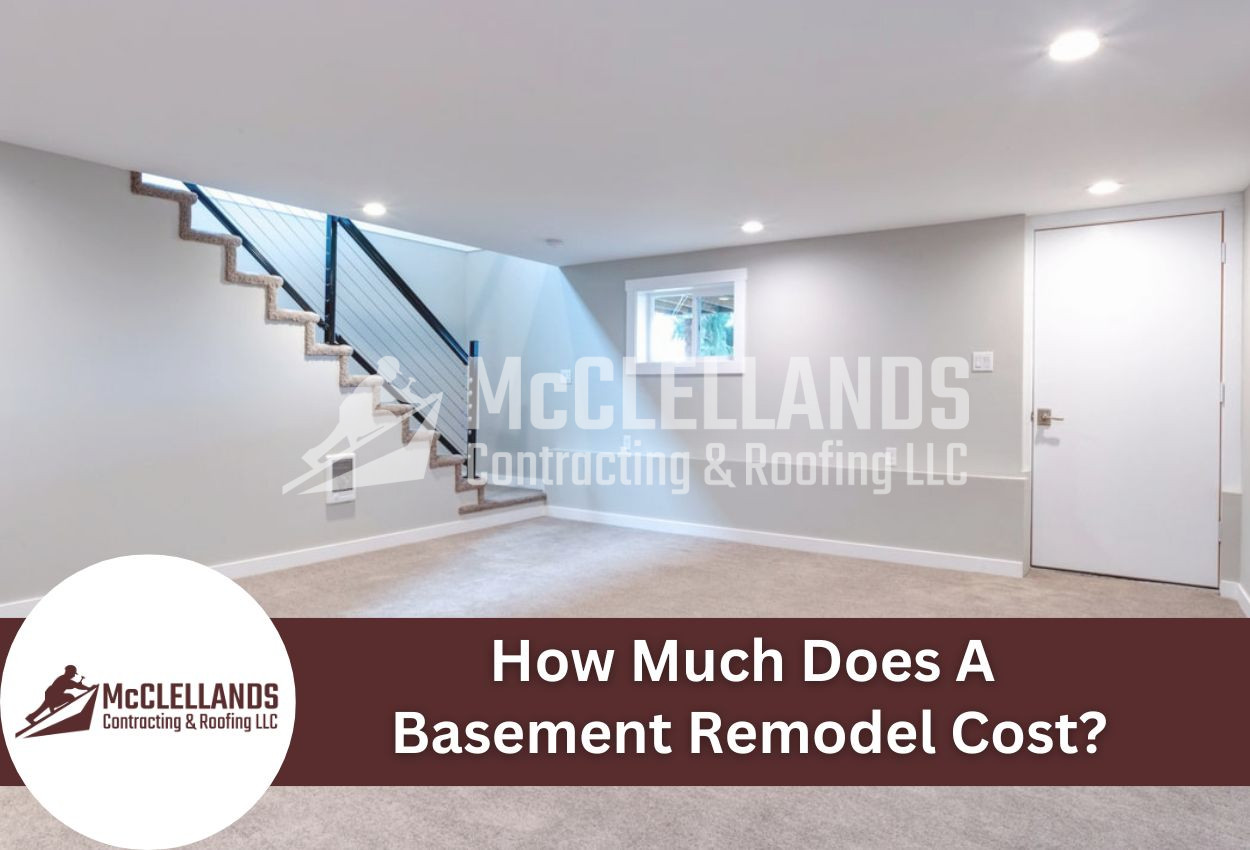
Finishing a basement in Pittsburgh can add 400 to 1,000 square feet of usable living space and return 70% to 75% of the project cost at resale. That makes it one of the highest-value home improvement projects available to Pittsburgh homeowners. Few other renovations deliver that combination of daily usability and long-term financial return.
Pittsburgh does present real challenges. Average annual humidity sits around 70% (or higher), clay soils push groundwater against foundation walls, and most homes were built between 1920 and 1960 using concrete block or brick construction that absorbs moisture over time. These factors make proper finishing technique more important here than in drier regions, but they do not make the project impossible or impractical.
This guide covers the practical benefits of finishing a basement in Pittsburgh, realistic cost estimates, what to expect on return on investment, and the permit requirements local homeowners need to know before breaking ground.
*Please note, price ranges listed in this article may not reflect the final cost of your project. Prices are subject to change based on various factors such as local labor rates, material quality, and more. All costs established in this article are rough estimates based on average industry rates.
How Much Does Basement Finishing Cost in Pittsburgh, and What Do You Get for That Price?
Basement finishing in Pittsburgh runs from roughly $25 to $90+ per square foot, depending on the finish level, putting total costs for a 600 square foot basement between $15,000 and $54,000 or more.
| Finish Tier | What’s Included | Cost Per Sq Ft | Total Cost (600 Sq Ft) |
|---|---|---|---|
| Basic | Framing, drywall, flooring installation, and basic lighting | $25 to $40 | $15,000 to $24,000 |
| Mid-Range | Full bathroom, egress window, insulated panels, moisture barrier | $45 to $65 | $27,000 to $39,000 |
| Premium | Custom layout, wet bar, full bath, waterproofing system | $70 to $90+ | $42,000 to $54,000+ |
Pittsburgh building code requires permits for electrical, plumbing, and structural changes, those permits typically add $500 to $1,500 to total project costs and are not optional. Skipping permits creates legal liability and can kill a home sale when the unpermitted work surfaces during inspection. Most projects run 4 to 8 weeks from start to finish. Scheduling work during late spring through early fall is strongly recommended, since Pittsburgh’s high winter humidity can compromise material installation and slow drying times for adhesives, drywall compound, and moisture barriers.
What Pittsburgh-Specific Moisture and Structural Factors Should You Know Before Finishing?
Four risk factors make Pittsburgh basements harder to finish correctly than those in drier regions, and ignoring any one of them leads to mold, structural damage, or failed materials within a few years.
- Concrete block walls and hydrostatic pressure: Most Pittsburgh homes built between 1920 and 1960 use concrete block construction. These walls absorb water and crack under hydrostatic pressure, the force of groundwater pushing inward, especially after heavy rain.
- Appalachian Plateau drainage patterns: Pittsburgh’s hillside terrain and plateau geography create poor surface drainage. Water moves downhill and collects against foundation walls rather than draining away, raising groundwater levels directly adjacent to basement walls.
- 38 inches of rain spread across roughly 150 days per year: That’s not a few big storms, it’s steady, recurring moisture exposure. Foundations in Pittsburgh rarely get a long dry stretch to release absorbed water before the next rain cycle begins.
- Clay soils that expand and redirect water: Pittsburgh’s clay-heavy soils swell when wet and funnel water toward foundations instead of absorbing it. This dramatically increases the volume of water pressing against basement walls after each rainstorm.
Because of these four factors, vapor barriers, waterproofing membranes, and inorganic cement-blend panels such as Total Basement Finishing systems are standard requirements in Pittsburgh, not optional upgrades. Standard organic drywall absorbs moisture and begins supporting mold growth in sustained 70% humidity environments, the year-round average in Pittsburgh. Inorganic panel systems resist moisture where drywall fails, making them the correct material choice for this region, not a premium add-on. Pittsburgh building code also requires egress window installation in any basement space designated as habitable, adding $800 to $2,500 per window to project costs, depending on well size and excavation depth.
Is Finishing a Basement Worth It in Pittsburgh Compared to Other Home Improvements?
Basement finishing returns 70% to 75% of project costs at resale, more than a kitchen remodel, bathroom addition, or deck addition in the Pittsburgh market. That gap matters when homeowners are deciding where to put $20,000 to $50,000 in renovation dollars.
| Project | Average ROI | Estimated Cost Range | Resale Value Recovered |
|---|---|---|---|
| Basement Finishing | 70% to 75% | $20,000 to $50,000 | $14,000 to $37,500 |
| Kitchen Remodel | 60% to 65% | $20,000 to $50,000 | $12,000 to $32,500 |
| Bathroom Addition | 50% to 60% | $20,000 to $50,000 | $10,000 to $30,000 |
| Deck Addition | 55% to 65% | $20,000 to $50,000 | $11,000 to $32,500 |
The ROI percentage alone does not tell the full story in Pittsburgh. The region’s tight housing inventory and strong demand for move-in-ready homes give finished basements a real marketability advantage. In South Hills neighborhoods like Mt. Lebanon, Peters Township, and Bethel Park, homes with finished basements tend to sell faster than comparable properties without that extra living space.
There is also a long-term cost argument that pure ROI percentages miss. Renting a one-bedroom apartment in Pittsburgh currently runs $1,100 to $1,400 per month, which is $13,200 to $16,800 per year for space outside the home. A one-time basement finishing investment creates that same added space without a recurring monthly cost. Over 5 years, a family paying $1,200 per month for extra rented space spends $72,000, far more than most basement finishing projects cost. The math strongly favors investing in the home over renting square footage indefinitely. For a detailed comparison of how basement finishing stacks up against other interior projects, see our kitchen vs. bathroom remodel ROI breakdown.
Who Should Finish Their Pittsburgh Basement and Who Should Wait?
Three clear conditions signal that finishing a Pittsburgh basement makes sense now, and three others mean the project should be delayed until underlying problems are resolved.
Finish Now If These Apply
- You plan to stay in the home 5+ years: Recovering the 70% to 75% ROI on a basement finishing project requires time in the market. Homeowners who sell too soon after finishing rarely recoup permit and construction costs.
- Your basement passes a moisture inspection with no active water intrusion: A clean inspection means finishing materials can perform as intended, with no remediation costs eating into your budget before a single wall panel goes up.
- Your home was built after 1940 with poured concrete walls rather than block: Poured concrete resists moisture absorption and hydrostatic cracking far better than the block construction common in Pittsburgh homes built between 1920 and 1940, reducing waterproofing risk and upfront cost.
Wait or Address These First
- Active water seepage or hydrostatic cracking in block walls: Remediation for this type of damage runs $3,000 to $10,000 before any finishing work begins. Starting a finish project over unresolved water intrusion guarantees mold and material failure.
- Your home goes on the market within 12 months: The timeline is too short to recover permit and construction costs through resale value, making the investment difficult to justify financially.
- Your HVAC system is undersized for the added conditioned square footage: Finishing a basement adds heated and cooled space. An undersized system will struggle to maintain comfortable temperatures and will raise energy costs year-round.
Get a waterproofing inspection before collecting Pittsburgh basement finishing quotes. Uncovered moisture issues discovered mid-project can increase total costs by 20% to 40%. Finding problems early keeps the project on budget and on schedule.
How Much Home Value Does a Finished Basement Add in Pittsburgh?
Finished basements in Pittsburgh typically increase appraised home value by $20,000 to $40,000, depending on finish quality, square footage added, and neighborhood. South Hills suburbs like Mt. Lebanon, Peters Township, and Bethel Park tend to return higher dollar values than many urban Pittsburgh zip codes because median home prices in those areas are higher to begin with.
Nationally, finished basements return $0.70 to $0.75 per dollar spent at resale. That figure holds up well in Pittsburgh’s current market, where buyer demand for functional lower-level living space, home offices, in-law suites, and rec rooms has grown steadily since 2020, when remote work trends reshaped what buyers expect from a home. A basement that delivers a dedicated workspace or guest suite sells faster than unfinished square footage that buyers have to imagine.
Appraisers value finished basement square footage at 50% to 60% of the above-grade finished square footage value in Pittsburgh. That math is straightforward: in a neighborhood where above-grade square footage is valued at $100 per square foot, a 600 square foot finished basement adds approximately $30,000 to $36,000 in appraised value. That return sits comfortably within the $20,000 to $40,000 appraised value range for most Pittsburgh finished basement projects, and a mid-range finish on a 600 square foot basement costs $27,000 to $39,000, meaning the appraisal gain can nearly match the investment dollar for dollar. The closer a project gets to premium finish quality, the more the neighborhood median price becomes the ceiling on what appraisers will award.
Ready to Start Your Pittsburgh Basement Project? Here’s Your Next Step.
A finished basement in Pittsburgh adds $20,000 to $40,000 in appraised home value, but only if moisture conditions are assessed before a single panel goes up. Late spring through early fall is the best window to start, giving contractors dry working conditions and allowing permit approvals to clear before winter.
McClellands Contracting and Roofing, LLC serves Pittsburgh homeowners with on-site estimates that account for local moisture conditions, permit requirements, and a project-specific cost range, not a generic number pulled from a national calculator.
Get your free basement estimate.
Not ready to schedule? Learn more about custom basement finishing.