Western PA's #1 For Roofing & Interiors
Western PA's #1 For Roofing & Interiors
Western PA's #1 For Roofing & Interiors

Morgantown takes a beating from the weather, and your roof absorbs most of it. The Appalachian terrain surrounding the city funnels wind and water directly toward homes, turning ordinary storms into serious roofing issues. Spring and fall bring high winds with gusts that can exceed 58 mph, tearing at ridge caps and flashing long before a single shingle comes loose. Summer thunderstorms roll through with hail that strips granules from shingles without leaving obvious damage you can spot from the ground. Winters cycle through temperature changes that force water under already-weakened shingles, and with around 40 inches of annual precipitation, that moisture has plenty of opportunities to find its way in. Older homes with multiple roof valleys and ridges, which describe most properties in Morgantown, are especially vulnerable because those are the spots where water concentrates, and wind gets underneath.
Storm damage here is rarely straightforward. What looks like a few missing shingles can hide lifted flashing, saturated underlayment, or early rot in the roof decking beneath. That is why a proper inspection matters so much after any significant storm, and why the repair work needs to account for what the weather in this region actually does to a roof over time. McClellands Contracting and Roofing, LLC works in this market specifically, understands how local geography shapes storm damage patterns, and brings that knowledge to every repair job rather than applying a generic fix that was not designed for these conditions. If you need urgent help after a storm, we are ready to respond quickly.
Having a clear understanding of the process before work starts helps remove uncertainty when dealing with storm-related roof damage. Below is a breakdown of how McClellands Contracting and Roofing, LLC, approaches residential roof repair after a storm.
Storm damage on Morgantown roofs rarely announces itself clearly. Hail can strip granules and bruise shingles without leaving holes, and wind can separate flashing or lift ridge caps while the shingles above look perfectly intact. Knowing what damage patterns to expect after a storm helps you understand why a complete inspection matters even when things look fine from the driveway.
| Damage Type | Common Cause | What It Affects |
|---|---|---|
| Granule loss and shingle bruising | Hail strikes, frequent in spring through early fall | Shingle lifespan, water resistance |
| Lifted or separated flashing | High-wind gusts are common in spring and fall storms | Valleys, chimneys, roof transitions |
| Ridge cap displacement | Wind uplift along the Appalachian terrain | Peak of the roof, underlayment exposure |
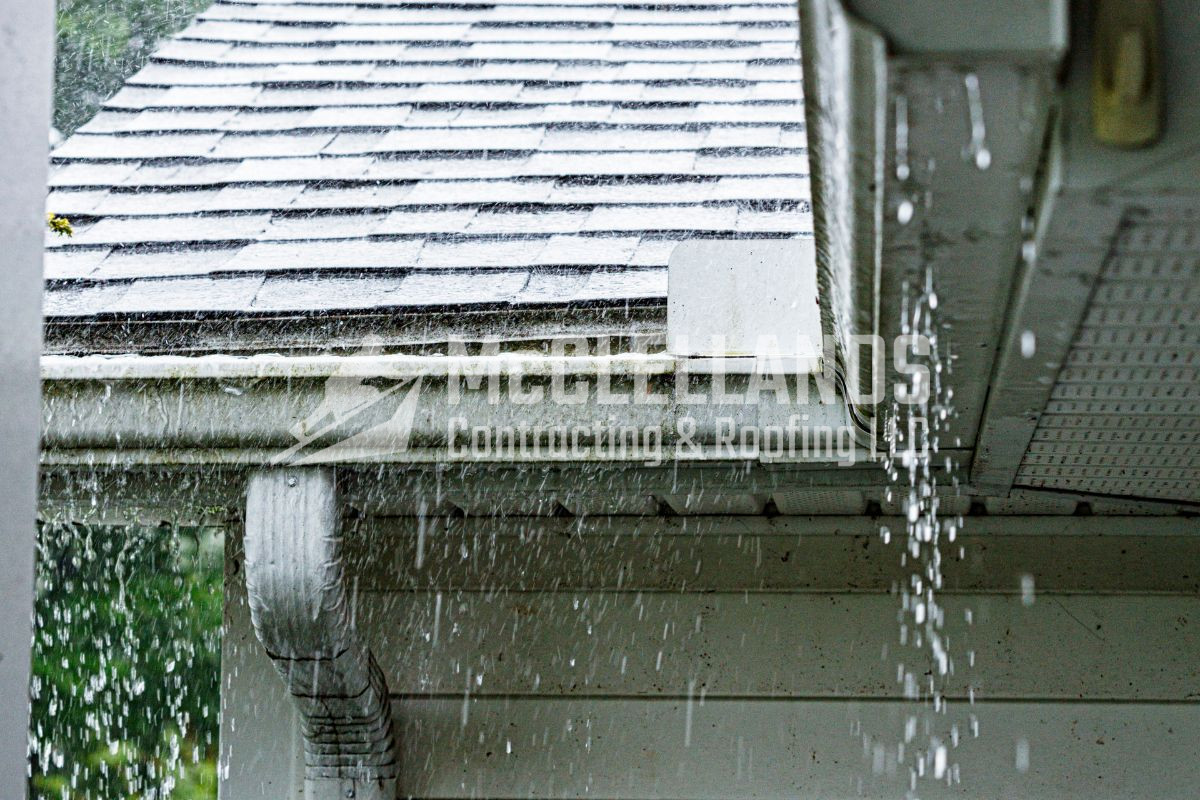
| Leaks near eaves | Temperature changes are forcing moisture under weakened shingles | Roof decking, underlayment, soffit, and framing |
Older Morgantown homes with multiple valleys and steep pitches concentrate these stress points in predictable locations. Addressing damage at those spots quickly matters because once water reaches the roof decking or framing beneath, the repair scale grows well beyond what the storm originally caused. A thorough inspection after any significant storm gives you an accurate picture of what actually needs attention before the next round of rain or temperature swings makes things worse.
Storm repairs go beyond swapping out cracked or missing shingles. When water has reached the underlayment beneath, that layer gets replaced too, so your home is not left with a new shingle sitting over a compromised moisture barrier that will fail during the next heavy rain.
Valleys, chimney bases, and roof transitions are where flashing separates first during high winds, and resealing or replacing that flashing is a core part of any complete storm repair. Skipping this step leaves the most water-vulnerable spots on your roof exposed, even after the visible shingle damage is fixed.
Ridge caps on Morgantown homes take a beating from the wind uplift patterns the Appalachian terrain creates, and replacement caps are fastened to meet local building code standards designed specifically for those forces. This is not a standard nailing pattern, it is one rated to hold against the gusts this area sees regularly.
Once the roof is open during repairs, we check the roof decking beneath for soft spots, rot, or water damage that a surface inspection cannot catch. Any compromised sections get replaced before new materials go down, so the finished repair is built on a solid foundation rather than patched over hidden deterioration.
Morgantown's weather does not ease up between seasons, and a roof that came through one storm with minor damage can become a real problem after the next. The combination of terrain-driven winds, frequent precipitation, and temperature changes that push moisture under already-stressed materials means small repairs handled quickly protect your home from the kind of damage that grows quietly until it becomes an expensive project. Spring and fall tend to be the best windows for getting repair work done before conditions shift, but storm damage does not wait for ideal timing, and neither should the repair.
If your roof took a hit from a recent storm, or if you are not sure what the last few storms may have left behind, McClellands Contracting and Roofing, LLC is ready to take a look. Reach out whenever you are ready, and we will help you figure out exactly what your roof needs.
Got questions about your roof? We’ve got answers. From maintenance tips to insurance claims and repair timelines, our FAQ section covers the most common concerns homeowners have. Get informed and make confident decisions about protecting your home.
Hail damage often hides in plain sight. Granule loss and shingle bruising do not create immediate leaks, but they accelerate how quickly the shingles break down, leaving your home vulnerable when the next storm rolls through. Given how frequently hailstorms occur in this area from spring through early fall, waiting usually means layering new damage on top of existing weakness. Getting an inspection shortly after a hailstorm lets you know where you actually stand before the damage adds up.
For repairs that exceed certain size thresholds under local building codes, a permit is required before work begins, and that adds an approval step to the timeline beyond the actual repair work. The permit process also includes an inspection to confirm the repair meets the wind fastening standards specific to this area. Factoring that in from the start avoids delays mid-project and keeps the repair fully code-compliant, which matters if you ever sell the home or file a future claim.
The Appalachian terrain around Morgantown creates wind patterns that concentrate uplift pressure at the highest and most exposed points on your roof, which is exactly where ridge caps and flashing sit. These areas are also transition points where two roof surfaces meet, and that geometry makes them more vulnerable to wind getting underneath and separating the seal. Shingles on the main field of the roof have more surface area holding them down, so they often survive a storm that has already done real damage to the ridge and flashing. That is why an inspection should start at those spots even when the shingles look fine from the ground.


 Residential
 Commercial
 Interior
 Exteriors
 Service Areas
 Contact Us