
 Residential
 Commercial
 Interior
 Exteriors
 Service Areas
 Contact Us
Why Roofs Fail Inspections and What Pittsburgh Homeowners Need to Know
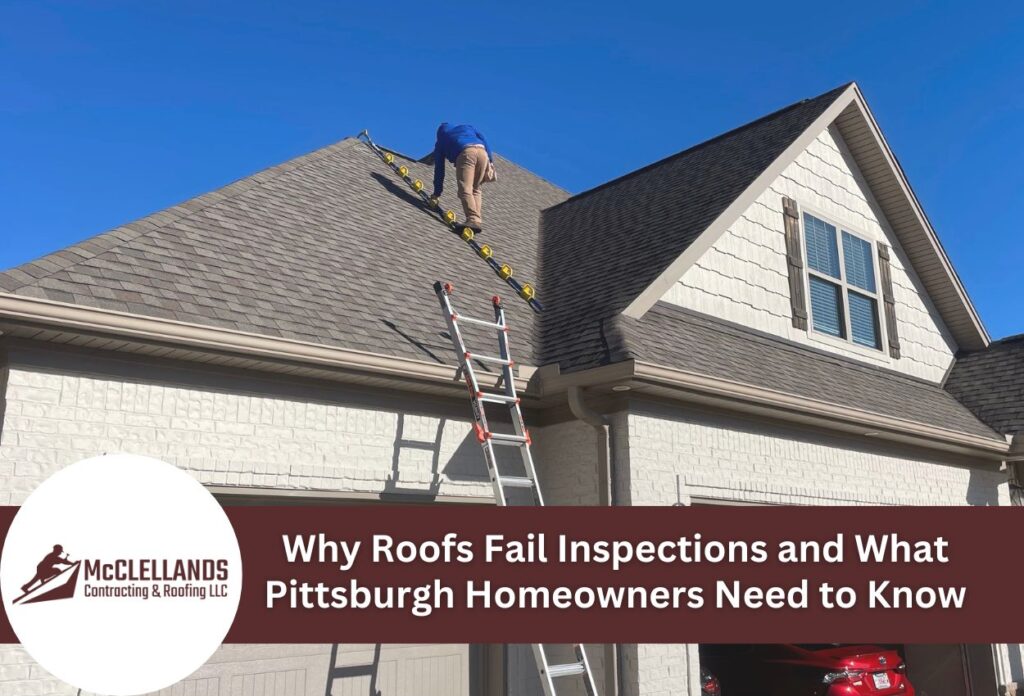
Roof inspections can make or break real estate transactions, insurance renewals, and home safety assessments. When a roof fails inspection, it often catches homeowners off guard, leaving them scrambling to understand what went wrong and how to fix it. Understanding what makes a roof fail inspection helps property owners prepare for evaluations and address potential problems before they become deal-breakers.
Missing or damaged shingles, compromised flashing around chimneys and vents, and structural issues like sagging or rotting decking represent common roofing problems during inspection. Water damage, inadequate ventilation, and outdated materials also trigger automatic failures in many cases.
Pittsburgh’s challenging weather conditions create additional complications for local roofs. The region’s freeze-thaw cycles, heavy snow loads, and severe storms accelerate deterioration and contribute to specific types of damage that inspectors notice as roof inspection red flags. Ice dams, for instance, commonly form during Pittsburgh winters and cause leaks that can lead to a failed roof inspection.
Professional inspectors follow strict requirements when evaluating properties. They examine structural integrity, weatherproofing, ventilation systems, and its overall condition to determine whether a roof meets safety and building code standards. Recognizing these important factors allows homeowners to take proactive steps toward maintaining compliant roofing systems.
Structural Damage That Guarantees Inspection Failure
Structural damage can be the most serious category of roof inspection failure reasons, as these issues directly threaten the safety of the occupants. Inspectors immediately flag sagging roof decking as a critical failure point because it indicates the underlying support system cannot adequately bear the roof’s weight. This sagging often results from compromised support beams that have deteriorated due to age, moisture exposure, or insect damage.
Load-bearing problems lead to common roofing problems found during an inspection that cannot be overlooked or temporarily patched. When rafters, trusses, or joists show signs of cracking, bowing, or rotting, the entire roof system becomes unstable. These structural weaknesses require immediate professional attention.
Water damage accelerates structural deterioration and creates a bunch of other problems that inspectors recognize as major red flags. Prolonged leaks weaken wooden support members, cause metal components to rust, and compromise the deck’s ability to hold fasteners securely. Once water gets into the roof system, it spreads throughout the structure, causing rot that weakens its load-bearing capacity.
Missing or Damaged Shingles: A Red Flag for Your Roof
Visible shingle damage stands among the most obvious roof inspection failures that catch homeowners’ attention during professional evaluations. Missing, cracked, or loose shingles indicate problems that go far beyond simple cosmetic concerns, revealing underlying issues with the roof’s protective barrier. These damaged shingles create entry points for leaks, which lead to extensive interior damage and structural deterioration over time.
Granule loss represents one of the most common roofing problems during inspection, which could mean that shingle materials have reached the end of their effective lifespan. When protective granules wash away or fall off in large quantities, the underlying asphalt becomes exposed to direct ultraviolet radiation and temperature fluctuations. This exposure accelerates deterioration and reduces the roof’s ability to shed water effectively, creating conditions that inspectors recognize as immediate roof inspection red flags.
Curling and cupping shingles could mean that the roofing materials are aging and no longer provide adequate weather protection. These issues occur when shingles lose flexibility due to repeated expansion and contraction cycles, causing edges to lift and creating gaps in the roof’s surface. Wind-driven rain easily gets into these openings, leading to water damage.
Professional roof inspectors evaluate shingle condition as part of standard roof inspection requirements because damaged or deteriorated shingles compromise the entire roofing system’s performance. When shingle coverage becomes inadequate, the roof cannot fulfill its primary function of protecting the structure from weather elements, resulting in automatic inspection failure.
Flashing Problems That Cause Automatic Inspection Failures
Flashing failures represent one of the most critical reasons for an inspection failure that professional evaluators encounter during assessments. These thin metal barriers protect vulnerable areas where different roof planes meet or where gaps interrupt the roof’s surface. When flashing around chimneys, vents, skylights, or dormers becomes damaged, deteriorated, or improperly installed, it creates direct pathways for water that can compromise the entire roofing system.
Deteriorated flashing materials lose their ability to form watertight seals around roof gaps, allowing moisture to enter the structure. This type of leak often goes undetected for extended periods, causing extensive damage to decking, insulation, and interior structures before becoming visible to homeowners. Inspectors recognize these conditions as serious common roofing problems during inspection because the resulting damage typically requires repairs that go beyond simple flashing replacement.
Improper flashing installation creates immediate roof inspection red flags that experienced evaluators identify quickly during professional assessments. Flashing must be correctly positioned, adequately sealed, and properly integrated with surrounding roofing materials to function effectively. When contractors install flashing incorrectly or use inappropriate materials for specific applications, these installations fail to prevent leaks and violate established roof inspection requirements.
Gutter and Drainage Issues That Compromise Roof Integrity
Faulty gutter systems create serious roof inspection failures that go beyond simple water collection problems. When gutters become clogged with debris, damaged by weather, or improperly maintained, they prevent proper water flow away from the roof structure. This disruption in drainage patterns causes water to back up against roof edges, creating conditions that allow moisture to get beneath shingles and into the structure.
Clogged gutters force water to overflow and pool along roof perimeters, where it can seep under shingle edges and cause extensive damage to fascia boards and roof decking. These common roofing problems during inspection often remain hidden until significant deterioration occurs. Water backup also creates ice dam conditions during freezing weather, adding extra weight and stress to roof structures that were not designed to handle such loads.
Poor drainage systems that fail to direct water away from the building create standing water issues that inspectors immediately identify as serious performance failures. When water cannot drain properly from roof surfaces, it accumulates in low spots and goes into roofing materials through prolonged exposure. This standing water accelerates material degradation and creates conditions that lead to premature roof failure.
Inadequate slope design and blocked drainage outlets represent roof inspection red flags that guarantee evaluation failures. Inspectors specifically examine drainage patterns because water management directly affects roof longevity and structural integrity. When drainage systems cannot handle normal precipitation loads, the resulting failed roof inspection repairs often require modifications to meet current roof inspection requirements.
Ventilation Deficiencies That Lead to Inspection Failures
Inadequate ventilation systems create serious roof inspection failure reasons that many homeowners overlook until professional evaluations reveal the extent of resulting damage. Poor attic ventilation allows moisture to accumulate in enclosed spaces, creating conditions that promote mold growth, wood rot, and insulation deterioration. This trapped moisture also causes temperature imbalances that accelerate the breakdown of roofing material and create ice dam formation during the winter.
Blocked ventilation systems are a common roofing problem during an inspection that compromises energy efficiency and violates modern building standards. When soffit vents become clogged with debris or ridge vents fail to function properly, air circulation stops and creates stagnant conditions in attic spaces. These blocked systems prevent proper heat and moisture removal, leading to premature material failure and increased energy costs that inspectors recognize as significant red flags.
When ventilation systems lack sufficient intake or exhaust capacity, they cannot effectively regulate temperature and humidity levels. This inadequate air circulation causes shingles to overheat during the summer and creates condensation problems during cold weather.
Preparing Your Roof for a Successful Inspection
Taking proactive steps before scheduled roof inspections significantly improves the chances of passing evaluations and avoiding expensive surprise repairs. Homeowners can address many reasons for a potential roof inspection failure by conducting basic maintenance tasks that target the most common problem areas inspectors encounter. These preparation efforts help identify issues early when repairs remain manageable and prevent minor problems from escalating into major roof inspection red flags.
Clearing gutters and downspouts represents one of the most important pre-inspection tasks because clogged drainage systems contribute to water damage and structural problems. Removing debris from roof surfaces, checking for loose or missing shingles, and ensuring proper attic ventilation also address common roofing problems during inspection. These simple maintenance steps demonstrate responsible property ownership and help inspectors focus on genuine concerns rather than neglect-related issues.
Professional roofing contractors become necessary when homeowners discover problems beyond their skill level or comfort zone during pre-inspection preparation. Structural damage, extensive flashing repairs, and major shingle replacement require professional expertise to ensure work meets roof inspection requirements. Attempting complex repairs without proper knowledge often creates additional problems that worsen inspection outcomes.
Ensure Your Roof Passes Inspection with McClellands Contracting and Roofing, LLC
If you’re concerned about the structural integrity of your roof and want to ensure it passes inspection, don’t wait until it’s too late. Common issues such as structural damage, missing shingles, or faulty flashing can lead to failed inspections, compromising the safety and value of your home. Understanding what makes a roof fail an inspection is critical for maintaining your property’s condition, especially in Pittsburgh’s demanding climate.
At McClellands Contracting and Roofing, LLC, we specialize in identifying and addressing these critical issues before they lead to severe consequences. Our expert team is equipped to handle all your roofing needs, from comprehensive inspections to professional repairs and maintenance. Don’t risk the safety and integrity of your home. Call us today at (412) 353-5660 to schedule a thorough roof evaluation and ensure your roof is in top condition!