

 Residential
 Commercial
 Interior
 Exteriors
 Service Areas
 Contact Us
Why Is My Roof Leaking Around the Chimney and What’s Most Likely Causing It?
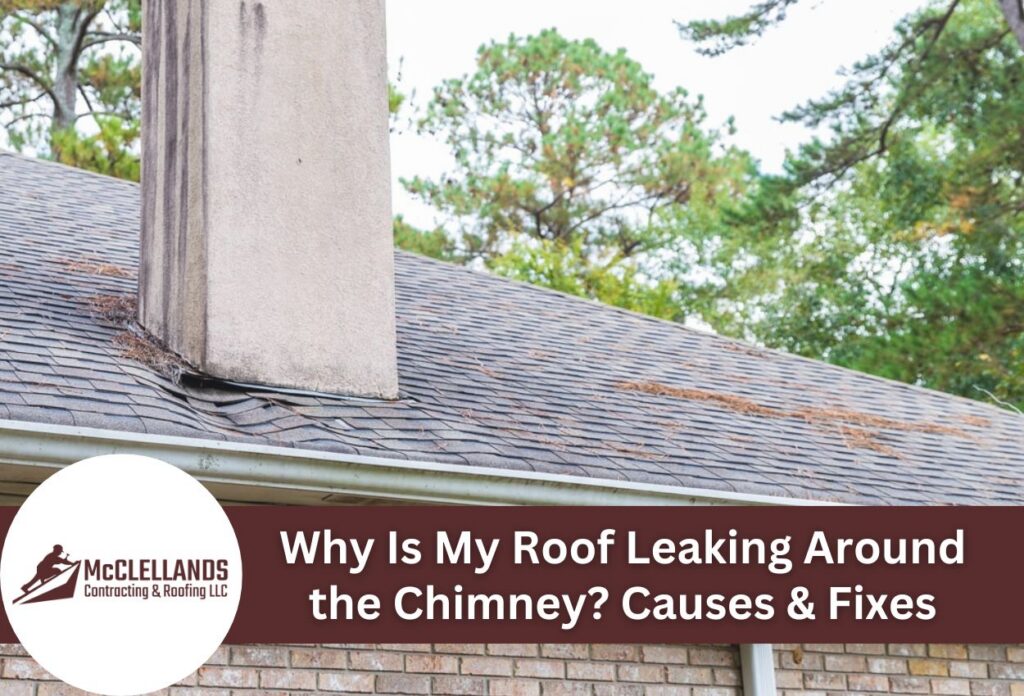

Chimney-related leaks make up a disproportionate share of roof water intrusion calls, and in Pittsburgh, where annual precipitation commonly reaches 38 to 41 inches and snowfall tops 40 inches, chimneys rank among the highest-risk leak points on any older masonry home. Four causes account for most of these leaks: failed flashing at the roof-to-chimney joint, a cracked chimney crown, deteriorated mortar or sealant, and ice dam backup during winter snowmelt. Knowing which one you’re dealing with determines your next step.
Pittsburgh’s housing stock makes this problem especially common. A large share of homes here were built before 1960, with brick masonry chimneys that have now gone decades without flashing or mortar attention. Temperature changes in this region are relentless; moisture enters small gaps, freezes, and forces those gaps wider every winter.
The good news is that most chimney leaks have a diagnosable source. This article breaks down each cause, how to spot it, and what kind of repair it actually requires.
What Are the Most Common Reasons a Roof Leaks Around a Chimney?
Four failure points cause the vast majority of chimney leaks: failed flashing, a cracked chimney crown, deteriorated mortar joints, and ice dam backup. Each one shows up differently, and knowing which fits your situation helps you get the right repair the first time.
- Chimney flashing that is no longer sealed: The metal flashing where your roof meets the chimney is protected by sealant that typically lasts 5 to 10 years before it needs reapplication. Visible gaps, rust staining, or lifted metal edges all point to flashing failure, the most common cause of water coming in around a chimney during heavy rain.
- A cracked chimney crown: The chimney crown is the concrete cap that covers the top of the masonry. Cracks wider than 1/8 inch channel rainwater directly into the brick below. A cracked crown is one of the fastest ways for water to reach your attic or ceiling without any sign of roof damage.
- Failed step flashing and counter flashing: Step flashing runs along the sides of the chimney in layers beneath each shingle course, while counter flashing is cut into the masonry joints above it. When either layer lifts, corrodes, or separates, the roof-to-chimney joint becomes an open path for water.
- Deteriorated mortar joints: Brick chimney mortar typically needs repointing every 25 to 30 years. Pittsburgh’s temperature changes, averaging approximately 80 freeze-thaw cycles per year, accelerate that breakdown, allowing water to saturate the masonry and move inward.
Leaks that appear during heavy rain almost always point to flashing or crown failure. Leaks that show up during snowmelt more often trace back to ice dam backup or saturated masonry. That timing detail alone can help narrow down where to look first.
How Much Does Chimney Flashing Leak Repair Cost and What Affects the Price?
Chimney flashing leak repair costs in the Pittsburgh area range from under $200 for a basic sealant reapplication to over $1,800 for a full flashing system replacement, depending on how far the damage has progressed. A professional roof inspection can help pinpoint the exact scale of damage before repair work begins.
| Repair Type | Typical DIY Cost | Typical Contractor Cost (Pittsburgh Area) | Expected Lifespan of Repair |
|---|---|---|---|
| Sealant-only reapplication | $15 to $40 | $150 to $300 | 5 to 10 years |
| Step flashing replacement | Not recommended | $400 to $900 | 15 to 25 years |
| Full flashing system replacement | Not recommended | $800 to $1,800 | 20 to 30 years |
| Chimney crown repair/resurfacing | $20 to $60 (sealant) | $300 to $700 | 10 to 20 years |
| Chimney cap replacement | $30 to $80 | $150 to $350 installed | 10 to 20 years |
On steep-pitch roofs common across older Pittsburgh neighborhoods, contractor costs can run 20% to 40% higher than the ranges above due to added labor time and fall-protection requirements. A full flashing system replacement on a steep-pitch roof could reach $2,500 or more once those labor factors are applied. Most standard flashing seal or cap repairs do not require a permit under Pennsylvania’s Uniform Construction Code, but chimney reconstruction or full re-roofing can trigger City of Pittsburgh permit requirements. Confirm the scale with your contractor before any work begins.
How Do You Know If the Problem Is Flashing, the Crown, or Something Else?
Match the timing and location of water staining to the failure type, as a single step narrows the diagnosis faster than any other approach.
- Water appears only during or right after rain: This points to flashing or crown failure. Rain-only leaks rarely trace back to ice dams or masonry saturation; the timing is too immediate.
- Water appears during snowmelt or after ice accumulates: Ice dam backup or saturated masonry is the likely cause. Water is backing up under shingles or moving through brick that has absorbed moisture over weeks, not hours.
- Staining is tight to the chimney base on the interior ceiling: Counter flashing failure is the most common explanation. Water is entering exactly where the metal meets the masonry, not spreading from a wider source.
- Staining spreads wide across the ceiling: A broad stain pattern often signals condensation or an interior moisture problem rather than a direct roof leak. The spread is too wide to trace to a single flashing joint.
What to Look for from the Ground
- Rust streaks running down the brick: A clear sign that flashing metal is corroding and water is moving behind the metal.
- Visible caulk separation or lifted flashing edges: Sealant that has pulled away from the masonry means the chimney flashing is not sealed properly, one of the easiest problems to spot without getting on the roof.
- White powder (efflorescence) on the masonry: This mineral deposit buildup signals chronic leaks into the brick, often tied to crown cracks or failed mortar joints.
When DIY Is Reasonable vs. When to Call a Contractor
- DIY is reasonable for: Sealant reapplication on a single-story roof where the flashing metal is still intact and the surface is accessible without climbing above a 6:12 pitch.
- A contractor is required for: Any bent, cracked, or missing metal flashing; chimney crown cracks deeper than surface level; or any roof with a pitch steeper than 6:12. Attempting metal flashing work on a steep-pitch roof without fall protection is one of the most common causes of serious DIY roofing injuries.
If two or more of these signs appear together:
Rust streaks, lifted edges, and interior ceiling staining: the repair has likely moved past a sealant fix and into contractor territory. In these cases, a professional roof repair is the appropriate next step to stop the damage from spreading.
When Is the Best Time to Fix a Chimney Leak in Pittsburgh?
Spring (April to May) and fall (September to October) are the best windows for chimney leak repairs in Pittsburgh because temperatures consistently stay above 40 degrees Fahrenheit, the minimum threshold most roofing sealants and flashing compounds need to bond and cure correctly. Below that temperature, sealants will not adhere properly, meaning any patch applied during a January cold snap is almost always a temporary fix, not a permanent one.
That matters more in Pittsburgh than in warmer markets. Winter emergency repairs done in December or January may hold water out short-term, but a permanent repair often cannot be scheduled until spring, a delay of 2 to 4 months. During that window, interior protection like buckets, plastic sheeting, or absorbent barriers helps manage water intrusion until conditions allow proper work.
Homeowners who spot a leak in late fall should contact contractors in September or October, before the seasonal repair window closes. Summer scheduling fills fast. Pittsburgh roofing contractors commonly carry a 4 to 8 week backlog from June through August. Anyone who waits until summer to book chimney flashing work may find the earliest available slot pushes into late August or September anyway. Calling in fall, before that rush ends, is the fastest path to a repair done at the right time of year, under the right conditions, with materials that will actually cure and hold.
Does Fixing a Chimney Leak Actually Protect Your Home’s Value, and What Happens If You Ignore It?
A $300 to $900 flashing repair left unaddressed for 1 to 2 seasons can escalate into $3,000 to $12,000 in water damage remediation, a 5x to 15x cost multiplier for doing nothing. That gap comes from secondary damage: interior framing rot, ruined insulation, drywall replacement, and mold remediation all add up quickly once water finds a regular path inside. Proper gutter maintenance and drainage alongside flashing repairs can further reduce the risk of water damage adding up over time.
| Scenario | Action Taken | Total Cost | Outcome |
|---|---|---|---|
| Scenario A: Act at the first sign | Flashing repair within one season | $400 to $800 | Damage contained; no secondary repairs needed |
| Scenario B: Wait 18 months | No repair; leak continues | $4,000 to $14,000 | Structural rot, mold remediation, and drywall replacement are required |
The financial risk goes beyond repair bills. Home inspectors in Pittsburgh routinely flag chimney flashing defects and crown cracks during real estate transactions. An unresolved chimney leak can reduce an appraised home value or trigger buyer repair credits, turning a $600 fix into a $5,000 negotiating loss at closing. Fixing the leak early keeps repair costs low and keeps the home’s value intact when it counts most.
Ready to Stop the Leak? Here’s How to Get the Right Help in Pittsburgh
A $400 to $800 repair done this season is far better than a $4,000 to $14,000 remediation bill next year, and the gap closes faster than most homeowners expect. Schedule a chimney flashing inspection before the next rainstorm or before winter sets in, because each season of water intrusion widens gaps and deepens damage. Most reputable Pittsburgh-area contractors offer free or low-cost inspections specifically for chimney flashing and crown assessment.
McClellands Contracting and Roofing, LLC serves Pittsburgh, PA, and the surrounding areas and can help identify whether the problem is with the flashing, the crown, or the masonry before the repair window closes.
Schedule your chimney inspection.
Not ready to schedule? Learn more about our services.