

 Residential
 Commercial
 Interior
 Exteriors
 Service Areas
 Contact Us

Key Points
- Chimney flashing is critical because it prevents water from leaking into one of the roof’s most vulnerable areas, the chimney-to-roof connection.
- Failed chimney flashing can lead to extensive structural and interior damage.
- Professional installation and regular maintenance are essential for long-term protection.
Chimney flashing serves as the critical barrier that seals the connection point between your chimney and roof. This metal waterproofing system prevents water from leaking into one of your home’s most vulnerable areas. When properly installed, chimney flashing directs rainwater and melting snow away from the chimney base, protecting both your roof and interior spaces from moisture damage.
The importance of chimney flashing becomes clear when considering the expensive consequences of system failure. Leaks through damaged or improperly installed flashing can lead to rot, compromised structural framing, and expensive interior repairs. Pittsburgh homeowners face particular challenges due to the region’s harsh winters and frequent precipitation, making effective chimney leak prevention essential for maintaining property value.
Failed flashing often creates a domino effect of problems throughout your home. Water damage can spread from the initial entry point to surrounding areas, causing ceiling stains, wall damage, and potential mold growth. The structural integrity of your roofing system may become compromised over time, requiring extensive roof flashing repair or complete roof replacement. Understanding how chimney waterproofing and proper flashing installation work together helps homeowners recognize why regular chimney maintenance represents a smart investment in their property’s long-term protection and value.
How Water Damage Happens When Chimney Flashing Fails
Understanding how leaks form begins with recognizing how compromised flashing creates entry points for moisture. When chimney flashing develops cracks, separates from surfaces, or becomes improperly sealed, water follows the path of least resistance into your home’s structure. Rainwater and melting snow initially collect around the chimney base, then seep through these vulnerable gaps in the flashing system.
Once water gets past the flashing barrier, it travels along the roof decking and structural components, often moving far from the original entry point. This moisture can affect ceiling joists, insulation, and interior walls throughout multiple rooms. The water damage accelerates during freeze-thaw cycles, which expand existing cracks and create additional pathways for it to travel.
Homeowners can identify several warning signs that indicate their chimney flashing requires immediate attention. Water stains on ceilings near the chimney represent the most obvious symptom of failed waterproofing. Other indicators include peeling paint around the chimney area, musty odors suggesting mold growth, and visible rust or corrosion on the flashing itself. Dampness in the fireplace or white staining on exterior chimney surfaces also signals that roof flashing repair may be necessary. Regular chimney maintenance helps detect these issues before extensive structural damage occurs, making early intervention important for effective chimney leak prevention.
Types of Chimney Flashing and Their Protective Functions
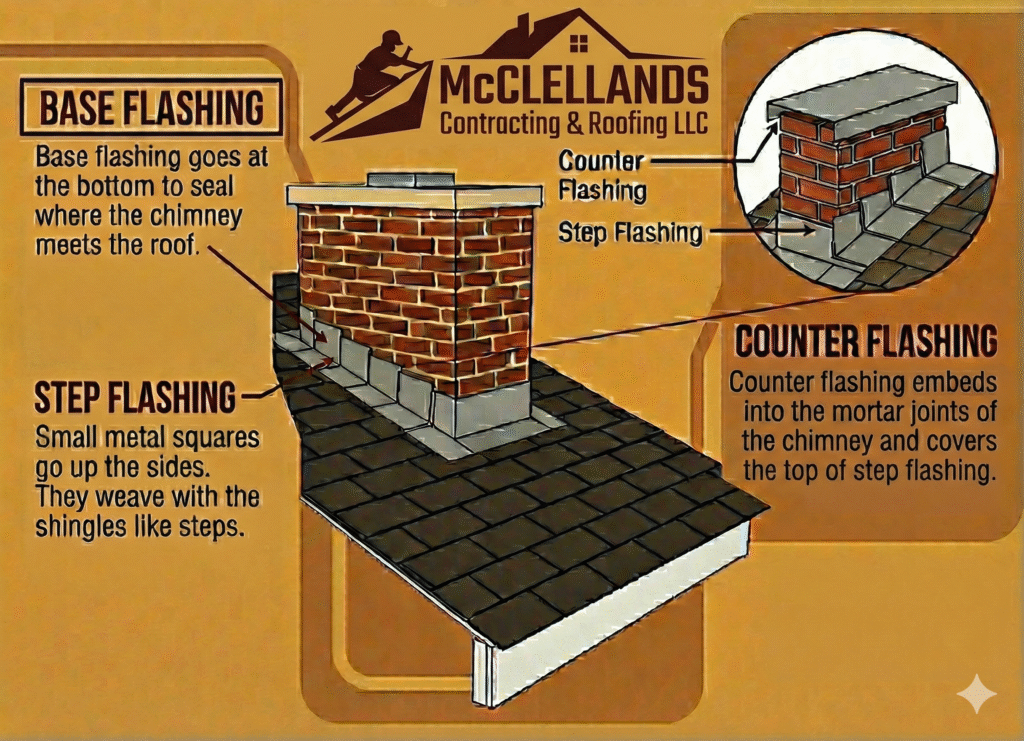
Professional chimney flashing systems incorporate 3 distinct components that work together to create comprehensive chimney leak prevention. Step flashing consists of individual L-shaped pieces installed in layers along the roof slope where it meets the chimney sides. These overlapping sections channel water down the roof surface while preventing moisture from flowing back toward the chimney base. Counter flashing covers the upper edges of step flashing, creating a secondary barrier that directs water away from the connection points.
Base flashing forms the foundation of the waterproofing system by sealing the bottom edge where the chimney meets the roof deck. This critical component must withstand constant exposure to standing water and debris accumulation. The three types of flashing integrate to form multiple lines of defense against water infiltration, ensuring that if one component experiences minor failure, the remaining elements continue providing protection.
Material selection significantly impacts the longevity and effectiveness of chimney waterproofing systems. Galvanized steel represents a cost-effective option that performs well when properly maintained. Professional flashing installation ensures these materials work together as an integrated system, with proper overlap patterns and sealed joints creating reliable roof flashing repair solutions that protect your home’s structural integrity.
Long-Term Structural Problems Caused by Inadequate Flashing
Inadequate chimney flashing can create a bunch of structural problems that go beyond the initial leak. Wood rot represents the most immediate threat to your home’s framing system. When moisture gets through compromised flashing, it saturates the roof deck, ceiling joists, and wall studs. These wooden components begin deteriorating within weeks of exposure, losing their structural integrity and load-bearing capacity. The rotting process accelerates in warm, humid conditions, creating soft spots that compromise your home’s overall stability.
Mold growth follows closely behind leaks, thriving in the dark, moist environment created by failed chimney waterproofing. Mold colonies spread rapidly through organic building materials, including insulation, drywall, and wooden framing. This biological contamination not only damages building materials but also creates serious health risks for occupants. The spores travel through ventilation systems, affecting indoor air quality throughout the entire home.
Roofing materials suffer extensive deterioration when flashing installation fails to provide adequate protection. All of these issues extend to your home’s foundation as water travels down through wall cavities, potentially causing basement flooding and foundation settling. Regular chimney maintenance and quick roof flashing repair prevent these expensive, long-term issues, protecting your property and your family’s safety.
Professional Installation Techniques That Ensure Maximum Protection
Proper chimney flashing installation demands specialized expertise that extends well beyond basic DIY capabilities. Professional roofers possess the technical knowledge to integrate flashing systems with complex roofs, ensuring water flows away from vulnerable points. They understand building code requirements specific to flashing materials, overlap specifications, and sealing methods that create lasting leak prevention. The installation process requires precise measurements, proper fastening techniques, and weather-resistant sealant application, which amateur attempts often compromise.
Roofing contractors bring the right tools and equipment, as well as the proper know-how to get the project done effectively and efficiently. Professional-grade soldering equipment creates permanent flashing joints, while specialized crimping tools form precise bends and connections. Contractors use proper underlayment materials and ice-and-water barriers that work in conjunction with the flashing system. They understand the thermal expansion properties of different metals and select compatible fasteners that prevent galvanic corrosion over time.
The integration of chimney waterproofing with the overall roofing system requires a comprehensive understanding of water management. Professional installation ensures that flashing installation coordinates with gutter systems, roof valleys, and other drainage components. Contractors evaluate roof pitch, snow load patterns, and prevailing wind directions to optimize flashing performance. This approach to repair roof flashing creates protection layers that safeguard your home investment. Professional chimney maintenance includes regular inspection of these integrated systems, identifying potential issues before they compromise your home’s structural integrity.
Regular Maintenance Practices That Extend Flashing Lifespan
Summer evaluations allow clear visibility of the entire chimney waterproofing system, revealing cracks, rust spots, or separation areas that developed during harsh weather. Fall inspections prepare the flashing system for winter conditions by identifying vulnerable areas that require attention before severe weather arrives.
Homeowners can perform basic visual assessments from ground level using binoculars to examine the condition of the flashing without climbing onto the roof. Look for obvious signs of flashing deterioration, including rust stains, loose metal sections, or gaps between the chimney and flashing components. Interior inspections prove equally important, as water stains on ceilings or walls near the chimney indicate compromised chimney leak prevention systems.
Simple preventive maintenance steps include keeping gutters clean to prevent water backup that can stress flashing systems. Remove debris accumulation around the chimney base that might trap moisture against flashing components. Schedule professional roof flashing repair evaluations every 3 to 5 years, or immediately after severe weather. Professional assessments identify subtle deterioration that untrained eyes might miss, ensuring prompt intervention before minor issues require extensive chimney maintenance or complete flashing installation replacement.
Making Smart Decisions About Flashing Repair and Replacement
Determining whether your chimney flashing requires repair or complete replacement depends on several critical factors that affect both safety and cost-effectiveness. Age plays a significant role in this evaluation, as most flashing systems have predictable lifespans based on material composition. Aluminum flashing typically performs well for 15 to 20 years, while copper systems may last 30 years or longer with proper maintenance. Galvanized steel flashing generally requires replacement after 10 to 15 years due to corrosion susceptibility.
Visual inspection reveals important condition indicators that guide the decision to repair or replace. Minor issues such as loose sealant, small cracks, or isolated rust spots often respond well to targeted roof flashing repair. However, extensive corrosion, multiple separation points, or structural damage to the flashing material typically needs a complete system replacement. Evidence of water damage inside your home suggests that temporary repairs will not provide adequate chimney leak prevention, making replacement the more practical long-term solution.
When consulting roofing contractors, ask specific questions about their assessment methodology and recommended approach. Quality contractors provide written estimates that clearly distinguish between repair and replacement options, explaining the cost-benefit analysis of each approach. They should demonstrate knowledge of proper flashing installation techniques and local building code requirements. Expect contractors to discuss chimney waterproofing integration with your existing roofing system and provide realistic timelines for completion. Professional chimney maintenance providers offer valuable insight into long-term performance expectations and help you make informed decisions that protect your home investment effectively.
| Material | Step Flashing (Per Piece) | Base & Counter Flashing (Per Linear Foot) |
| Aluminum | $0.35 – $0.45 | $0.70 – $1.10 |
| Galvanized Steel | $0.60 – $0.75 | $1.40 – $1.60 |
| Stainless Steel | $3.00 – $5.00 | $8.00 – $11.50 |
| Copper | $7.00 – $11.00 | $9.00 – $15.00 |
| Lead | (Cut from roll) | $6.50 – $7.00 |
Protect Your Investment with Expert Chimney Flashing Services in Pittsburgh
At McClellands Contracting and Roofing, LLC, we understand the critical role that proper chimney flashing plays in safeguarding your home from water damage. Water infiltration due to failed or deteriorating chimney flashing can lead to severe structural issues, including wood rot, mold growth, and compromised roofing materials. These problems can not only degrade your home’s safety but also its overall value.
Don’t wait for the damage to become irreversible. Proactive maintenance and quick repairs are key to ensuring that your chimney flashing continues to perform its vital function effectively. Whether you need an assessment of your current flashing condition, a complete installation, or just expert advice on maintenance practices, our skilled team is here to help.
Contact McClellands Contracting and Roofing, LLC today at (412) 353-5660 to schedule a professional evaluation and ensure your home remains protected against the elements with top-quality chimney flashing solutions.