

 Residential
 Commercial
 Interior
 Exteriors
 Service Areas
 Contact Us
Key Points:
- The time to install a commercial roof typically ranges from 2 to 4 weeks for standard jobs, but large or complex projects can take several months.
- Key factors like building size, material choice, existing roof condition, and Pittsburgh’s weather significantly impact your project’s duration.
- Careful planning, contractor coordination, and permit processing are essential to setting realistic expectations and minimizing business disruption.
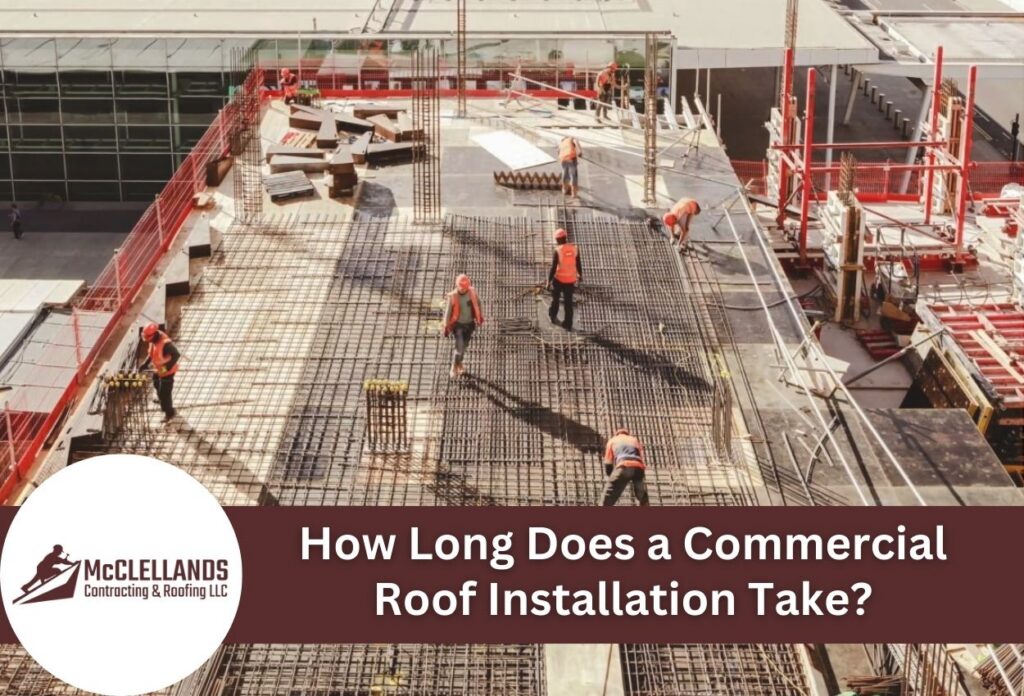
Commercial roof installation typically takes anywhere from 1 week to several months, depending on the size and complexity of the project. Most standard commercial roofing jobs on buildings under 20,000 square feet are completed within 2 to 4 weeks, while larger facilities or complex installations can extend the commercial roof installation timeline significantly.
The overall project schedule is shaped by a combination of site-specific and logistical conditions that extend well beyond roof size alone. Access limitations, staging space for materials, the need to protect building operations, and the complexity of the existing assembly can all change how work is sequenced and how many crews can operate at the same time.
System design choices, including insulation build-up and attachment methods, also affect how the work progresses, making early coordination and planning a critical part of establishing a realistic construction schedule.
Understanding these factors affecting commercial roof installation helps property managers make informed decisions about timing and business operations. Planning around peak business seasons, coordinating with other building maintenance, and preparing for potential weather delays ensures minimal disruption to daily operations.
Building Size and Roof Area Impact on Installation Timeline
Square footage serves as the primary determining factor for commercial roof installation timeline and crew scheduling requirements. Smaller commercial buildings typically require 1 to 2 weeks for completion, while larger structures can extend the project duration to several months. The commercial roofing project schedule directly correlates with available roof surface area and the number of crew members that can work simultaneously without creating safety hazards.
Small warehouses and retail facilities generally allow for streamlined installations with consistent workflow patterns, keeping the flat roof installation timeframe within predictable parameters. Large industrial facilities present unique challenges, including complex drainage systems, multiple roof levels, and equipment that significantly extend the commercial roof replacement length. These factors affecting commercial roof installation require specialized coordination between multiple crews and trades, often doubling or tripling the base timeline expectations for standard commercial roofing projects.
Roofing Material Selection and Installation Speed
Different commercial roofing materials significantly impact the overall commercial roof installation timeline due to varying complexity levels and installation methods. TPO membrane systems typically install the fastest, with experienced crews completing installations at rates of 3,000 to 5,000 square feet per day on straightforward projects. EPDM rubber roofing follows closely behind TPO in speed, though seaming requirements can slow the flat roof installation timeframe on larger projects with multiple membrane sheets.
Modified bitumen systems require more time due to torch application or hot asphalt processes, reducing daily installation rates to approximately 2,000 to 3,500 square feet per crew. Metal roofing systems present the most variable commercial roof replacement length, ranging from quick standing seam installations to complex structural applications requiring weeks of additional preparation. These factors affecting commercial roof installation become especially important when coordinating business operations around the commercial roofing project schedule, as material selection directly determines crew size requirements and weather dependency levels for successful completion.
Weather Conditions and Seasonal Considerations
Pittsburgh’s unpredictable climate creates significant challenges that can extend any commercial roof installation timeline beyond original projections. Rain, snow, and freezing temperatures halt roofing work completely, as most commercial roofing materials require dry conditions and temperatures above 45 degrees Fahrenheit for proper installation. Winter storms and frequent precipitation during spring often cause multiple delays, potentially doubling the expected commercial roof replacement length for projects scheduled during unfavorable seasons.
The best possible timing for commercial roofing projects falls between late spring and early fall when weather patterns provide the most consistent working conditions. Summer offers the most predictable flat roof installation timeframe, though extreme heat can also create installation challenges for certain membrane systems. Planning commercial roofing project schedules around Pittsburgh’s weather patterns helps minimize these factors affecting commercial roof installation, ensuring crews can maintain steady progress without extended weather-related interruptions that impact both timeline and project costs.
Roof Condition and Preparation Requirements
Existing roof condition dramatically affects the commercial roof installation timeline through additional preparation work that crews must complete before installing new roofing materials. Buildings with deteriorated roof decks, structural damage, or multiple roofing layers require extensive tear-off procedures that can add several days or weeks to the standard commercial roofing project schedule. Deck repairs, insulation replacement, and roof deck preparation often consume 30% to 50% of the total project time on older commercial structures.
Poor roof conditions create cascading delays that impact crew efficiency and material installation rates throughout the entire project. Water damage to structural decking requires complete removal and replacement, extending the commercial roof replacement length while additional trades coordinate repairs. These factors affecting commercial roof installation become particularly challenging when hidden damage emerges during tear-off, requiring immediate structural assessments and modified installation approaches that weren’t included in original timeline projections for the flat roof installation timeframe.
Permitting and Inspection Processes
Pittsburgh’s commercial building permit requirements add substantial time to the commercial roof installation timeline, often extending project schedules by 2 to 6 weeks, depending on permit complexity and city processing backlogs. Commercial roofing projects require detailed structural plans, manufacturer specifications, and contractor licensing documentation before work can legally start. The permit approval process involves plan review by multiple city departments, creating potential delays when applications lack required technical information or fail to meet current building codes.
Inspection scheduling creates additional factors affecting commercial roof installation that can disrupt crew workflow and extend the commercial roofing project schedule unexpectedly. Pittsburgh requires inspections at multiple project phases, including roof deck preparation, insulation installation, and final membrane completion. Inspection delays occur frequently when city inspectors face heavy workloads or when weather prevents scheduled site visits. These interruptions can add several days to the flat roof installation timeframe, as crews often cannot proceed with subsequent work phases until receiving inspection approval for completed sections.
Planning Your Commercial Roofing Project Timeline
Successful commercial roofing projects require careful coordination between property owners, contractors, and building occupants to minimize business disruption while maintaining project quality standards. Establishing clear communication protocols from project inception through completion ensures all stakeholders understand timeline expectations and potential scheduling changes that may occur during installation. Effective planning considers both the commercial roof installation timeline and operational requirements unique to each business facility.
Coordinating with experienced roofing contractors involves scheduling pre-construction meetings to review project phases, delivery requirements, and workspace limitations that could affect the commercial roofing project schedule. Contractors should provide detailed timeline breakdowns showing daily work activities, crew sizes, and milestone completion dates throughout the flat roof installation timeframe. These scheduling discussions help identify potential conflicts with business operations, allowing property managers to adjust staffing, inventory management, or customer access plans accordingly during the commercial roof replacement process.
Communication strategies must address multiple stakeholder groups, including building tenants, employees, customers, and management teams who need advance notice of construction activities. Regular project updates through email notifications, posted schedules, and progress meetings keep everyone informed about current work phases and upcoming activities that might affect normal business operations during the installation period.
Expert Commercial Roof Installation Services in Pittsburgh
Understanding the timeframe for a commercial roof installation is crucial for effective business operations planning. At McClellands Contracting and Roofing, LLC, we specialize in efficient and reliable roofing solutions that minimize disruption to your daily activities.
Call McClellands Contracting and Roofing, LLC today at (412) 353-5660 to schedule a consultation and start planning your commercial roof installation with confidence.