

 Residential
 Commercial
 Interior
 Exteriors
 Service Areas
 Contact Us
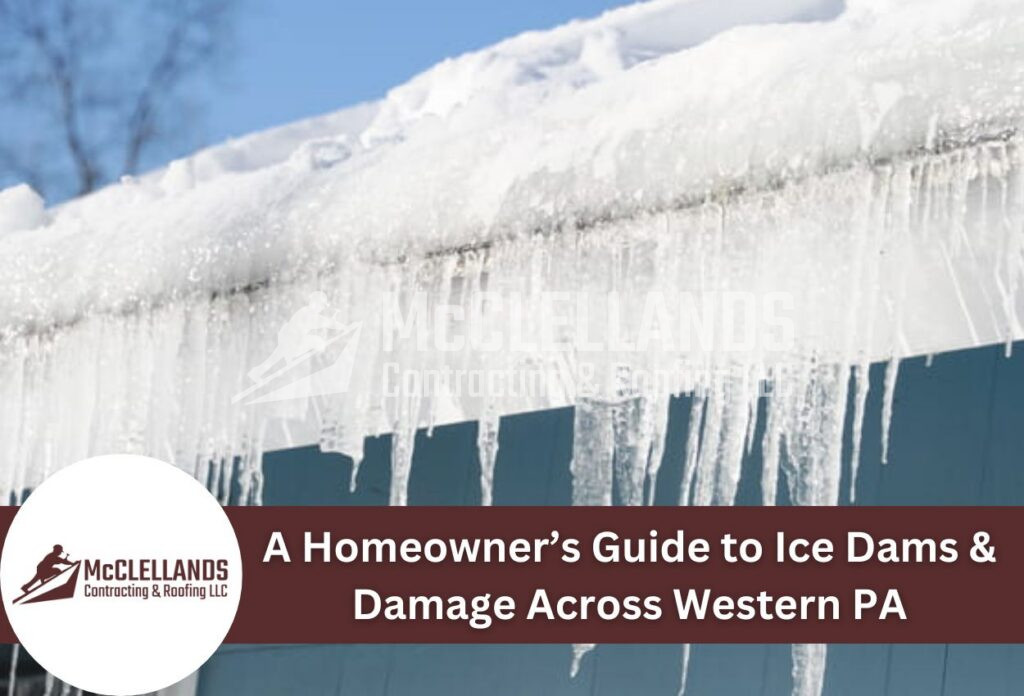
Winter in Western Pennsylvania is beautiful, but it can be tough on your home. If you’ve ever seen a thick ridge of ice hugging the edge of your roof or giant icicles hanging over your front door, you’ve seen an ice dam.
For homeowners in Pittsburgh and the surrounding areas, these ice formations are more than just a natural part of winter. They are a sign that your home’s attic insulation and thermal envelope are struggling. Even a brand-new, professionally installed roof can be affected by ice dams if the heat from the home isn’t properly contained. If ignored, they can lead to ruined gutters, soggy insulation, and water dripping into your living room.
*Please note, price ranges listed in this article may not reflect the final cost of your project. Prices are subject to change based on various factors such as local labor rates, material quality, and more. All costs established in this article are rough estimates based on average industry rates.
The Quick Answer: What Causes Ice Dams and How Do You Fix Them?
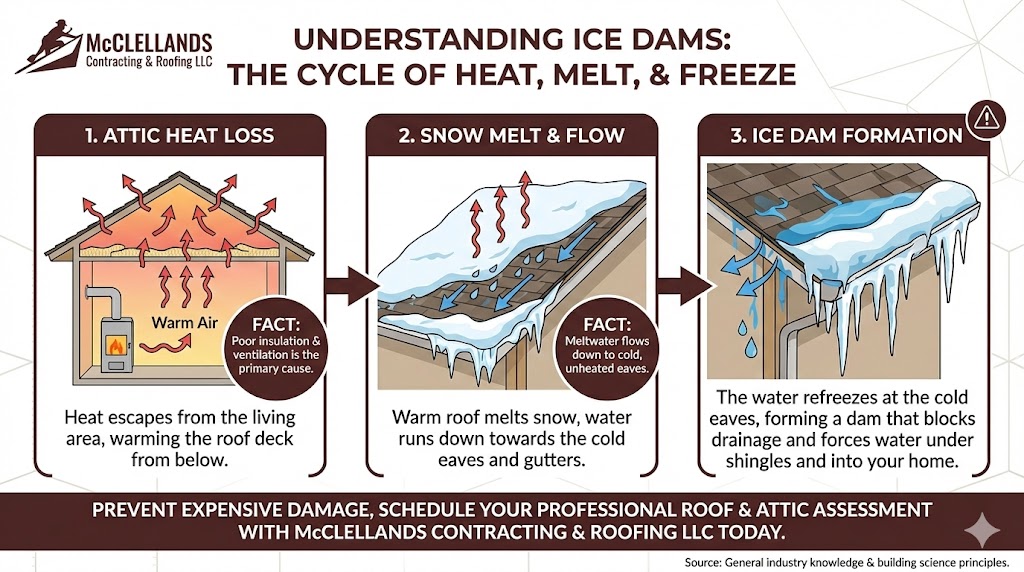
In short, ice dams happen when your roof is too warm. Heat escapes from your house into the attic, warming the very top of the roof. This melts the snow, which flows down to the cold edges of the roof, known as the eaves, and freezes into a block of ice.
- The Cause: Not enough attic insulation and air leaks from the living space, combined with the back-and-forth of winter temperatures.
- The Solution: In the short term, professional steaming. In the long term, addressing attic insulation levels and ensuring proper ventilation to keep the roof deck cool.
What Is an Ice Dam?
An ice dam is a ridge or wall of ice that forms at the edge of your roof. It usually happens right over the gutters. This wall of ice is known as a dam because it stops melting snow from draining off the roof. When the water has nowhere to go, it pools behind the ice. Eventually, that water can leak under your shingles and into your house. While a high-quality roof installation includes protective barriers like ice and water shields to prevent these leaks, these components are designed to waterproof the home, not to stop the physical formation of the ice itself.
How Does It Happen?
Ice dams occur because your roof is most likely not the same temperature across the entire surface. For an ice dam to grow, 3 things must happen at the same time:
- It must be below freezing outside
- You have snow on your roof
- The top part of your roof is warmer than the bottom edge
If your attic is too warm due to inadequate insulation or air leaks, the hot air rises to the peak of the roof and melts the snow sitting on top of the roofing materials. Then the melted water runs down the roof until it hits the eaves. The eaves are the part of the roof that hangs over the side of the house, but unlike the peak, this area stays very cold. When the water hits that cold spot, it turns back into ice. Over a few days, this ice grows into a thick dam. Because this melting and freezing cycle is powered by heat escaping from the home’s interior, an ice dam is fundamentally an insulation and building science issue rather than a roofing material defect.
Ice Dams vs. Icicles: What’s the Difference?
Many people think icicles and ice dams are the same thing. While they often show up together, they are actually very different.
Icicles vs. Ice Dams
| Feature | Icicles | Ice Dams |
|---|---|---|
| What it is | Spikes of ice hanging from the gutter | A solid ridge of ice that sits on the roof |
| The Danger | Can fall and hurt someone, or pull down a gutter | Forces water under your shingles and into your walls. Leads to both interior and exterior damage |
| The Cause | Sunlight melting snow, minor gutter clogs, and ice dams | Interior heat escaping from the living space into the attic (typically due to inadequate insulation) and warming the roof deck |
| Action Needed | Knock them down carefully if they are over a walkway | Needs professional removal to prevent interior leaks. Long-term prevention requires a whole-home approach, starting with upgraded attic insulation and air sealing |
Signs You Have an Ice Dam Problem
It is important to catch the signs early so you can call for help before a leak starts. Remember, these signs are often the first indicator that your home’s attic insulation is struggling to contain heat.
Watch for these signs outside your home:
- The Wall of Ice: If you see a solid sheet of ice covering your gutters, it’s likely that water is already beginning to back up behind it. This can occur even if the roof has just been professionally installed.
- Odd Icicles: Icicles are normal, but watch out for ones that are brown or dirty. This means the water is picking up dirt or wood tannins from inside your roof, which is a clear sign of a leak.
- Uneven Melt: If the snow is gone from the top of your roof but still thick at the bottom, your attic is losing too much heat. This is a classic symptom of inadequate insulation levels in the attic floor.
Watch for these signs inside your home:
- Ceiling Stains: Look for gray, brown, or yellow rings on your ceiling or near the top of your walls.
- Bubbling Paint: If the paint on your walls starts to bubble or peel, water might be trapped behind it.
- Attic Frost: In the winter, check your attic. If you see frost on the nails poking through the roof, your attic is too warm and moist. This is a “building science” red flag indicating that your home needs air sealing and upgraded insulation to protect the long-term health of your roof.
The True Cost of Ice Dam Damage
Ignoring an ice dam is a gamble. The weight of the ice alone can be hundreds of pounds, but the real damage happens when melting water is blocked behind the ice dam and has nowhere to move other than under your shingles, which, over time, leads to leaks in your home, regardless of how new your roof is.
Common Repair Costs for Ice Dam Damage
| Type of Damage | What Happens | Estimated Repair Cost (PA Average) |
| Torn Gutters | The weight of the ice pulls the gutter off the house. | $300 to $3,000+ |
| Shingle Damage | Ice expands under shingles, cracking or lifting them. | $300 to $3,000+ |
| Interior Leaks | Water drips through the ceiling, ruining the drywall. | $500 to $2,500+ |
| Soggy Insulation | Wet insulation loses its ability to provide thermal benefits and can grow mold. | $1,500 to $4,000+ |
DIY vs. Professional Removal: Staying Safe
When you see ice on your roof, it’s tempting to attempt to knock it down as soon as possible, but this is not the best method.
DIY Attempts (The Don’ts)
- Hammer & Chisel: This is the fastest way to poke a hole in your shingles. Since the ice is frozen to the roof due to the continuous cycle of heat loss from your home, you can’t damage the ice without damaging the roof.
- The Pressure Washer: Using cold water just adds more ice. Using hot water can lead to thermal shock and cause shingles to split.
- Deicing Salt: Standard sidewalk salt can corrode your gutters and kill your landscaping when it melts.
Why Professional Help Is Necessary
When homeowners see ice, they often want to fix it themselves. This can be a dangerous mistake. Because an ice dam is a structural and thermal event, it requires specialized tools and a deep understanding of building science to resolve without creating further issues.
The Dangers of DIY
- Slippery Ladders: Using a ladder in the winter is very risky. Ice and snow make it easy to slip and fall, which can lead to serious injuries.
- Damaging Your Roof: Never use a hammer, shovel, or ice pick to chip away at the ice. Shingles become brittle when it is cold. One wrong swing can punch a hole in your roof, making the leak even worse and potentially ruining your warranty. These forms of damage are not covered by manufacturer warranties.
- Dangerous Chemicals: Throwing rock salt on your roof can corrode your metal gutters and kill your plants when the snow melts.
The Professional Solution: Steam & Enhanced Ventilation
Some reputable roofing companies in Western PA have the ability to use low-pressure steam to remove ice dams, which is the gold standard for removal.
- How it works: The steamer uses very hot water to melt the ice gently.
- Why it’s better: It does not use force. It melts a channel through the ice so the water can flow out safely without hurting your shingles.
A Whole-Home Approach – Enhanced Ventilation:
It is important to remember that steaming is a temporary fix for ice dams. Professional roofers can provide a more permanent solution by ensuring that your roof’s ventilation system is working effectively. Since ice dams are caused by an unequal surface temperature across the roof, quality ventilation can keep it equal and reduce the impact of ice dams. Professionals can also provide inspections and comprehensive repairs for any issues that ice dams caused in the first place, reinforcing your roofing system.
DIY vs. Professional Removal Method Effectiveness
It is important to distinguish between removing the “fuel” for an ice dam (the snow) and removing the ice itself. Because ice dams are a result of heat loss from the home, these methods are temporary measures.
| Method | Effectiveness | Risk Level |
| Roof Rake (DIY) | High (for snow removal only): By removing snow from the eaves, you remove the fuel for the dam | Low (if done from the ground). This is a safe preventive measure, but it does not address the main problem (attic heat) |
| Calcium Chloride Socks (DIY) | Medium (melts a small channel): Creates a path for water to drain | Low/Medium (can be messy). While effective, chemicals can be hard on gutters and do not fix the underlying insulation issue |
| Hacking with a Shovel (DIY) | Low: It is nearly impossible to remove ice without harming roofing materials | Extremely High. Shingles are engineered to shed water, not to withstand physical impact. Manual hacking often leads to shingle fractures and leaks, and typically voids roofing warranties. |
| Low-Pressure Steaming (Pro) | High: A safe way to remove the wall of ice without force. | Low. Safely melts ice with heat, but it is not a permanent solution. |
| Updated Ventilation System | High: Prevents the occurrence of ice dams in the first place | Low: There is no risk involved with this process, as it’s handled by professionals who assess your attic ventilation and have extensive experience |
The Best Time to Book Service
While many homeowners wait until they see water dripping from a ceiling to take action, industry experts recommend a proactive approach to avoid the high costs and stress of winter emergencies.
The Best Month: September or October: This is the ideal window before winter arrives. A professional inspection during this timeframe allows roofers to check areas of the home and prevent ice dams. Here’s what’s looked at:
- Gutter Clearance: Ensuring gutters are free of autumn leaves so they can handle snowmelt.
- Ventilation Check: Verifying that intake and exhaust vents are unobstructed to help keep the roof deck at an even temperature.
- Insulation Assessment: Identifying if attic insulation levels meet current standards.
How to Stop Ice Dams for Good
Removing the ice is only a temporary fix. To stop them from coming back, you need to address the main causes behind the problem. A permanent solution requires a “whole-home” approach that focuses on the attic.
- Air Sealing: Gaps in the home’s thermal envelope, especially around recessed lights, attic hatches, and plumbing pipes, allow warm air to leak from the living space into the attic. Professionals use specialized sealants to cover these areas.
- Proper Insulation: In Pennsylvania, building science experts recommend insulation with a value of R49 to R60. This is the primary defense against ice dams; without sufficient insulation to keep heat in the living space, even a brand-new roof will be susceptible to ice formation.
- Better Ventilation: Your attic needs to allow for safe and effective air flow. Cold air should come in through the bottom (soffit vents), and warm air should go out through the top (ridge vents). This keeps the roof deck at a consistent temperature so snow won’t melt.
ROI: Why Prevention is a Smart Investment
Think of ice dam prevention as an insurance policy for your house. Investing in your home’s thermal performance protects the structural integrity of your roofing materials and prevents environmental damage that typically falls outside of standard material warranties.
Spending $1,000 to $4,000+ to upgrade your attic insulation and ventilation might seem like a lot at first. However, compare that to an emergency ice removal along with new gutters ($300 to $3,000+) and ceiling repairs ($500 to $2,500+), and you’ll find more money saved in the long run while also upgrading your home.
By investing in prevention, you aren’t just stopping ice, you are also:
- Lowering your heating bills because the heat stays in your house.
- Extending the life of your shingles because the roof deck stays dry and cool.
- Increasing your home’s value through documented attic upgrades, which becomes a huge plus for buyers.
Reach Out to McClellands Roofing and Contracting, LLC, Today to Repair & Prevent Ice Dam Damage
Ice dams are a common part of life in Western PA, but they don’t have to ruin your winter. Staying proactive is the key to protecting your biggest investment.
Your Winter Ready Checklist:
- Clean the Gutters: Do this in late October after the leaves have fallen.
- Check the Attic: Can you see your floor joists? If so, you probably need more insulation. This is the #1 cause of ice dams.
- Inspect Vents: Ensure your soffit and ridge vents aren’t blocked by bird nests or old insulation.
- Buy a Roof Rake: Use this after a heavy snow to clear the bottom 3 to 4 feet of your roof safely from the ground.
- Call the Pros: Schedule a fall inspection to catch small problems before they become severely damaging to your home.
Don’t Wait for the Drip!
At McClellands Contracting and Roofing, LLC, we’re your local experts in keeping roofs healthy and homes dry. Call us now at (412) 353-5660 to schedule a comprehensive inspection to identify the ventilation and thermal causes of ice dams on your roof. Our experts ensure your roofing system is prepared to handle the unique challenges of Western PA winters.