

 Residential
 Commercial
 Interior
 Exteriors
 Service Areas
 Contact Us
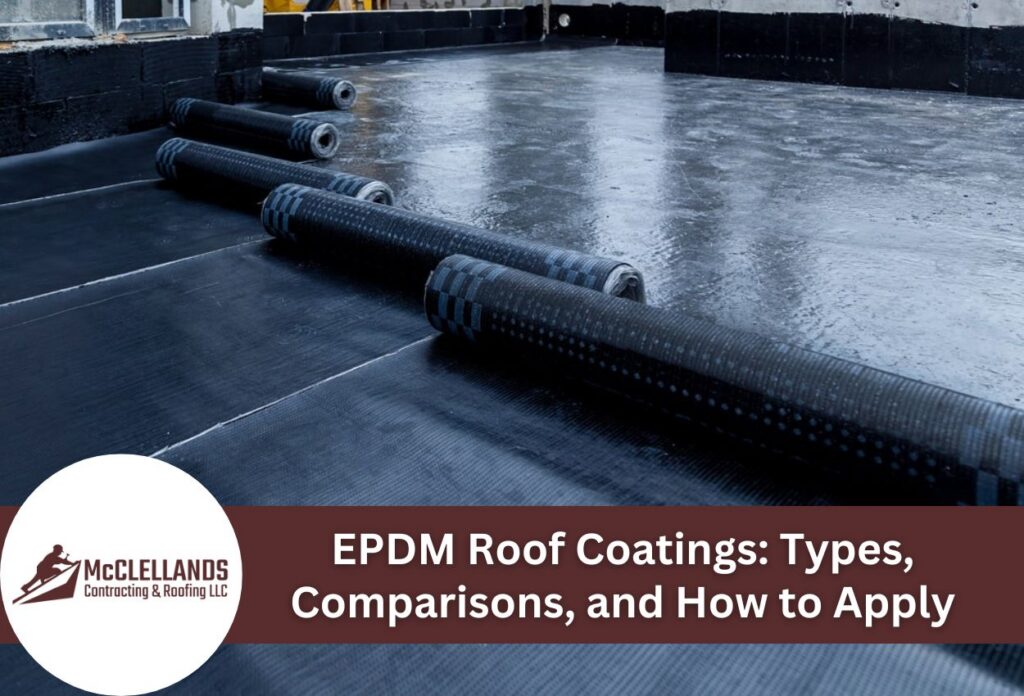

EPDM membranes typically last 20 to 30 years uncoated, but Pittsburgh’s temperature changes, averaging 60, 90, or more freeze-thaw cycles per year, accelerate surface degradation, and adding a coating can extend membrane life by 10 to 15 years. That gap in lifespan is the difference between replacing a roof on schedule and replacing it years too soon.
An EPDM roof coating is a liquid-applied elastomeric layer, basically a flexible, rubber-like material bonded directly over an existing EPDM membrane. It is not a replacement. It seals small cracks, reflects UV radiation, and adds a protective barrier without tearing off what is already there. Full replacement runs $4 to $8 per square foot. Coating an existing membrane costs $1 to $3 per square foot. That cost difference adds up fast on any commercial roofing or flat-roof property.
Which Types of EPDM Roof Coatings Are Compatible With Rubber Membrane Roofs?
Three coating types bond reliably with EPDM membranes: liquid rubber, silicone, and acrylic, and each performs differently across tensile strength, flexibility, and application temperature.
| Coating Type | Tensile Strength (psi) | Elongation (%) | Min. Application Temp ( degrees Fahrenheit) | Coverage Rate (sq ft/gallon) | Typical Cost (per gallon) |
|---|---|---|---|---|---|
| Liquid Rubber (EPDM-based) | 200 to 300 psi | 300% to 600% | 40 degrees | 50 to 80 sq ft | $60 to $120 |
| Silicone | 200 to 400 psi | 200% to 400% | 35 degrees | 60 to 100 sq ft | $50 to $100 |
| Acrylic | 150 to 250 psi | 100% to 200% | 50 degrees | 100 to 150 sq ft | $25 to $60 |
Liquid rubber coatings are the most chemically compatible with EPDM membranes because they share the same base polymer, allowing them to bond at the molecular level rather than simply sitting on top. That bond strength makes liquid rubber the most commonly specified coating in commercial flat roof coating applications across the Pittsburgh market.
Acrylic costs less per gallon but requires warmer temperatures, a real drawback in Pittsburgh, where usable application days are limited by the 40 degrees to 50 degrees minimum temperature window for much of the year.
How Do You Apply EPDM Liquid Rubber Roof Coating Step-by-Step?
Proper application takes 7 distinct steps spread across 2 to 4 days, depending on temperature and dry time between coats. In Pittsburgh, spring and fall applications require close attention to morning temperatures, which can drop below 50 degrees and halt the process before it starts.
- Inspect the surface for cracks, seams, and failed areas. Walk the entire roof and mark every crack, open seam, blister, and gap point. These spots need targeted treatment before any coating goes down.
- Clean with a pressure washer at 1,500 to 3,000 psi. Dirt, chalking, algae, and loose material must be fully removed. Any residue left on the membrane will break the bond between the coating and the EPDM surface.
- Allow 24 to 48 hours of dry time before proceeding. The membrane must be completely dry. Applying a coating over any trapped moisture causes bubbling and adhesion failure within 1 to 2 seasons.
- Embed reinforcing fabric tape at all seams and gaps during the first coat. This is the step most often skipped by DIYers, and skipping it is the leading cause of premature coating failure. Press the tape into the wet coating material and smooth out all edges before it cures.
- Apply the first coat at 1.5 to 2 gallons per 100 square feet. Use a roller or brush for edges and a larger roller for the field. Work in sections to keep a wet edge and avoid lap marks.
- Allow 12 to 24 hours of cure time before applying the second coat. Cooler temperatures slow curing. In Pittsburgh’s fall shoulder season, morning temperatures can push cure time toward the longer end of that window.
- Apply the second coat to reach a total dry film thickness of 20 to 30 mils. Two coats at the specified rate are needed to hit that target. A single thick coat is not an acceptable substitute. It traps solvent and cures unevenly.
Application requires temperatures between 50 degrees and 90 degrees with no rain in the forecast for at least 24 hours after the final coat. Missing that weather window is one of the most common reasons liquid rubber coatings fail early on Pittsburgh flat roofs. Plan application for late spring or early summer when temperatures are stable and extended dry forecasts are most reliable.
EPDM Roof Coating vs. Silicone Coating: Which Performs Better on Pittsburgh Flat Roofs?
Silicone outperforms liquid rubber on Pittsburgh flat roofs with drainage problems, but liquid rubber wins on chemical compatibility and long-term recoatability. The right choice comes down to four specific conditions your roof either has or doesn’t have.
- Ponding water resistance: Silicone does not degrade in standing water, making it the better choice when drainage problems cause water to sit on the surface of the roof for more than 48 hours after a rainstorm. Liquid rubber can soften and lose adhesion under prolonged ponding.
- Temperature change flexibility: Liquid rubber retains elasticity down to -40 degrees, while silicone holds flexibility down to -65 degrees. Both handle Pittsburgh winters, but silicone has a wider safety margin during extreme cold snaps.
- UV reflectivity over time: Silicone holds an initial reflectivity of 80% to 85% longer than acrylic, while liquid rubber reflectivity drops to 70% to 75% within 3 to 5 years without a topcoat applied over it.
- Recoatability and long-term costs: Silicone can only be recoated with silicone, locking property owners into one product line for every future application, a real cost concern over a 20 to 30-year roof lifespan. Liquid rubber offers more flexibility when it comes time to recoat.
Choose Liquid Rubber If
- The existing EPDM membrane is in good condition, and drainage clears within 48 hours of rainfall.
- Long-term recoatability and product flexibility matter more than maximum UV reflectivity.
Choose Silicone If
- The roof has documented drainage problems and water regularly ponds for more than 48 hours.
- Maximum UV reflectivity over time is the top priority, and the property owner accepts silicone-only recoating going forward.
Pittsburgh code does not restrict coating type selection, but contractor warranties often specify compatible product lines. Verify warranty terms before purchasing any coating material. Switching product types mid-roof-life can void coverage entirely.
When Is the Right Time to Apply EPDM Roof Coatings in Pittsburgh?
Mid-April through mid-October is Pittsburgh’s viable application window, when daylight hours bring temperatures consistently at or above 50 degrees, and precipitation risk stays manageable. Pittsburgh averages only 8 to 15 frost-free days in March, which makes early spring scheduling unreliable. A job booked for late March can stall for weeks waiting on usable conditions.
Late spring, specifically May through June, is the best window for scheduling. Temperatures average 60 degrees to 75 degrees, humidity stays moderate, and the peak summer storm season has not yet arrived. That combination gives coating materials the stable conditions needed to bond and cure correctly. July and August bring higher risks, as humidity regularly climbs above 70%, which slows cure times and can trap moisture under the coating before it fully sets.
Any application attempted below 40 degrees risks adhesion failure and coating delamination, which is one of the most common causes of warranty voidance on liquid rubber and acrylic products. Pittsburgh’s December through February months are not viable for either material type under any standard manufacturer specification. Silicone has a slightly lower minimum at 35 degrees, but even that threshold is regularly breached during Pittsburgh winters, where temperatures average well below freezing. Scheduling in the May to June window removes most of that risk and gives property owners the longest reliable cure time before fall temperature swings begin.
How Long Does EPDM Roof Coating Last and What Does It Cost to Recoat vs. Replace?
Liquid rubber recoating delivers the lowest annualized cost of any EPDM treatment option, running as low as $0.13 per square foot per year, less than half the per-year cost of full membrane replacement on most roofs.
| Treatment Option | Avg Cost per Sq Ft (Materials + Labor) | Expected Lifespan (Years) | Est. Cost per Year of Service Life | Recoat Interval |
|---|---|---|---|---|
| Liquid Rubber Recoat | $1.50 to $2.50/sq ft | 10 to 15 years | About $0.13 to $0.25/sq ft per year | Every 10 to 12 years |
| Silicone Recoat | $2.00 to $3.50/sq ft | 15 to 20 years | About $0.13 to $0.23/sq ft per year | Every 15 to 20 years |
| Full EPDM Membrane Replacement | $4.00 to $8.00/sq ft | 20 to 30 years | About $0.20 to $0.27/sq ft per year | Full replacement at the end of life |
For Pittsburgh roofs with membranes that are 10 to 20 years old and show no structural deck damage, liquid rubber recoating delivers the lowest annualized cost of the 3 options. Silicone recoating runs slightly higher upfront but extends the service interval, which can reduce long-term disruption on larger commercial roofs.
Roofs over 25 years old or with widespread seam failure are more cost-effective to replace outright. Recoating a failing membrane delays the inevitable and adds cost without extending true service life. Property owners in that situation should explore commercial roof replacement as the most reliable long-term solution.
Ready to Coat or Restore Your Pittsburgh Flat Roof? Here’s What to Do Next.
Booking before June keeps your project inside Pittsburgh’s most reliable application window, the same May to June period where temperatures average 60 degrees to 75 degrees and coating materials bond and cure without the humidity risk that July and August bring. Missing that window means pushing the job into fall uncertainty or waiting another full year.
McClellands Contracting and Roofing, LLC knows Pittsburgh’s flat roof building stock and the climate conditions that shorten coating life here. Schedule an inspection now before the summer application window fills up. The company serves Pittsburgh and the surrounding Allegheny County area.
Schedule your roof inspection.
Not ready to schedule? Learn more about EPDM roof coating services.