

 Residential
 Commercial
 Interior
 Exteriors
 Service Areas
 Contact Us
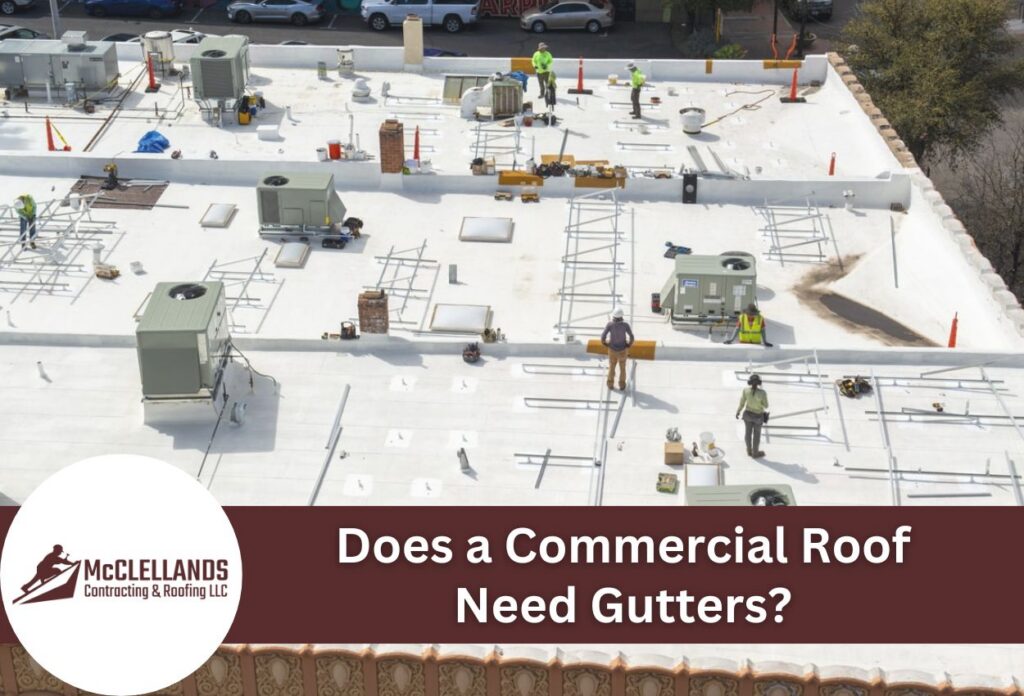

Commercial roofs handle water management differently than residential structures, and the question of whether gutters are necessary depends entirely on the building’s design and drainage strategy. Unlike sloped residential roofs that naturally channel water toward edges, many commercial buildings utilize flat or low-slope roofing systems that require specialized approaches to prevent water accumulation and potential damage.
The answer isn’t universal. Commercial roof drainage systems vary based on building codes, roof design, climate conditions, and the structure’s specific configuration. Some commercial buildings benefit from traditional gutters and downspouts along their perimeters, while others employ internal drains, scuppers, or combination systems that eliminate the need for external gutters. Understanding which commercial building gutter installation method works best requires examining factors like roof slope, surface area, regional rainfall patterns, and how water runoff impacts the building’s foundation and surrounding property.
Proper flat roof water management protects against expensive structural issues, foundation erosion, and interior water damage. Property owners must evaluate their building’s unique characteristics to determine whether gutters serve as the best solution for commercial roof water damage prevention or if alternative drainage approaches provide better long-term performance.
How Commercial Roof Design Affects Water Drainage Needs
The pitch and surface area of a commercial roof directly determine which commercial roof drainage systems will function most effectively. Sloped roofs naturally channel water toward edges through gravity, making commercial building gutter installation a practical solution for controlling runoff direction. Flat roofs, however, require different flat roof water management approaches since water pools rather than flows. These low-slope surfaces typically utilize internal drains positioned at strategic low points to collect standing water and direct it through vertical pipes.
Building dimensions and architectural elements significantly impact drainage requirements. Larger roofs generate greater water volumes that drainage systems must accommodate to prevent overflow and structural damage. Parapet walls, which extend above the roof line, create barriers that require specialized roof water runoff solutions like scuppers or overflow drains. The building’s height affects how water exits the drainage system, while surrounding landscape features influence where water should be directed. Implementing proper commercial roof water damage prevention measures requires analyzing these design factors to determine whether gutters, internal drains, or a combination of both systems will best protect the structure from water-related issues.
Alternative Drainage Systems for Commercial Properties
Internal drainage systems offer effective flat roof water management without requiring traditional gutters. Roof drains installed at low points collect water and channel it through pipes inside the building, preventing exterior runoff issues. These drains typically feature strainers or grates that prevent debris from clogging the system while allowing water to flow freely. Scuppers provide another roof water runoff solution by creating openings in parapet walls that allow water to exit through the building’s exterior wall. Many commercial roof drainage systems incorporate overflow drains positioned several inches above primary drains as a secondary protection layer against standing water when main drains become overwhelmed or blocked.
Hybrid drainage approaches combine multiple methods to maximize commercial roof water damage prevention. Property managers may integrate internal drains with perimeter gutters on buildings featuring both flat and sloped sections. This combination proves particularly valuable for structures with complex roof designs or those experiencing heavy rainfall. Some commercial building gutter installation projects include supplementary downspouts connected to internal drainage networks, creating redundant pathways for water removal. The choice between single-method and hybrid systems depends on roof configuration, local weather patterns, and building code requirements that govern drainage capacity standards.
Water Damage Risks Without Proper Roof Drainage
Inadequate commercial roof drainage systems create immediate threats to building foundations as uncontrolled water runoff saturates soil and causes erosion around structural footings. This constant moisture exposure weakens foundation stability and can lead to settling or cracking that compromises the entire structure. Exterior walls suffer from repeated water contact, with brick mortar deteriorating and siding materials degrading faster than normal wear patterns would predict. Landscaping near building perimeters experiences washout and vegetation loss when concentrated water flow lacks proper management through effective roof water runoff solutions.
Interior leaks represent one of the most expensive consequences of poor flat roof water management. Pooling water eventually finds weak points in roofing membranes, seeping into ceiling spaces and disrupting business operations with leaks that damage inventory, equipment, and interior finishes. Long-term structural damage accelerates when drainage problems persist, with roof membranes failing prematurely from constant standing water exposure. Fascia boards and soffit materials rot from persistent moisture contact that proper commercial building gutter installation would prevent. Maintenance costs multiply as property owners address recurring problems rather than implementing damage prevention measures that protect buildings from the ground up through the roofline.
Selecting the Right Drainage Solution for Your Building
Property owners must assess multiple building-specific factors when determining appropriate commercial roof drainage systems. Local climate conditions and rainfall intensity directly influence drainage capacity requirements, with regions experiencing frequent heavy storms needing more robust flat roof water management capabilities than areas with moderate precipitation. The roof membrane type affects which drainage methods integrate most effectively, as different materials respond differently to standing water and require specific installation approaches. Buildings with limited maintenance staff should prioritize commercial building gutter installation or drainage configurations that minimize debris accumulation and reduce cleaning frequency.
Building code compliance establishes minimum standards for drainage system sizing based on roof area and regional weather data. Calculating adequate capacity involves measuring the roof’s square footage and multiplying it by local rainfall intensity rates to determine required drain flow rates. These calculations ensure roof water runoff solutions can handle peak water volumes during severe weather without overwhelming the system. Property managers in the Pittsburgh area should verify that drainage designs meet both state and municipal requirements while accounting for seasonal weather variations. Proper system sizing prevents the commercial roof water damage prevention failures that occur when undersized drains cannot accommodate actual water volumes, leading to overflow conditions that compromises the building’s structural integrity.
Professional Installation Requirements for Commercial Gutters
Proper commercial building gutter installation begins with selecting materials that withstand the weight and volume requires of large-scale commercial roof drainage systems. Aluminum, steel, and copper options each offer distinct durability characteristics suited to different building types and budgets. The gutter pitch must maintain a minimum slope of ¼ inch per 10 feet of run to ensure water flows toward downspouts rather than pooling in sections. Hanger spacing requirements differ significantly from residential standards, with commercial systems typically requiring supports every 2 to 3 feet to handle increased water loads and prevent sagging that compromises flat roof water management effectiveness.
Integration with existing roofing systems requires careful attention to flashing details and membrane connections to prevent leaks at critical junctions. Professional installers must coordinate gutter placement with roof edge details, ensuring that water transitions smoothly from roofing materials into the drainage system without creating gaps where moisture can leak in. Downspout sizing and placement affect overall system performance, with commercial applications requiring larger diameter pipes positioned to distribute water away from foundations. These roof water runoff solutions must account for thermal expansion in materials and seasonal weather changes that affect component performance, making expert installation essential for achieving reliable commercial roof water damage prevention that protects the building investment long-term.
Maintenance Schedules and Inspection Protocols
Commercial roof drainage systems require regular inspection twice a year, typically in spring and fall, to identify potential problems before they escalate into expensive repairs. These scheduled examinations should evaluate gutter conditions, checking for accumulated debris, standing water, and structural integrity issues that affect flat roof water management performance. Property managers should document inspection findings with dated photographs and detailed notes that track drainage system condition over time. Immediate post-storm assessments provide additional value after severe weather that may overwhelm or damage commercial building gutter installation components.
Common problems include leaf and debris buildup that restricts water flow, creating backups that defeat the purpose of roof water runoff solutions. Loose or damaged hangers compromise gutter stability, causing sections to pull away from fascia boards and redirect water toward building foundations rather than designated drainage points. Corrosion and rust development indicate material degradation that weakens the system’s structural integrity, particularly at seam connections where water exposure concentrates. Ice dam formation during the winter presents regional challenges that require preventive measures tailored to local climate patterns. Establishing consistent maintenance protocols extends system lifespan while maintaining effective commercial roof water damage prevention capabilities that protect structural elements and interior spaces from moisture intrusion.
Making the Right Drainage Decision for Your Commercial Building
Determining the best commercial roof drainage systems for a specific property requires weighing multiple factors against practical constraints. Commercial building gutter installation offers visible, accessible components that simplify maintenance and repair, making it suitable for structures with adequate perimeter space and sloped roof sections. Internal drain systems provide clean exterior appearnaces and work effectively on flat roofs where conventional gutters prove impractical. Property owners should consider initial installation complexity, ongoing maintenance needs, and how each roof water runoff solution integrates with existing building features. Budget considerations extend beyond installation to include long-term upkeep expenses and potential repair costs associated with different drainage approaches.
Professional evaluation from experienced roofing contractors provides essential guidance for selecting appropriate flat roof water management strategies. Qualified professionals assess roof pitch measurements, calculate water volume based on surface area and regional rainfall data, and identify structural factors that influence drainage performance. These experts ensure commercial roof water damage prevention systems comply with building codes while addressing site-specific challenges like surrounding landscape grades and foundation proximity. Consulting with knowledgeable contractors prevents expensive mistakes that occur when property owners implement inadequate solutions, protecting buildings through proper system design and expert installation that addresses unique drainage requirements effectively.
Expert Commercial Roofing Solutions at McClellands Contracting and Roofing, LLC
If you’re grappling with the decision of whether your commercial roof needs gutters, let McClellands Contracting and Roofing, LLC guide you to the best solution. Specializing in both innovative and traditional commercial roof drainage systems, we understand the complexities of flat roof water management and the important role effective drainage plays in protecting your property. Don’t let inadequate drainage compromise your building’s structural integrity and lead to unnecessary water damage.
To discuss your specific roofing needs and explore our roof water runoff solutions call us directly at (412) 353-5660. At McClellands Contracting and Roofing, LLC, we ensure your commercial roofing system is equipped with the best drainage solution, tailored to your building’s unique requirements and local climate conditions.