

 Residential
 Commercial
 Interior
 Exteriors
 Service Areas
 Contact Us
Key Points:
- The key difference between roof sealant and coating is that sealants target specific leaks, while coatings protect the entire surface of the roof.
- Choose sealants for targeted minor repairs around gaps or for quick, cost-effective fixes with limited timelines.
- Coatings provide full, long-term protection for the full surface of the roof, ideal for flat roofs and aging systems in Pittsburgh.
When facing roofing problems, property owners often find themselves choosing between roof sealants and coatings without fully understanding how these roof protection products differ. The difference between roof sealant and coating lies in their application and protective approach. Roof sealants function as targeted repair solutions designed to fill specific gaps, cracks, and joints where leaks occur. These products excel at addressing localized problem areas with precision.
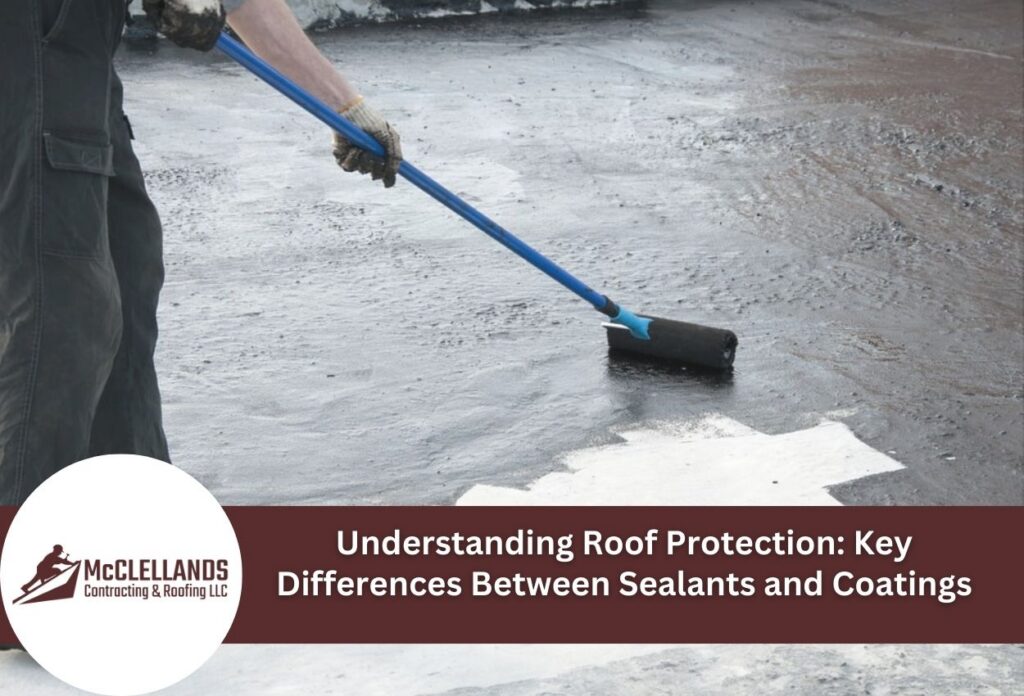
Roof coatings take a completely different approach to roof waterproofing options. These protective membrane systems create a continuous barrier that covers the entire surface of the roof, providing weather protection across the full roofing system. While deciding between roof sealant and coating depends on specific roofing needs, understanding their fundamental differences helps determine which solution addresses particular roofing challenges most effectively. Each product serves distinct purposes in roof maintenance and protection strategies.
How Roof Sealants Work for Targeted Repairs
Roof sealants provide precise solutions for specific problem areas through their unique application methods and material composition. These roof protection products bond directly with existing roof materials, creating watertight seals that prevent leaks at vulnerable points. Most sealants contain flexible polymers that expand and contract with temperature changes, maintaining their protective seal over time. The application process involves cleaning the target area thoroughly before applying the sealant material using caulk guns, brushes, or trowels, depending on the product consistency.
These roof waterproofing options prove most effective around flashing installations, roof vents, chimney gaps, and existing leak points that require immediate attention. Unlike roof coating systems that cover large surface areas, roof sealant applications focus on joints and seams where different roofing materials meet. The difference between roof sealant and coating becomes apparent in these targeted repairs, as sealants fill gaps and cracks while maintaining flexibility to accommodate building movement and thermal expansion without compromising the watertight barrier.
The Science Behind Roof Coating Systems
Roof coating technology relies on advanced materials that create continuous protective films across the entire surface of the roof. These systems work by forming a seamless membrane that reflects harmful UV rays while providing weatherproofing protection. The application process involves thorough surface preparation followed by spray or roller application of the coating material, which then cures to form a durable protective layer. This scientific approach differs significantly from roof sealant applications, as coatings bond at the molecular level with the roof deck to create uniform protection.
Three primary coating materials dominate roof waterproofing options: acrylic, silicone, and polyurethane. Acrylic roof coating systems offer excellent UV reflection and work effectively on metal and modified bitumen surfaces. Silicone coatings provide superior water resistance and perform well on existing coating systems. Polyurethane delivers exceptional durability and bonds effectively with concrete and metal decks. Each coating type utilizes different chemical bonding mechanisms to adhere to roofing materials, creating protective barriers that extend roof life through surface protection rather than the targeted approach of roof sealant products.
When to Choose Sealants Over Coatings
Specific roofing scenarios make roof sealant a more practical choice over coating systems. Minor leak repairs around roof gaps, HVAC units, and flashing details benefit from targeted sealant applications that address immediate leak problems. These roof protection products excel in preventive maintenance situations where property owners need to seal individual seams or joints before they develop into larger issues. The difference between roof sealant and coating becomes evident when dealing with localized problems that don’t require full surface treatment.
Budget considerations often drive the roof sealant vs. coating decision, particularly for emergency repairs requiring immediate attention. Sealants provide cost-effective solutions for urgent leak repairs that cannot wait for coating projects. Timeline factors also favor sealant applications when weather windows are limited or building operations cannot accommodate extended roof work. These roof waterproofing options allow property owners to address important roofing issues quickly while planning for long-term protection strategies that may include full coating systems in future maintenance schedules.
Ideal Situations for Roof Coating Applications
Roof coating systems perform exceptionally well on specific roof types and materials that benefit from complete surface protection. Flat roofs with EPDM, TPO, or modified bitumen membranes gain significant longevity from coating applications that create seamless protective barriers. Metal roofing systems, particularly those showing signs of corrosion or weathering, respond well to coating treatments that restore protective properties while extending service life. Aging membrane systems that exhibit surface degradation but maintain structural integrity become ideal candidates for roof coating restoration rather than complete replacement.
Pittsburgh’s climate conditions strongly influence roof coating performance and longevity expectations. The region’s freeze-thaw cycles, heavy precipitation, and temperature fluctuations create demanding environments where roof protection products must demonstrate flexibility and adhesion properties. Roof coating systems designed for northeastern climate conditions provide superior protection against ice dam formation and thermal shock compared to roof sealant applications. The difference between roof sealant and coating becomes particularly important in Pittsburgh’s weather patterns, where comprehensive surface protection offers better long-term value than localized repairs on deteriorating roofing systems.
Durability and Maintenance Requirements
Understanding the longevity expectations of roof protection products helps property owners plan effective maintenance schedules and budget for future roofing needs. Roof sealant applications typically provide 3 to 7 years of reliable performance, depending on material quality and environmental exposure conditions. Signs indicating sealant replacement include visible cracking, pulling away from surfaces, or leaks at previously sealed areas. Regular inspection of sealant joints should occur annually, with particular attention to high-stress areas around roof gaps and flashing connections.
Roof coating systems offer significantly longer service intervals, commonly providing 10 to 20 years of protection when properly maintained. These roof waterproofing options require biannual inspections to identify potential issues before they compromise the system’s structural integrity. Factors affecting coating durability include UV exposure intensity, ponding water conditions, and foot traffic frequency across treated surfaces. The difference between roof sealant and coating maintenance becomes apparent in their inspection requirements, as coatings need evaluation across the entire surface of the roof while sealants require focused attention on specific application points. Professional assessment every 5 years ensures the best performance from both roof protection products throughout their expected service life.
Making the Right Choice for Your Pittsburgh Roof
Determining whether your roof needs targeted sealant repairs or coating protection requires a close look at the current roofing conditions and protection goals. Property owners should evaluate the extent of roofing issues, with isolated leaks and minor problems typically indicating that sealant solutions work best. Widespread surface deterioration, multiple leak points, or aging roofing systems generally benefit from complete coating applications that address protection needs.
Professional evaluation considers multiple factors when selecting between roof waterproofing options, including roof age, existing material compatibility, and local weather exposure patterns. Pittsburgh’s climate requires specific attention to freeze-thaw cycles and the moisture management capabilities of both roof sealant and roof coating systems. Experienced roofing contractors assess structural integrity, existing coating presence, and decking conditions to determine which roof protection products provide the best performance. The roof sealant vs. coating decision ultimately depends on balancing immediate repair needs against long-term protection strategies that align with building maintenance objectives and budget planning requirements.
Protect Your Pittsburgh Roof with Expert Solutions from McClellands Contracting and Roofing, LLC
Deciding between roof sealant and coating can be challenging, but understanding their distinct benefits tailored to specific needs can significantly impact your roof’s longevity and performance. If you’re facing minor leaks or require immediate maintenance, a sealant might be your go-to option. However, for overall roof protection against harsh weather conditions prevalent in Pittsburgh, a coating system offers a durable barrier that not only enhances your roof’s life but also improves its overall energy efficiency.
Don’t let the complexity of choice overwhelm you. McClellands Contracting and Roofing, LLC is here to provide professional guidance and top-notch service. Whether you need targeted repairs with sealants or a roof coating application, our experts are equipped to help you make the best decision for your roofing needs. Call us today at (412) 353-5660 to schedule an assessment and ensure your roof is in its best condition year-round.