

 Residential
 Commercial
 Interior
 Exteriors
 Service Areas
 Contact Us
Why Are Your Gutters Pulling Away From Your Roofline? Common Causes and Solutions
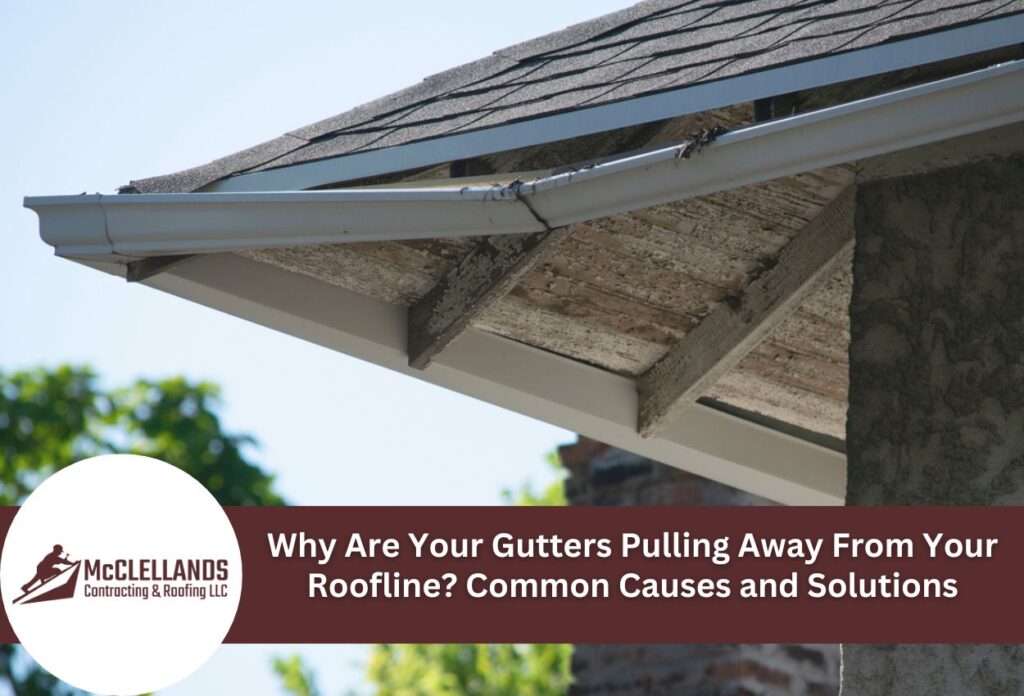

Gutters that are pulling away from your roofline are a serious problem that needs immediate attention. When gutters separate from the fascia board, they can no longer protect your home from water damage, potentially leading to expensive repairs affecting your roof, siding, and foundation.
Several warning signs indicate gutter separation from the fascia board, including visible gaps between the gutter and roofline, water spilling over the sides during rainfall, and sagging sections. Loose gutter hangers often cause these problems, as they weaken over time due to weather exposure and the weight of accumulated debris.
Properly functioning gutters should sit snugly against the fascia board with secure hangers spaced every 2 feet. These hangers bear the responsibility of supporting the entire gutter system, channeling rainwater safely away from your home. When this system fails, fascia board damage from gutters becomes inevitable.
Understanding why gutters pull away from houses helps homeowners recognize problems early. Heavy ice accumulation, clogged gutters filled with debris, and deteriorating fascia boards all contribute to gutter separation. Weather extremes cause expansion and contraction that loosen mounting hardware over time.
Loose and Damaged Gutter Hangers Are Often the Main Culprit
Gutter hangers serve as the backbone of your entire gutter system, supporting hundreds of pounds of water, debris, and ice throughout the seasons. These critical components attach directly to the fascia board or roof, bearing the full weight of the gutters during heavy rainfall and snowfall. Over time, constant exposure to temperature fluctuations, moisture, and structural stress causes these hangers to weaken and fail.
When loose gutter hangers begin deteriorating, the first signs appear as slight sagging or small gaps between the gutter and fascia board. Weather cycles create expansion and contraction that gradually loosen screws and brackets. Accumulation of heavy debris adds extra weight that accelerates this process, causing the gutters to separate from the fascia board.
Different hanger types present varying levels of durability and failure rates. Spike and ferrule systems, common in older installations, tend to become loose more quickly than hidden hangers or fascia brackets. Strap hangers wrapped over the roof edge offer superior support but require proper installation to prevent sagging gutters and repair issues.
Understanding why gutters pull away from houses often traces back to inadequate hanger spacing or using lightweight hardware inappropriate for local weather conditions. Professional assessment identifies which hangers require replacement before minor gutter pulling away from house problems escalate into major fascia board damage from gutters.
Heavy Water and Clogged Gutters Create Excessive Weight
Water accumulation from clogged gutters creates enormous stress on gutter attachment points, often exceeding the design capacity of standard hangers. When leaves, twigs, and debris block downspouts, standing water transforms lightweight gutters into heavy structural loads that strain mounting hardware. Each linear foot of standing water adds approximately 5 pounds of weight, causing the gutters to separate from the fascia board as hangers struggle under this unexpected burden.
Blocked gutters force water to remain in the system rather than flow toward downspouts, creating pressure that pulls gutters away from their mounting points. This standing water also freezes during cold weather, expanding and adding even more weight while pushing against the walls of the gutter.
Pittsburgh winters bring additional challenges through ice dams and heavy snow accumulation that add to gutter weight problems. Ice dams form when melting snow refreezes in gutters, creating solid ice blocks that can weigh hundreds of pounds. These frozen masses pull gutters away from fascia boards, causing sagging gutters, repair needs, and potential fascia board damage from gutters.
Heavy snow combined with existing debris creates perfect conditions for gutters to pull away from the structure’s fascia boards. The gradual accumulation of weight over winter slowly loosens mounting hardware, leading to catastrophic failure during the spring thaw when ice melts rapidly and overwhelms weakened systems.
Fascia Board Deterioration Weakens Your Gutter Support System
Fascia board deterioration creates a cascade of problems that undermines the entire gutter attachment system. When wooden fascia boards absorb moisture from failed gutters or inadequate sealing, they begin to rot and lose their structural integrity. This decay weakens the board’s ability to hold screws and brackets securely, causing gutter separation from the fascia board as mounting hardware pulls loose from deteriorated wood fibers.
Signs of rotting fascia boards include soft or spongy wood texture, discoloration, peeling paint, and visible gaps where gutters once fit tightly against the roofline. Water stains on fascia boards indicate prolonged moisture exposure that compromises the wood’s strength. As rot progresses, loose gutter hangers begin pulling away from the weakened fascia, creating larger gaps that allow more leaks to form.
Moisture problems behind gutters develop when water seeps between the gutter and fascia board through small gaps or damaged caulking. Trapped moisture against your roof’s fascia boards prevents proper drying and accelerates wood decay that spreads along the surface over several years. The gradual deterioration often goes unnoticed until sagging gutters repair becomes urgent due to complete attachment failure.
Understanding why gutters pull away from houses requires recognizing how fascia board damage from gutters creates a self-perpetuating cycle.
Poor Installation Methods Lead to Premature Gutter Failure
Installation mistakes account for the majority of premature gutter failures that cause systems to pull away from houses within just a few years of installation. Proper gutter installation requires precise hanger spacing, appropriate fastener selection, and an understanding of local weather loads.
Common installation errors include spacing hangers too far apart, typically beyond the recommended 18 to 24-inch intervals. This excessive spacing creates weak points where gutters sag between support points, concentrating stress on individual hangers until they fail. Using incorrect fastener types, such as lightweight screws instead of heavy-duty lag bolts, adds to these problems by providing inadequate holding power in fascia boards.
Many contractors also fail to properly assess fascia board condition before installation, mounting new gutters to deteriorated wood that cannot provide adequate support. This oversight leads to gutters pulling away from the house, issues within the first year, as weakened attachment points give way under normal weather.
Without understanding load requirements and fastener specifications, well-intentioned homeowners often create conditions for rapid system failure, leading to fascia board damage from gutters and expensive professional remediation work.
Weather and Age Take Their Toll on Gutter Attachment Points
Pittsburgh’s extreme weather cycles create relentless stress on gutter attachment systems through repeated freeze-thaw patterns that gradually loosen even properly installed hardware. Temperature swings from freezing winters to hot summers cause metal gutters and mounting brackets to expand and contract continuously, working fasteners loose over multiple seasons. This natural expansion and contraction process slowly enlarges screw holes in fascia boards, reducing the holding power that keeps gutters securely attached to the roofline.
The aging process affects all gutter materials regardless of initial quality or proper maintenance practices. Metal fatigue develops in aluminum gutters after years of thermal cycling, while steel components may rust at connection points despite protective coatings. Even high-quality gutter hangers experience material degradation as galvanized coatings wear thin and expose underlying metals to corrosion that weakens their structural integrity.
Normal settling of house structures compounds age-related gutter problems as foundation movement creates slight shifts in roofline alignment. These minor structural changes alter the stress patterns on gutter mounting points, causing previously secure attachments to work loose over time.
Understanding that loose gutter hangers represent inevitable wear rather than installation defects helps homeowners plan for systematic replacement before complete failure occurs. Recognizing when sagging gutters repair transitions from maintenance to full system replacement prevents the extensive fascia board damage from gutters that develops when aged attachment points finally give way completely.
Repair Solutions and Prevention Tips to Keep Gutters Secure
Addressing gutters pulling away from the fascia boards requires choosing between professional repair services and manageable DIY fixes based on the problem’s severity. Minor issues like loose gutter hangers can often be resolved by homeowners using basic tools and replacement hardware, while extensive fascia board damage from gutters demands professional intervention to prevent recurring problems.
Simple repairs include tightening existing hanger screws, replacing individual damaged brackets, and adding extra hangers to reduce spacing between attachment points. Homeowners can handle these basic maintenance tasks when gutters show early signs of sagging or slight separation. However, when fascia boards show rot, multiple hangers have failed, or the gutter is pulling away from the house, problems affect long sections. Professional roofing contractors possess the expertise and specialized equipment necessary for comprehensive repairs.
Prevention strategies significantly extend gutter system life and reduce sagging gutter repairs. Regular cleaning removes debris that creates excessive weight loads on attachment points, while annual inspections identify loose gutter hangers before they cause separation problems. Installing gutter guards reduces debris accumulation, and upgrading to heavy-duty hangers provides superior holding power for challenging weather conditions.
Professional gutter upgrades include reinforcing fascia boards, installing commercial-grade mounting systems, and implementing proper drainage improvements that prevent ice dams. These preventive measures address the root causes of why gutters pull away from houses, providing long-term solutions that protect both the gutter system and the home’s structural integrity.
Protect Your Home with Professional Gutter Repairs by McClellands Contracting and Roofing, LLC
Are your gutters sagging or pulling away from your house? This is a serious concern that can lead to significant water damage to your property. At McClellands Contracting and Roofing, LLC, we understand the critical role gutters play in maintaining the integrity of your home. Whether it’s due to loose gutter hangers, fascia board damage, or improper installation, our team is equipped to handle all your gutter repair needs efficiently.
Ignoring these warning signs can lead to more extensive and expensive damage. For expert advice and professional repair services, call us today at (412) 353-5660. Ensure your gutters are securely attached and fully functional to protect your home from the harsh Pittsburgh weather. Trust McClellands Contracting and Roofing, LLC to provide reliable solutions and quality craftsmanship for all your roofing and gutter needs.