Western PA's #1 For Roofing & Interiors
Western PA's #1 For Roofing & Interiors
Western PA's #1 For Roofing & Interiors

Cranberry Township gets a lot of weather. Between the heavy spring rains, summer thunderstorms, and snow that melts and refreezes through winter, your gutters are working hard for most of the year. With precipitation spread across well over 150 days annually, there is rarely a long dry stretch that gives your drainage system a break. That kind of constant exposure puts real stress on seams, fasteners, and downspouts, and when gutters start to pull away, crack, or clog without draining properly, water ends up where it should not be: against your foundation, behind your siding, and under your roofline. In a market where homes have been settling into their lots for decades, a lot of existing gutter systems are simply past their best years.
Replacing your gutters is one of the more straightforward ways to protect your home from the kind of moisture damage that adds up quietly over time. New gutters sized and installed correctly for your home can handle heavy rain and snowmelt without backing up or pulling loose.
McClellands Contracting and Roofing, LLC works with homeowners throughout Cranberry Township who want a reliable drainage system that holds up through the full range of western Pennsylvania weather, not just the mild stretches. From selecting the right gutter profile to securing proper downspout placement, the goal is a system your home can depend on year after year.
Gutter replacement affects more than the gutters themselves. The condition of the fascia boards, roof edge, downspout layout, and existing drainage pattern all influence how the new system should be installed on a Cranberry property.
Choosing the right gutter system for your home involves more than picking a profile. The weather patterns Cranberry Township sees throughout the year, frequent rain, heavy snowmelt, and repeated temperature changes, all factor into which materials and sizing actually hold up over time.
| Consideration | What It Means for Your Home | Why It Matters in Cranberry, PA |
|---|---|---|
| Gutter sizing | Wider gutters move more water volume quickly | Heavy spring and summer rain can overwhelm undersized gutters |
| Seam placement | Fewer seams mean fewer points where leaks develop | Repeated temperature changes put constant stress on seam connections |
| Downspout capacity | Proper sizing and placement keep water moving away from the foundation | Cranberry homes see precipitation on a large share of days each year |
| Fastener strength | Secure mounting prevents gutters from pulling away from the fascia boards | Heavy snow and ice buildup add weight that loose fasteners cannot handle |
| Permit awareness | Gutter replacement is generally straightforward from a township code standpoint | Cranberry Township has a formal permitting process for exterior residential work |
Getting these details right at installation is what separates a system that lasts from one that starts showing problems after a season or two. A properly sized and secured gutter system does its job quietly, keeping water away from your foundation, siding, and roofline without requiring constant attention.
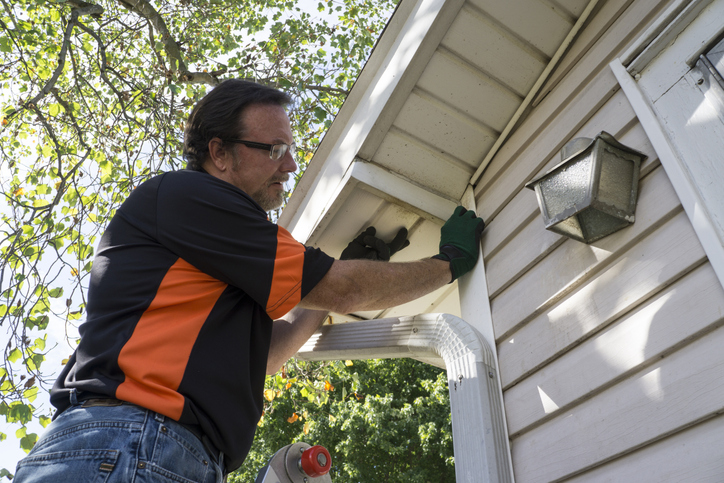
New gutters are only as solid as what they are attached to. Before mounting begins, the fascia boards along your roofline are checked for rot, soft spots, or damage that would compromise how securely the new system holds over time, and any problem areas are addressed so the installation has a sound surface to work with.
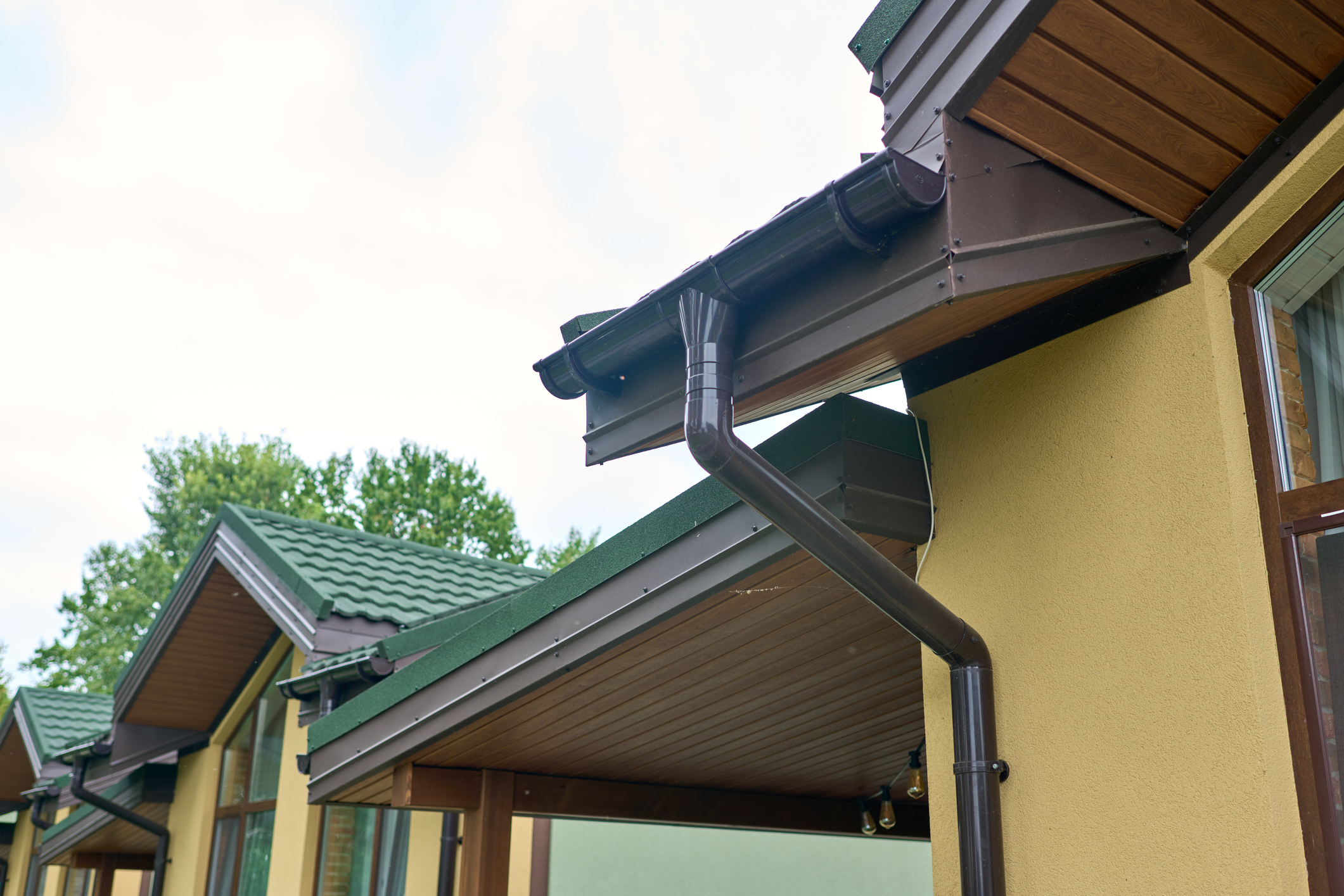
Where water exits your gutter system matters as much as how it gets there. Downspout outlets and discharge points are positioned to direct water well away from your foundation, walkways, and landscaping, reducing the risk of pooling or erosion near the base of your home.
End caps and any necessary joints are sealed during installation to stop leaks at the points where water tends to find its way through first. In a climate where rain falls regularly throughout the year, a watertight seal at every connection point is what keeps the system performing the way it should between service visits.
The size and profile of your new gutters are matched to the actual drainage area of your roof, not just selected by default. Homes with larger roof surfaces or steeper pitches need gutters that can move a higher volume of water quickly, and getting that match right is what prevents overflow during the heavy rain Cranberry Township sees through spring and summer.
Cranberry Township does not give gutters an easy life. With rain falling on a large share of days throughout the year, stretches of heavy snowmelt, and repeated temperature changes that stress seams and fasteners season after season, an aging gutter system simply cannot keep up the way a properly installed replacement can. Getting new gutters sized and secured correctly protects your foundation, your siding, and the structure around your roofline from the kind of gradual moisture damage that tends to go unnoticed until the repair bills are much larger than expected.
If your gutters are pulling away, leaking at the seams, or no longer draining the way they should, McClellands Contracting and Roofing, LLC is ready to help you sort out the right solution for your home. Homeowners across Cranberry Township can reach out when they are ready, and the team will take a look at what you have and walk you through your options.
Got questions about your roof? We’ve got answers. From maintenance tips to insurance claims and repair timelines, our FAQ section covers the most common concerns homeowners have. Get informed and make confident decisions about protecting your home.
In most cases, gutter replacement in Cranberry Township does not require a building permit, which makes the process more straightforward than many other exterior projects. That said, if work involves structural repairs to fascia boards or other parts of the roofline beyond the gutters themselves, the scale of the project may change that picture. A reputable contractor familiar with the township's codes can help you understand what applies to your specific job before work begins.
Cranberry Township sees a wide range of temperatures across the year, and that repeated expansion and contraction puts constant stress on the joints where gutter sections connect. Over time, sealant breaks down and metal shifts just enough that seams start to separate and leak, often before the rest of the gutter shows any obvious wear. Seamless gutter systems reduce the number of those vulnerable connection points, which is one reason they tend to hold up better in western Pennsylvania's weather conditions.
Most homeowners focus on the gutters themselves and overlook whether their downspouts can keep up with the volume of water coming off the roof during a heavy storm. A roof with a large surface area or steep pitch pushes water into the gutters faster than undersized or poorly placed downspouts can drain it, which leads to overflow even when the gutters themselves are in decent shape. The right answer depends on your specific roof layout, and getting that calculation right at the time of replacement prevents a problem that is easy to miss until you are watching water pour over the sides during the next big rain.


 Residential
 Commercial
 Interior
 Exteriors
 Service Areas
 Contact Us