

 Residential
 Commercial
 Interior
 Exteriors
 Service Areas
 Contact Us
Identifying and Replacing Damaged Roof Trusses: What Pittsburgh Homeowners Need to Know
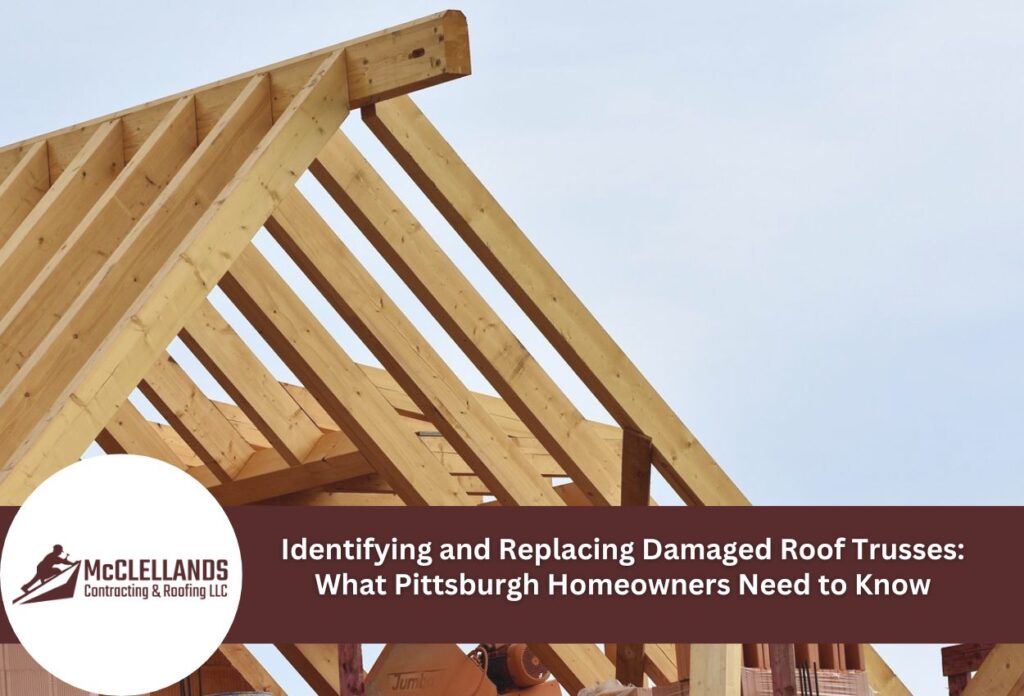

Roof trusses form the critical backbone of your home’s structure, silently supporting the roof above. For Pittsburgh homeowners, this part of the roof faces unique challenges from heavy snow loads, seasonal temperature fluctuations, and occasional severe weather that can lead to damage over time. Recognizing the signs of a compromised roof truss is crucial before small issues become major structural problems, including concerns about the roof’s roof weight capacity.
When a roof truss becomes damaged, telltale signs often appear throughout the home. Sagging roof lines, cracks appearing in ceiling drywall, or unusual patterns of water damage can all signal truss issues that require attention. Western Pennsylvania homes, many featuring distinctive architectural styles at varying ages, may exhibit specific problems with their roof trusses that differ from properties in other regions.
The process to replace damaged roof trusses involves several important steps, from properly identifying affected components to selecting appropriate repair techniques based on the severity of damage. Whether it’s considering a DIY truss replacement or determining when structural roof repair methods require professional help, knowing the fundamentals of roof truss restoration provides essential protection for your Pittsburgh home’s value and safety.
Signs of Compromised Roof Trusses: When Replacement Is Necessary
Recognizing when roof trusses have deteriorated beyond repair requires careful inspection. The most obvious signs include visible sagging along the roof line, severe cracking across truss members, or noticeable deformities. Wood rot, particularly caused by humidity, often appears as soft, discolored areas that crumble when touched. Termite damage can also create distinctive tunneling and hollow sections within the wood, compromising structural integrity.
Pittsburgh homes face unique environmental challenges that accelerate truss deterioration. Heavy winter snow loads place tremendous weight on roof structures, sometimes exceeding their design capacity during severe storms. The region’s seasonal temperature changes cause repeated expansion and contraction, weakening joints over time. Many older Pittsburgh homes suffer from not having enough attic ventilation, creating excess moisture that promotes wood decay and weakens structural components.
When evaluating whether roof truss repair techniques will suffice or a complete replacement is necessary, professionals look for critical points of failure. Multiple cracked members, joints pulling apart, or extensive rot typically indicate that the safest solution is replacement. For Pittsburgh homeowners, addressing these issues as soon as possible prevents continuous damage to other parts of your home and prevents the substantially higher costs of emergency repairs after a partial roof collapse.
Selecting the Right Materials and Tools for Effective Truss Restoration
Selecting appropriate materials for roof truss replacement requires careful consideration of Pittsburgh’s specific climate challenges and the roof structural materials used in the home’s original construction. For replacement lumber, pressure-treated Douglas fir or Southern yellow pine rated for structural use provides excellent strength-to-weight ratios and natural resistance to moisture. Look specifically for Select Structural Lumber, or lumber graded #1, to ensure sufficient load-bearing capacity.
Metal connectors play a crucial role in truss restoration. Galvanized steel plates, hurricane ties, and structural screws designed for wet environments prevent joint failure during temperature fluctuations. For older homes, consider upgrading to modern connector systems that provide superior load distribution compared to original construction methods. Waterproof construction adhesive applied at all joints creates a secondary moisture barrier that extends the lifespan of the truss.
Essential tools for professional-quality truss work include a quality circular saw with a framing blade, a reciprocating saw for tight spaces, a framing square, a laser level, and hydraulic jacks for temporary support. While specialized equipment like truss jigs represents a substantial investment, rental options make sense for one-time repairs. However, Pittsburgh homeowners planning ongoing maintenance might consider purchasing basic tools like moisture meters to monitor attic conditions and prevent future truss damage through early detection.
Safety First: Steps To Take Before Tackling Truss Replacement
Before attempting any roof truss repair or replacement, establishing proper safety protocols is essential to protect both your home and yourself. Start by turning off the electricity to the attic area, as damaged wiring near trusses poses serious hazards. Carefully identify all load-bearing walls below the damaged truss, since these structural elements support the weight transferred from your roof and require special attention during repairs. Pittsburgh homes, especially older structures in neighborhoods like Shadyside or Squirrel Hill, often have complex load paths that require thorough assessment.
Personal protective equipment is non-negotiable for attic truss replacement. Always wear a NIOSH-approved respirator to protect against insulation particles, safety glasses for eye protection, sturdy gloves, and a hard hat. Create a safe walking path in the attic using plywood sheets placed across joists to prevent foot injuries or ceiling damage. Having enough lighting is also critical, but consider battery-powered LED work lights, which eliminate the risk of electrical fires.
Temporary support structures must be installed before removing damaged components. This involves placing adjustable support posts or building temporary walls beneath the affected area to maintain structural integrity during roof support beam restoration. For DIY damaged truss replacement, use multiple support points distributed across adjacent ceiling joists to prevent the weight from concentrating on one support.
The Truss Replacement Process for Homeowners
Replacing damaged roof trusses requires methodical execution and attention to detail. Begin by completely removing the damaged section of the truss by cutting it away with a reciprocating saw, making sure to maintain temporary supports on both sides. Measure the removed section precisely, accounting for both length and angle cuts. When selecting replacement lumber, choose the same dimensions and grade as the original, which is typically 2×4 or 2×6 dimensional lumber. Cut your replacement piece using a miter saw for clean, accurate angles that will ensure proper load transfer.
Installation requires careful alignment with existing truss components. Position the replacement piece and secure it temporarily with clamps before permanently fastening it in place. Use galvanized metal connector plates at joints for maximum strength, supplemented with construction adhesive for added durability. Structural screws provide superior holding power compared to nails, especially important given Pittsburgh’s freeze-thaw cycles that can cause fasteners to loosen over time.
Working in attic spaces presents unique challenges during roof support beam restoration. Limited headroom often requires working from awkward positions, so having a helper pass tools and materials can improve efficiency. For complex repairs involving multiple truss components, work in order from the bottom chord upward to maintain structural stability throughout the process. After completion, have your work inspected to ensure it meets local building code requirements.
DIY vs. Professional Replacement: Making the Right Choice for Your Home
Deciding whether to tackle damaged roof truss replacement yourself or hire a professional depends on several critical factors. For minor damage limited to a single truss, experienced DIY homeowners with carpentry skills might be able to complete repairs. However, when damage affects multiple trusses or compromises key structural joints, professional expertise becomes essential. Pittsburgh building codes require permits for structural modifications, and licensed contractors understand these requirements thoroughly, helping you avoid potential code violations and inspection failures.
Professional roof truss replacement offers significant advantages despite the higher initial price. Qualified Pittsburgh roofing contractors bring specialized equipment like hydraulic jacks, laser levels, and engineered temporary support systems that ensure safe and precise replacement. They also have access to properly graded lumber and engineered connector plates that match your home’s specific structural needs. While DIY approaches might seem cost-effective initially, the wrong type of repairs can lead to accelerated deterioration, resulting in more extensive structural roof repair methods later.
Time considerations also factor into this decision. Professional teams can typically complete attic truss replacement steps in 1 to 3 days, while DIY projects often stretch weeks at a time as homeowners navigate the learning curve. For Pittsburgh homes, particularly older structures with complex roof geometries, professional roof support beam restoration provides peace of mind that your home’s structural integrity remains protected against our region’s challenging weather conditions.
Ensuring Longevity: Post-Replacement Inspection and Maintenance
After completing a roof truss replacement, verification is essential to confirm the repair’s success. Begin with a thorough visual inspection, checking that all new connections are tight and properly aligned. Look for consistent spacing between trusses and verify that replacement members match the original design angle. Many Pittsburgh roofing professionals recommend a simple load test by placing a minimal weight on the repaired area and monitoring for any unexpected movement or stress sounds.
Proper installation signs include even roof lines when viewed from outside, absence of gaps at connection points, and secure fastener placement without wood splitting. Structural integrity can be confirmed when the ceiling drywall shows no new cracking patterns after the repair has settled for several days.
Implementing preventative maintenance strategies significantly extends truss lifespan. Pittsburgh’s seasonal challenges demand that homeowners pay particular attention to attic ventilation, ensuring soffit vents remain unobstructed and ridge vents function properly to prevent moisture from accumulating. Install humidity monitors in attic spaces to track conditions throughout the year. You should also create a regular inspection schedule, checking trusses each spring and fall for early signs of water damage, pest activity, or structural movement.
Expert Roof Truss Replacement Services in Pittsburgh
If you’ve noticed signs of severe damage to your roof trusses, such as significant cracking, wood rot, or structural deformation, it’s crucial to address these issues promptly to maintain the safety and integrity of your home. In Pittsburgh, where environmental conditions like heavy snow and fluctuating temperatures can make these problems worse, professional assessment and replacement of damaged roof trusses become even more essential.
At McClellands Contracting and Roofing, LLC, we specialize in identifying and replacing compromised roof trusses, ensuring your home remains safe and structurally sound. Don’t risk the pitfalls of DIY repairs when professional help is just a call away. Contact us today at (412) 353-5660 to schedule an inspection and discuss your roof truss replacement needs. Let us help you secure your home with expert care and precision.