


 Residential
 Commercial
 Interior
 Exteriors
 Service Areas
 Contact Us
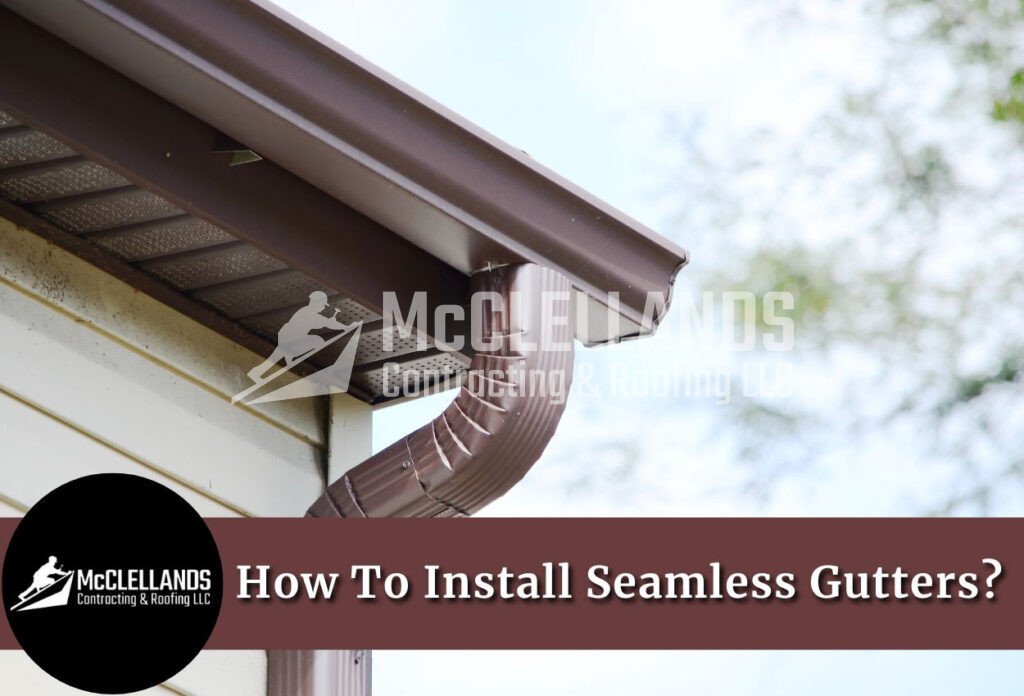

Installing seamless gutters requires professional equipment and expertise—unlike sectional gutters you can buy at home improvement stores, seamless gutters must be custom-manufactured on-site using specialized gutter-forming machines that cost $15,000-40,000. Professional installers bring these machines to your property, create continuous gutter sections cut to your exact specifications, then mount them with proper slope (1/2 inch per 10 feet) and secure spacing (hangers every 16-20 inches) to ensure optimal water drainage.
The complete professional installation process involves 10 essential steps: inspecting and preparing fascia boards, taking precise measurements, calculating proper slope, determining downspout locations, manufacturing gutters on-site, creating downspout openings, attaching end caps and outlets, installing hidden hangers, mounting gutters to fascia, and installing downspouts with proper extensions. While DIY installation isn’t feasible due to equipment requirements, understanding this process helps you recognize quality professional work.
For a no-obligation discussion or free estimate for your gutter or roofing project, call us today at (412) 790-1608.
What Are Seamless Gutters and How Are They Different?
Seamless gutters represent a significant upgrade from traditional sectional gutters, offering homeowners enhanced protection with reduced maintenance requirements.
How Seamless Gutters Work
Unlike traditional gutters assembled from 10-foot sections connected with joints and hardware, seamless gutters are manufactured from single continuous pieces of material custom-fitted to your home’s exact specifications. Professional installers bring specialized gutter-forming machines directly to your property, creating gutters cut precisely to your roofline measurements.
These continuous gutters only have seams at corners and downspout connections—the absolute minimum needed for a functional drainage system. This design dramatically reduces potential leak points that plague traditional sectional systems. Every joint in a sectional gutter represents a vulnerability where water can escape, causing fascia damage and foundation problems over time.
Key Differences Between Seamless and Sectional Gutters
| Feature | Seamless Gutters | Sectional Gutters |
|---|---|---|
| Construction | Single continuous piece per run | Multiple 10-20 foot sections joined together |
| Seams/Joints | Only at corners and downspouts | Every 10-20 feet plus corners |
| Leak Potential | Minimal (fewer failure points) | Higher (multiple sealed joints) |
| Lifespan | 20-30 years average | 10-15 years average |
| Maintenance | Lower (less debris accumulation) | Higher (seams collect debris) |
| Installation | Professional only (requires specialized equipment) | DIY-friendly |
| Aesthetic Appeal | Sleek, streamlined appearance | Visible seams and connectors |
| Initial Cost | $4-30 per linear foot | $3-20 per linear foot |
| Repair Flexibility | Full run replacement often needed | Individual sections replaceable |
Why Homeowners Choose Seamless Gutters
Climate conditions across the United States present unique challenges for gutter systems. Heavy summer thunderstorms, winter freeze-thaw cycles, and ice accumulation test gutter durability and performance throughout the year. Seamless gutters handle these challenges better than sectional alternatives because their continuous construction resists separation during ice expansion and provides smoother water flow during heavy rainfall.
The reduced seam count also means less debris accumulation at connection points—a significant advantage when autumn leaves from trees would otherwise clog traditional gutter joints. Fewer clogs translate to less frequent cleaning and reduced risk of ice dams during winter months.
How Long Do Seamless Gutters Last?
Understanding lifespan expectations helps you make informed decisions about material selection and installation investments.
Average Lifespan by Material
Aluminum Seamless Gutters: The most popular choice for homeowners, aluminum gutters typically last 20-30 years with proper maintenance. They resist rust, handle temperature fluctuations well, and maintain structural integrity through freeze-thaw cycles. Aluminum’s lightweight nature puts less stress on fascia boards while still providing excellent durability.
Vinyl Seamless Gutters: Budget-friendly vinyl gutters last 10-20 years depending on climate exposure. In variable weather, expect lifespans toward the lower end of this range. Vinyl becomes brittle in extreme cold and can crack during harsh winters, making it less ideal for our region despite lower initial costs.
Galvanized Steel Seamless Gutters: Steel gutters offer 15-25 years of service when properly maintained. They handle heavy snow loads better than aluminum and resist impact damage from falling branches. However, steel requires vigilant maintenance to prevent rust, particularly in areas with high humidity or where road salt spray reaches gutters during winter.
Stainless Steel Seamless Gutters: Premium stainless steel resists corrosion exceptionally well and lasts 40-50 years or more. The higher initial investment pays dividends in longevity and minimal maintenance requirements, making stainless steel an excellent choice for homeowners planning long-term ownership.
Copper Seamless Gutters: The ultimate in gutter longevity, copper systems last 50-100+ years with minimal maintenance. Copper develops a distinctive patina over time that many homeowners find aesthetically appealing. While copper represents the highest upfront investment, its lifespan can actually make it more economical per year than cheaper materials requiring replacement every 10-15 years.
What Factors Affect Seamless Gutter Lifespan?
Several key factors determine whether your gutters reach their maximum potential lifespan:
Climate and Weather Exposure: Freeze-thaw cycles, heavy precipitation, and temperature extremes accelerate wear on gutter systems. Gutters facing south receive more sun exposure and temperature fluctuations, while north-facing gutters may retain ice longer during winter. Coastal properties experience additional challenges from salt air that can accelerate corrosion.
Installation Quality: Professional installation significantly impacts longevity. Proper slope ensures water flows toward downspouts rather than pooling in sections—standing water accelerates deterioration. Secure attachment with correctly spaced hangers prevents sagging that compromises drainage and stresses seams. Quality sealant at corners and downspout connections prevents the leaks that cause fascia rot and structural damage.
Maintenance Consistency: Regular cleaning prevents debris accumulation that retains moisture against gutter surfaces, accelerating corrosion and material breakdown. Gutters cleaned twice yearly (spring and fall) last significantly longer than neglected systems. Prompt repairs of minor damage prevent small issues from becoming major failures.
Tree Proximity: Properties surrounded by trees face more frequent debris accumulation, increased cleaning needs, and higher risk of impact damage from falling branches. However, proper gutter guards can mitigate many tree-related challenges while still allowing effective water flow.
Can You Install Seamless Gutters Yourself?
This frequently asked question deserves a nuanced answer based on the unique nature of seamless gutter systems.
Why Seamless Gutters Require Professional Installation
Unlike sectional gutters available at home improvement stores, seamless gutters cannot be effectively installed as DIY projects. Here’s why professional installation is essential:
Specialized Equipment Required: Manufacturing seamless gutters requires professional-grade gutter-forming machines that cost $15,000-40,000+. These machines feed coiled metal through forming dies that shape continuous gutter profiles to exact specifications. The equipment mounts in specialized trucks that transport it to job sites, where installers create custom-length gutters on-demand.
Precision Measurement Critical: Professionals use laser-guided measurement tools ensuring gutters fit exactly against rooflines. A miscalculation of even 1/4 inch can cause water pooling, drainage failures, or gaps that allow water behind gutters. These precision requirements exceed typical DIY measurement capabilities.
Proper Slope Calculation: Seamless gutters must slope 1/2 inch per 10 feet toward downspouts for optimal water flow. Too little slope causes water pooling; excessive slope allows water to overshoot during heavy rain. Professionals calculate and maintain correct slopes throughout installation using specialized levels and measurement techniques.
Material Handling Challenges: Seamless gutter sections often span 20-40 feet in single pieces. These long sections are difficult and dangerous for homeowners to maneuver on ladders without proper equipment and trained assistance. Professional teams coordinate movements safely using appropriate tools and communication.
Quality Assurance: Professional installers provide warranties covering both materials and workmanship. If issues arise, you’re protected. DIY installations leave you responsible for all repairs, modifications, and potential water damage from improper installation.
What Can Homeowners Handle?
While complete installation requires professionals, homeowners can contribute in specific ways:
Preparation Work:
- Inspecting and repairing fascia boards before installation
- Trimming tree branches that might interfere with gutters
- Clearing landscaping near downspout discharge areas
- Researching material and color preferences
Maintenance Tasks:
- Bi-annual gutter cleaning (spring and fall)
- Inspecting for damage after severe storms
- Ensuring downspouts remain clear
- Checking that water discharges at least 5 feet from foundation
10 Steps Professionals Use to Install Seamless Gutters
Understanding the professional installation process helps you recognize quality work and communicate effectively with contractors.
Tools and Materials Needed for Professional Installation
Specialized Equipment:
- Truck-mounted gutter-forming machine
- Laser measurement tools
- Commercial-grade ladders and scaffolding
- Fall protection equipment
- Gutter-specific levels
- Heavy-duty drills and drivers
- Gutter crimper tools
- Hacksaw or miter saw
Materials:
- Metal coils (aluminum, steel, or copper)
- Hidden hangers rated for gutter material
- Hex screws (zinc-plated or stainless steel)
- Downspout outlets/adapters
- Downspouts and elbows
- End caps
- Professional-grade gutter sealant
- T-wedges (for angled fascia installations)
- Downspout brackets
Step 1: Inspect and Prepare Fascia Boards
Professional installers begin by thoroughly examining fascia boards for damage, rot, or deterioration. Compromised fascia cannot adequately support gutter systems, especially when gutters fill with water during heavy rainstorms. A five-inch gutter filled with water weighs approximately 2 pounds per linear foot—a 40-foot run holds 80 pounds of water before even accounting for debris.
Installers identify problem areas requiring repair or replacement before proceeding. Soft spots, discoloration, or visible rot all indicate fascia needing attention. Addressing these issues during installation prevents future problems and ensures your investment remains protected by structurally sound mounting surfaces.
Step 2: Take Precise Measurements
Accurate measurements are absolutely critical for seamless gutter success. Professional installers measure each gutter run multiple times, accounting for corners, downspout locations, and architectural features. They add appropriate overage (typically 1/4 inch) ensuring sufficient gutter length for proper fitting.
Laser measurement tools provide accuracy beyond standard tape measures, capturing exact distances and angles that affect how gutters align with rooflines. These measurements become specifications for the gutter-forming machine, which cuts each section to precise lengths.
Step 3: Calculate and Mark Proper Slope
Installers mark fascia boards to indicate the correct slope for water drainage. Starting at the high point (typically the end farthest from downspouts), they mark a point 1/4 inch lower every 10 feet moving toward downspout locations. Chalk lines connect these marks, creating visual guides ensuring consistent slope throughout installation.
For runs longer than 40 feet, professionals may install two downspouts with a high point in the center, allowing water to flow in both directions toward downspouts at each end. This prevents water flow from becoming too fast or too slow in very long gutter runs.
Step 4: Determine Optimal Downspout Locations
Strategic downspout placement is essential for effective drainage. Professionals typically install one downspout for every 30-40 feet of gutter, with additional downspouts for sections exceeding these lengths or for areas with particularly heavy rainfall.
Installers consider several factors when selecting downspout locations: proximity to building corners where downspouts are less visually obtrusive, locations allowing water discharge away from foundations, avoidance of high-traffic areas like walkways and driveways, and coordination with landscaping to minimize water damage to plantings.
Step 5: Manufacture Custom Seamless Gutters On-Site
This step showcases what makes seamless gutters special. Installers load metal coils into truck-mounted forming machines, selecting the profile style (K-style or half-round) and feeding coils through forming dies. The machine shapes flat metal into complete gutter profiles as it extrudes.
For quality control, installers run 3-4 feet of material before starting each section, ensuring consistent quality and trimming any imperfections. They then cut gutters slightly longer than needed, allowing final trimming that removes imperfect end portions. Each section emerges as a single continuous piece perfectly sized for its designated location.
Step 6: Create Downspout Openings
Before mounting gutters, installers create openings for downspout connections. Using measurements from Step 4, they mark downspout outlet locations on gutters. Downspout adapters are placed over marked areas, their outlines traced carefully.
Installers cut along traced lines about 1/16 inch outside markings, ensuring proper fits. They pre-drill 1/8-inch holes around openings for rivets that secure outlets. This precision prevents leaks at downspout connections—one of the most critical seal points in any gutter system.
Step 7: Attach End Caps and Downspout Outlets
Professional-grade gutter sealant is applied around downspout openings before outlets are positioned and riveted securely. This creates watertight seals preventing leaks that would damage fascia boards.
End caps receive similar treatment—sealant applied to inside surfaces before caps attach to gutter ends. Quality sealant remains flexible in temperature extremes, maintaining seals through summer heat and winter freezing.
Step 8: Install Hidden Hangers
Hidden hangers are attached to gutters before mounting. These hangers fit under gutter lips, providing support once installed while remaining invisible from ground level. Installers space hangers every 16-20 inches along gutter lengths, with additional hangers within 6 inches of end caps and corners.
For homes with angled fascia, T-wedges accompany every third hanger, ensuring gutters sit properly against fascia angles. This attention to detail prevents gaps where water might escape behind gutters.
Step 9: Mount Gutters to Fascia
This critical step requires coordination, typically involving teams of 2-3 installers. Long seamless gutter sections are positioned carefully, starting with securing center points first. Gutters are positioned under roof drip edges, ensuring water flows directly into gutters rather than behind them.
Installers work systematically from high points downward, checking slopes with levels as they secure hangers to fascia every 16-20 inches. Hex screws penetrate fascia boards into solid framing behind, providing secure attachment that withstands the weight of water-filled gutters during storms.
Step 10: Install Downspouts and Extensions
Once gutters are secured, installers attach downspouts. First elbows connect to downspout outlets, with crimped ends facing downward for proper water flow. Second elbows position against walls where downspouts will run vertically.
Downspout sections connect elbows, with installers crimping ends ensuring snug fits that won’t separate. Mounting brackets secure downspouts to walls at top and bottom, with additional brackets for longer runs. Downspout extensions direct water at least 5 feet from foundations, protecting against water infiltration and settlement issues.
Optional: Install Gutter Guards
For homes surrounded by trees, gutter guards significantly reduce maintenance. Professional installers can add guards during initial installation, securing them according to manufacturer specifications. Quality guards prevent leaves and large debris from entering gutters while allowing water to flow freely.
What Are Common Seamless Gutter Installation Mistakes?
Even experienced DIYers make critical errors when attempting seamless gutter work. Understanding these mistakes helps you recognize quality professional installation.
Critical Errors to Avoid
#1 – Incorrect Slope Calculation
The most fundamental mistake involves improper slope. Gutters too level allow water pooling, creating standing water that breeds mosquitoes and accelerates material corrosion. Water pools also freeze during winter, creating ice dams that damage gutters and rooflines.
Conversely, excessive slope causes water to flow too rapidly, potentially overshooting gutters during heavy rain. The water velocity can also erode soil around downspout discharge points, creating foundation concerns. Professional installers maintain the optimal 1/2 inch per 10 feet slope throughout installation.
#2 – Improper Hanger Spacing
Insufficient support causes gutters to sag over time, especially when filled with water during rainstorms or weighed down by ice in winter. Sagging gutters no longer maintain proper slope, causing drainage problems and potentially pulling away from fascia entirely.
Installers must place hangers every 16-20 inches along entire gutter lengths, with additional hangers within 6 inches of end caps. In areas with heavy snowfall, some professionals reduce spacing to 12-16 inches for extra support.
#3 – Neglecting Proper Sealing
While seamless gutters have fewer seams than sectional alternatives, they still have joints at corners and downspout connections. Failing to properly seal these areas with quality gutter sealant leads to leaks that damage fascia and foundations.
Professional installers use commercial-grade sealants rated for extreme temperatures and UV exposure. These sealants remain flexible through temperature swings, maintaining watertight seals year-round. Cheap hardware store caulks crack and fail within 1-2 years.
#4 – Incorrect Downspout Placement and Discharge
Downspouts discharging too close to foundations cause serious water damage and basement flooding. Water must discharge at least 5 feet from foundations, ideally onto graded surfaces that carry water further away.
Insufficient downspout quantity for gutter length also causes problems. Water overwhelms single downspouts on long gutter runs, causing overflows that defeat the purpose of having gutters at all. Professionals calculate appropriate downspout quantities based on roof square footage and regional rainfall intensity.
#5 – Wrong Gutter Size Selection
Five-inch gutters—standard for most homes—can be insufficient for large roofs or areas with heavy rainfall. Regions experiencing intense summer thunderstorms or high annual precipitation can overwhelm undersized gutters.
Professional installers calculate appropriate gutter sizes based on roof square footage, pitch, and regional rainfall data. For larger homes or those with steep roofs that concentrate water flow, six-inch gutters provide better water-handling capacity, preventing overflows that damage landscaping and foundations.
#6 – Attempting Solo Installation
Seamless gutters come in long sections that are difficult and dangerous for one person to handle on ladders. Attempting solo installation risks personal injury from falls and gutter damage from drops or bending.
Professional teams coordinate movements safely, with team members positioned strategically to support long gutter sections throughout positioning and securing. This coordination ensures safety while protecting expensive materials from damage.
How Much Does Seamless Gutter Installation Cost?
Understanding cost factors helps you budget appropriately and evaluate contractor quotes effectively.
Average Installation Costs by Material
| Material | Cost Per Linear Foot (Installed) | Best For |
|---|---|---|
| Vinyl | $4-8 | Budget-conscious homeowners in mild climates |
| Aluminum | $8-15 | Most homes (excellent value) |
| Galvanized Steel | $10-18 | Heavy snow load areas, impact resistance needs |
| Stainless Steel | $20-30 | Long-term investment, minimal maintenance |
| Copper | $25-40+ | Historic homes, premium aesthetics, lifetime investment |
These costs include professional installation with hidden hangers, proper sealing, and standard downspout configurations.
What Affects Your Total Installation Cost?
Total Linear Footage: Larger homes require more gutter length, directly affecting material and labor costs. A typical single-story ranch might need 100-150 linear feet, while a two-story colonial could require 200-300+ linear feet.
Gutter Size: Six-inch gutters cost $2-5 more per linear foot than standard five-inch gutters due to increased material and slightly more complex installation.
Roof Complexity: Simple rooflines with few corners and valleys cost less than complex designs with multiple peaks, valleys, and architectural details. Each corner requires mitering and additional sealing, increasing labor time.
Fascia Condition: Damaged fascia requiring repair or replacement adds costs before gutter installation can proceed. Budget $3-8 per linear foot for fascia repair or replacement.
Story Height: Second-story installation costs more than ground-level work due to equipment requirements and increased labor difficulty. Expect 30-50% higher labor costs for second-story gutter installation.
Downspout Quantity and Extensions: Each downspout costs $75-150 installed, including elbows and basic mounting. Underground downspout extensions add $15-30 per linear foot if you want water carried away from foundations through buried drainage pipes.
Gutter Guards: Adding gutter guards during installation costs $4-25 per linear foot depending on guard quality and style. While this increases upfront costs, guards dramatically reduce future maintenance needs.
Sample Project Costs
1,500 sq ft Ranch Home:
- 140 linear feet of 5″ aluminum gutters
- 4 downspouts with extensions
- Basic gutter guard system
- Total: $1,700-2,800
2,500 sq ft Two-Story Colonial:
- 240 linear feet of 6″ aluminum gutters
- 7 downspouts with extensions
- Premium gutter guard system
- Fascia repair (30 linear feet)
- Total: $3,800-6,200
4,000 sq ft Custom Home:
- 320 linear feet of 6″ copper gutters
- 9 downspouts with buried extensions
- Premium gutter guard system
- Total: $12,000-18,000+
Should You Choose DIY or Professional Seamless Gutter Installation?
While we’ve established that seamless gutters themselves require professional manufacturing and installation, understanding the complete decision framework helps you make informed choices.
Why Professional Installation Makes Sense for Seamless Gutters
Specialized Equipment Access: Professional gutter contractors own truck-mounted forming machines, laser measurement tools, and specialized installation equipment that make DIY installation impossible. This isn’t a matter of skill—the equipment simply isn’t available to homeowners.
Proper Installation Guarantees Performance: Seamless gutters only deliver their benefits when installed correctly. Improper slope, inadequate support, or poor sealing negates the advantages seamless systems provide over sectional alternatives. Professionals bring experience ensuring your investment performs as intended.
Safety Considerations: Working at heights with long, unwieldy materials creates significant fall risks. Professional installers use commercial-grade ladder systems, scaffolding, and fall protection equipment while following safety protocols that minimize risks. Falls from ladders cause thousands of injuries annually—many involving homeowners attempting DIY projects.
Warranty Protection: Reputable gutter contractors provide warranties covering both materials (typically 20-30 years for aluminum) and workmanship (typically 1-5 years). If issues arise, you’re protected. DIY installation voids material warranties and leaves you responsible for all repairs.
Time Efficiency: Professional teams typically complete residential gutter installations in 1-2 days. DIY attempts—if feasible—would require multiple weekends while learning installation techniques through trial and error.
Compliance with Building Codes: Professional installers understand local building codes and permit requirements. They ensure installations meet or exceed code standards, preventing issues when selling your home.
When Does DIY Make Financial Sense?
For seamless gutters, the honest answer is: almost never. The specialized equipment required makes DIY installation impractical regardless of skill level or cost considerations. However, homeowners can handle related tasks:
Cost-Effective DIY Tasks:
- Regular gutter cleaning ($0 vs. $75-200 professional cleaning)
- Downspout extension installation ($15-50 materials)
- Minor gutter guard repairs ($0-30 materials)
- Fascia board painting preparation ($0-50 materials)
Always Hire Professionals For:
- Seamless gutter manufacturing and installation
- Fascia board structural repairs
- Multi-story installation
- Downspout connection to buried drainage systems
- Any work requiring building permits
Investment Perspective: Cost vs. Value
Professional seamless gutter installation typically costs $1,500-4,500 for average homes. This investment:
Protects Your Foundation: Foundation repairs average $5,000-15,000 nationwide. Proper gutters prevent the water infiltration that causes foundation settling, cracking, and structural damage.
Preserves Fascia and Soffits: Rotted fascia and soffit repair costs $6-20 per linear foot. Leaking gutters cause this damage—seamless gutters installed correctly prevent it.
Prevents Basement Water Issues: Waterproofing wet basements costs $3,000-10,000+. Gutters directing water away from foundations significantly reduce basement moisture problems.
Maintains Landscaping: Replacing eroded landscaping and plants damaged by water runoff costs hundreds to thousands annually. Proper gutter systems with extensions protect landscaping investments.
When viewed as foundation and structural protection rather than simple rain management, professional seamless gutter installation represents exceptional value that pays for itself many times over during its 20-30 year lifespan.
What Maintenance Do Seamless Gutters Require?
While seamless gutters require less maintenance than sectional alternatives, regular care maximizes their lifespan and performance.
Essential Maintenance Tasks
Bi-Annual Cleaning (Spring and Fall):
- Remove leaves, twigs, and accumulated debris
- Flush gutters with garden hose checking for proper flow
- Inspect downspouts for clogs using plumber’s snake if needed
- Clean out downspout outlets and elbows
Post-Storm Inspections:
- Check for impact damage from falling branches
- Look for sections pulled away from fascia
- Ensure downspouts remain securely mounted
- Verify water still flows toward downspouts
Annual Detailed Inspection:
- Examine all corners and end caps for seal integrity
- Check for rust spots or corrosion (steel gutters)
- Look for fascia damage or rot behind gutters
- Verify hangers remain securely fastened
- Ensure proper slope hasn’t changed due to settling
Periodic Maintenance:
- Reapply sealant to corners and downspout connections every 3-5 years
- Touch up paint on scratched or chipped areas (painted gutters)
- Trim overhanging tree branches that drop excessive debris
- Adjust splash blocks or extend downspout discharge areas as needed
Signs Your Seamless Gutters Need Professional Attention
Immediate Repair Needs:
- Visible leaks at corners or downspout connections
- Sections pulling away from fascia
- Significant denting or impact damage
- Rust-through holes (steel gutters)
- Cracks in gutter material (vinyl or aluminum)
Potential Replacement Indicators:
- Multiple sections showing corrosion or deterioration
- Gutters older than 25-30 years (aluminum/steel)
- Frequent repairs needed annually
- Visible rot in fascia behind gutters
- Persistent leaking despite repairs
- Foundation water damage from gutter failures
Early attention to minor issues prevents expensive repairs. A $150-300 professional gutter inspection and minor repair is far more economical than the $5,000-15,000 foundation repair that results from neglected gutter problems.
Get Professional Seamless Gutter Installation
While installing seamless gutters yourself isn’t feasible, choosing the right professional installer ensures your home receives maximum protection from challenging weather conditions. At McClellands Contracting and Roofing, we specialize in high-quality seamless gutter installations that protect homes for decades.
Our experienced team brings years of exterior contracting expertise, specialized equipment, and meticulous attention to detail to every gutter project. We understand how regional climate challenges—from summer thunderstorms delivering 2+ inches per hour to winter ice accumulation—test gutter durability.