

 Residential
 Commercial
 Interior
 Exteriors
 Service Areas
 Contact Us
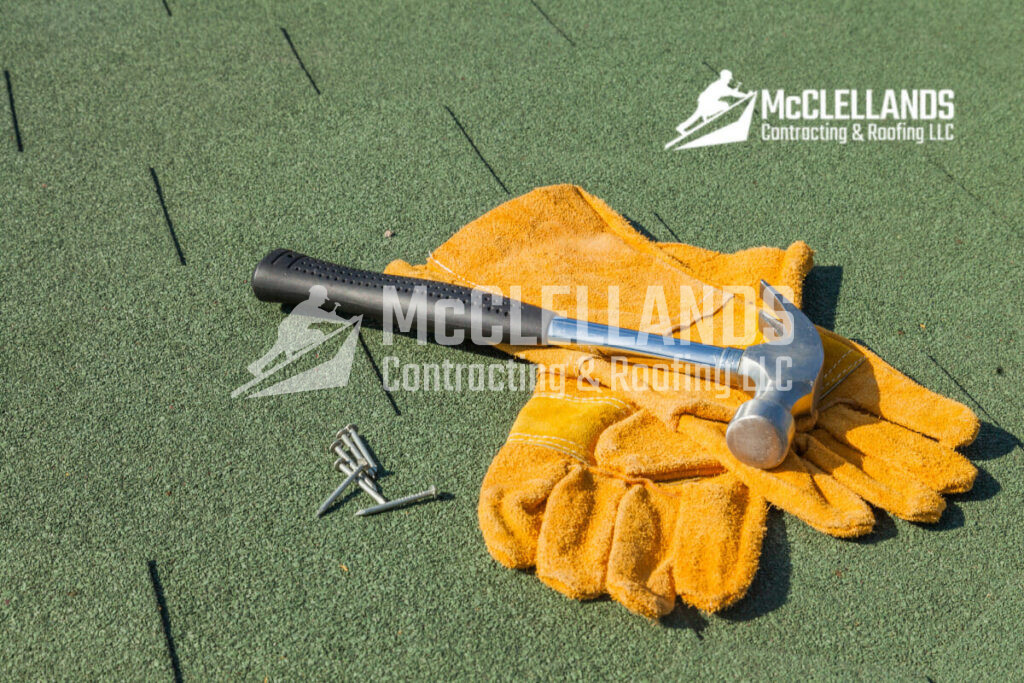
Choosing the right roofing nail requires matching five critical specifications to your project: nail type (smooth shank for basic applications, ring shank for high-wind areas, screw shank for maximum hold), material (galvanized steel for budget projects at $8-$15 per pound, stainless steel for coastal areas at $25-$40 per pound, aluminum for specialty applications at $18-$30 per pound), length based on total roof assembly thickness (typically 1¼ inches for standard asphalt shingles with ⅜-inch sheathing, 1½-2 inches for thicker shingles or sheathing), head size (⅜-inch minimum diameter for proper shingle hold-down), and gauge or thickness (11-12 gauge standard, with lower numbers indicating thicker, stronger nails). Using incorrect nails voids manufacturer warranties, creates leak points, allows wind blow-offs, and shortens roof lifespan by years or decades.
The most critical rule: nails must penetrate at least ¾ inch into roof deck for code compliance and proper hold. For a roof with ⅜-inch sheathing and standard architectural shingles (⅛-inch thick), you need minimum 1¼-inch nails. Building codes typically require 4-6 nails per shingle depending on roof pitch and wind exposure, with steeper roofs (over 6:12 pitch) and high-wind areas (over 90 mph design wind speed) requiring 6 nails per shingle versus 4 for standard applications.
Quick selection guide:
- Standard residential asphalt shingles: 1¼-inch galvanized ring shank nails, 11-12 gauge
- High-wind areas (coastal, tornado-prone): 1½-inch stainless steel ring shank or screw shank nails
- Thick/premium shingles: 1½-2 inch nails based on shingle + sheathing thickness
- Ridge/hip shingles: Add ½ inch to standard length (typically 1¾ inches minimum)
This guide covers nail types, materials, sizing calculations, placement requirements, and common mistakes to help you select proper fasteners ensuring decades of leak-free performance.
Understanding Roofing Nail Types
Roofing nails are specialized fasteners designed specifically for securing shingles and underlayment to roof decks. Unlike general-purpose nails, roofing nails feature larger heads (typically ⅜-inch diameter), specific lengths optimized for roof assemblies, and shank designs engineered for pull-out resistance.
Shank Types and Applications
| Nail Type | Shank Design | Hold Strength | Best For | Cost per Pound |
|---|---|---|---|---|
| Smooth Shank | Straight, smooth shaft | Basic | Low-wind areas, budget projects | $8-$12 |
| Ring Shank | Circular grooves around shaft | 3-4× smooth shank | High-wind areas, standard application | $10-$15 |
| Screw Shank | Spiral threads like a screw | 4-5× smooth shank | Extreme wind, coastal, hurricane zones | $12-$18 |
Smooth shank nails feature straight, uniform shafts without special features. These basic nails work for low-wind areas and budget projects but offer minimal resistance to pull-out forces. They’re being phased out in many regions as building codes increasingly require better wind resistance, though they remain code-compliant in some areas with minimal wind exposure.
Ring shank nails include circular grooves or rings along the shaft creating mechanical interference that resists withdrawal. These rings grip surrounding wood fibers, preventing nails from backing out during wind events or thermal cycling. Ring shank nails provide 3-4 times the holding power of smooth shank nails at minimal cost premium, making them the industry standard for residential roofing. The rings also create better seal around nail penetrations, reducing leak potential.
Screw shank nails feature spiral threads similar to screws, providing maximum withdrawal resistance—4-5 times greater than smooth shanks. These premium fasteners work best in extreme conditions including hurricane-prone coastal areas, tornado regions, or anywhere high wind design loads exceed 120 mph. The spiral threads engage wood fibers along entire shaft length, creating exceptional hold even in challenging installations. However, screw shanks cost 20-50% more than ring shanks and require more driving force (pneumatic nailers handle them easily, but hand-driving is difficult).
When to Use Each Type
Standard residential projects in areas with design wind speeds under 90 mph: Ring shank nails provide adequate performance at reasonable cost.
High-wind regions (90-120 mph design winds): Ring shank nails remain code-compliant but consider upgrading to screw shank for peace of mind.
Extreme wind zones (120+ mph design winds, hurricane/tornado regions): Screw shank nails or specialized hurricane fasteners required by code.
Budget-constrained projects in very low wind areas: Smooth shank may be acceptable where codes permit, though ring shank costs little more and performs far better.
Selecting Roofing Nail Material
Material choice affects corrosion resistance, longevity, and cost, with climate and exposure conditions determining best options.
Material Comparison
Galvanized Steel ($8-$15 per pound): The most common roofing nail material, featuring steel core with zinc coating providing corrosion resistance. Hot-dipped galvanized (HDG) nails include thicker zinc coating than electro-galvanized (EG) versions, offering better rust protection. HDG nails typically last 20-30 years in most climates before showing rust, while EG nails may rust within 10-15 years in humid areas.
Galvanized nails work well for inland residential applications with moderate humidity. They’re code-compliant nationwide and offer best value for most projects. However, coastal environments (within 3 miles of saltwater) or areas with heavy industrial pollution accelerate zinc coating breakdown, potentially causing rust staining on shingles and premature nail failure.
Stainless Steel ($25-$40 per pound): Premium nails featuring chromium-nickel alloy that doesn’t rely on coatings for corrosion protection—the material itself resists rust indefinitely. Type 304 stainless steel handles most residential applications, while Type 316 (marine grade) includes molybdenum for enhanced salt resistance in extreme coastal exposure.
Stainless steel nails last 50-75+ years without rust in any climate, making them ideal for coastal properties, high-end homes where re-roofing is expensive or disruptive, metal roofing applications where galvanic corrosion is concern, and situations where roof lifespan exceeds galvanized nail expected life. The 2-3× cost premium over galvanized represents excellent long-term value in challenging conditions, preventing rust stains, structural failures, and premature replacement.
Aluminum ($18-$30 per pound): Lightweight nails (30% lighter than steel) featuring natural corrosion resistance in most environments. Aluminum nails don’t rust in traditional sense but can corrode in alkaline conditions or when in contact with pressure-treated lumber. They work well for coastal applications where saltwater threatens steel nails, cedar shake or shingle installations where tannins cause galvanized nail corrosion, situations requiring non-magnetic fasteners, and specialty applications where weight matters.
However, aluminum’s softness (much lower tensile strength than steel) makes nails prone to bending during installation, limiting them to softer woods and careful installation. They’re less common for asphalt shingles, more popular for cedar and specialty materials.
Material Selection by Climate
Inland moderate climates: Galvanized steel (HDG) provides best value Coastal areas (within 3 miles of ocean): Stainless steel prevents rust and staining High-humidity regions: HDG galvanized acceptable, stainless preferred for premium projects Harsh industrial areas: Stainless steel resists chemical exposure Cedar/shake roofing: Aluminum or stainless to avoid tannin reactions
Calculating Correct Nail Length
Proper nail length ensures adequate penetration into roof deck for code compliance and secure attachment, preventing both under-penetration (leading to blow-offs) and over-penetration (wasting money and potentially puncturing through sheathing).
The Penetration Rule
Building codes require nails to penetrate minimum ¾ inch into roof deck or through roof deck completely (whichever is less). This rule applies nationwide, though some jurisdictions require full penetration through sheathing regardless of thickness.
For proper length calculation: Nail Length = Shingle Thickness + Underlayment Thickness + Sheathing Thickness + ¾ inch minimum
However, practical installation simplifies this since most underlayments are thin (1/16 inch or less) and compress during installation: Practical Formula: Nail Length ≈ Shingle Thickness + ¾ inch + Sheathing Thickness
Common Sizing Scenarios
Standard Setup (Most Common):
- Sheathing: ⅜ inch OSB or plywood
- Shingles: ⅛ inch architectural shingles
- Calculation: ⅛ + ¾ + ⅜ = 1.25 inches
- Use: 1¼-inch nails (most common residential size)
Thicker Sheathing:
- Sheathing: ½ inch plywood (older homes, quality construction)
- Shingles: ⅛ inch architectural
- Calculation: ⅛ + ¾ + ½ = 1.375 inches
- Use: 1½-inch nails
Thicker Premium Shingles:
- Sheathing: ⅜ inch OSB
- Shingles: ¼ inch luxury/designer shingles
- Calculation: ¼ + ¾ + ⅜ = 1.375 inches
- Use: 1½-inch nails
Ridge and Hip Shingles (Special Case): Ridge and hip shingles install over two layers of regular shingles (one from each slope), adding ⅛-¼ inch thickness. Add ½ inch to standard nail length:
- Standard nails: 1¼ inches
- Ridge/hip nails: 1¾ inches
Measurement Tips
If uncertain about sheathing thickness, measure from attic side using tape measure or drill small test hole from attic to determine exact thickness. Better to have nails slightly too long than too short—¼ inch extra length ensures code compliance and proper hold without issues, while ¼ inch too short risks failure and code violations.
Considering Head Size and Gauge
Beyond length and material, nail head diameter and shaft thickness (gauge) affect performance and code compliance.
Head Size Requirements
Roofing nails require minimum ⅜-inch diameter heads (9.5mm) to properly secure shingles without tearing through during wind events. Larger heads (½-inch) provide extra hold-down in high-wind applications but aren’t always necessary for standard residential work.
The wide head distributes clamping force across larger shingle area, preventing pull-through that occurs with smaller heads. When wind lifts shingle edges, the nail head’s bearing surface resists this force. Undersized heads allow shingles to tear away from nails during severe weather, while oversized heads can create visible bumps (called “shiners”) if not properly seated.
Standard ⅜-inch heads work for most applications. Consider ½-inch heads for:
- High-wind coastal or mountain areas
- Thinner shingle materials more prone to tearing
- Situations where maximum hold-down is critical
Nail Gauge (Thickness)
Roofing nails typically range from 10-14 gauge, with lower numbers indicating thicker, stronger nails:
11-12 gauge (standard): Most common for residential roofing, providing adequate strength without excessive cost. These handle standard installation forces and wind loads without bending.
10 gauge (heavy duty): Thicker, stronger nails for challenging applications including extremely hard woods, high-wind requirements, or situations requiring maximum pull-out resistance. Cost 10-20% more than standard gauge.
13-14 gauge (light duty): Thinner nails easier to drive but less resistant to pull-out and more prone to bending during installation. Generally avoided for critical roofing applications.
For most residential asphalt shingle projects, 11-12 gauge provides optimal balance of strength, drivability, and cost. Don’t assume “thicker is better”—excessively thick nails are harder to drive, more likely to crack shingles during installation, and cost more without performance benefit.
Matching Nails to Roofing Material
Different roofing materials have specific nail requirements based on material properties, installation methods, and performance needs.
Asphalt Shingle Nailing
Standard specifications for asphalt roofing:
- Length: 1¼ to 1½ inches (based on assembly thickness)
- Shank: Ring shank or screw shank
- Material: Hot-dipped galvanized steel (minimum), stainless for coastal
- Head: ⅜-inch minimum diameter
- Gauge: 11-12 gauge
- Quantity: 4 nails per shingle (standard), 6 nails for steep slopes or high-wind areas
Manufacturer instructions specify nail placement zones—typically above the adhesive strip and below the overlap line. Proper placement ensures nails penetrate through overlapping shingles for double coverage while avoiding exposure to weather.
Wood Shake and Shingle Nailing
Cedar and other wood roofing require corrosion-resistant fasteners since wood tannins corrode galvanized nails:
- Material: Stainless steel or aluminum (never galvanized)
- Length: Based on shake/shingle thickness (typically 1½ to 2 inches)
- Shank: Ring shank preferred
- Quantity: 2 nails per shake/shingle, positioned 1-2 inches from edges
Metal Roofing Fasteners
Metal roofing uses specialized screws rather than traditional roofing nails, but understanding fastener principles remains important. Metal roofing screws include neoprene washers sealing penetrations and hex heads for power tool driving.
Avoiding Common Roofing Nail Mistakes
Understanding frequent errors helps ensure proper installation that lasts decades without problems.
Using Wrong Nail Length: Too-short nails don’t meet code requirements and pull out during wind events. Too-long nails waste money and can puncture through sheathing, creating potential leak points inside attic.
Mixing Nail Types: Using leftover nails from previous projects seems economical but creates problems when smooth shank nails mix with ring shank, different lengths mix together, or corroded nails mix with new ones. Separate by type and discard rusty or damaged nails.
Improper Placement: Missing manufacturer’s nailing zone (typically marked on shingles) by nailing too high exposes nails to weather, nailing too low creates visible nail heads, and nailing too close to shingle edges risks cracking during thermal expansion.
Incorrect Driving Depth:
Overdriving (nails sunk too deep) tears shingle material, creating weak points where wind can lift shingles, damages underlayment, and potentially punctures through to attic space.
Underdriving (nail heads protruding) allows wind to catch nail heads, tearing shingles free, creates trip hazards for roofers during installation, and causes visible bumps (shiners) in finished roof.
Proper depth: Nail head sits flush with shingle surface—not protruding, not sunk below surface. High-quality pneumatic nailers include depth adjustment ensuring consistent placement.
Ignoring Climate Needs: Using galvanized nails in coastal saltwater environments leads to premature rust and shingle staining within 5-10 years. Stainless steel adds modest cost premium but lasts 50+ years in any climate—wise investment for seaside properties.
Skipping Manufacturer Instructions: Every shingle product includes specific installation instructions covering nail type, length, quantity, and placement. Following these requirements maintains warranty coverage—deviating voids warranties even if roof appears properly installed. When in doubt, call manufacturer technical support for clarification.
Conclusion
Selecting proper roofing nails requires attention to five key factors: type (ring shank for standard applications, screw shank for high-wind), material (galvanized for inland, stainless for coastal), length (calculated from assembly thickness ensuring ¾-inch penetration minimum), head size (⅜-inch minimum), and gauge (11-12 standard). Using correct fasteners ensures code compliance, maintains manufacturer warranties, prevents premature failures, and provides decades of leak-free performance.
For most residential asphalt shingle projects in moderate climates, 1¼-inch hot-dipped galvanized ring shank nails in 11-12 gauge with ⅜-inch heads represent the optimal choice. Adjust length for thicker shingles or sheathing, upgrade to stainless steel within 3 miles of saltwater, and use screw shank nails in hurricane or extreme wind zones.
When uncertain about specifications for your specific project, consult building codes, manufacturer instructions, or professional roofers. The modest cost difference between basic and proper nails ($20-$40 per square of roofing) is insignificant compared to roof replacement costs ($5,000-$15,000) or leak repair expenses from using wrong fasteners.
For professional roofing services including installation, inspection, or repair, call McClellands Contracting and Roofing at (412) 206-6718.